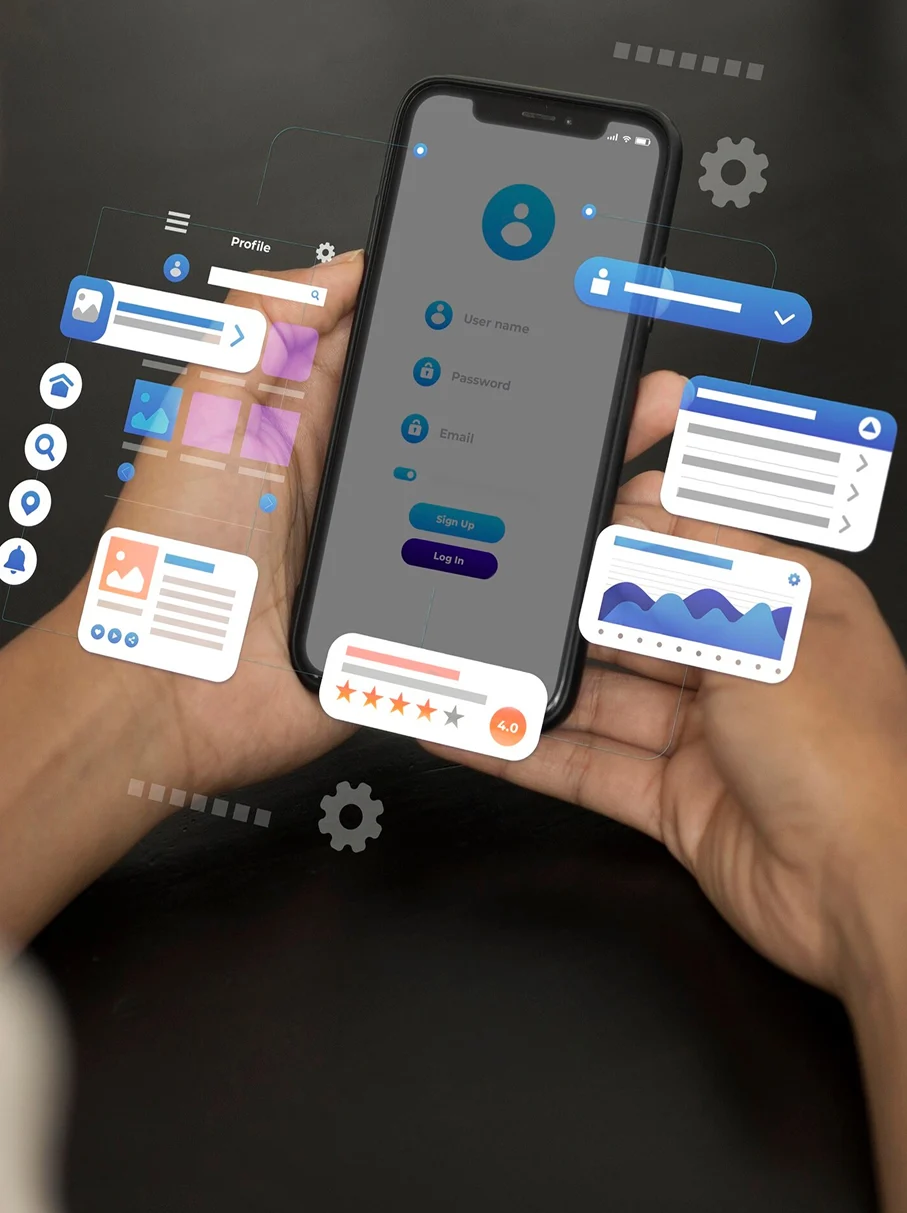
Most people do not quit fitness because they hate exercise. They quit because they get confused, bored, or they cannot see progress. That is why new tech startups are leveraging fitness startup ideas and building apps that feel like a small coach in your pocket. Not just a step counter.
The market is growing too. As per reports the global fitness apps market was USD 12.12 billion in 2025. More people are also wearing smartwatches and bands. IDC reported 136.5 million wearables shipped in Q2 2025, up 9.6% year over year. So the “fitness app” is not just an app now. It is an app plus your watch, plus your daily habits.
In this blog, we will show you 10 fitness tech startups doing something different. You will see creative features like recovery scores, habit coaching, social challenges, and simple wellness tracking. If you are exploring fitness startup ideas, this list will help you understand what people actually use, and what they ignore.
Table of Contents
- Which Real Problems Are Fitness Tech Startups Solving Today?
- Which Are The Top 10 Fitness Tech Startups To Watch In 2026?
- How Fitness Tracking Apps Work With Wearables And IoT?
- What Are the Core Features That Define a Modern Fitness App?
- What Compliances Are Involved in Fitness App Development?
- Final Thoughts
- FAQs
Which Real Problems Are Fitness Tech Startups Solving Today?
Fitness looks simple until real life hits. People miss days, get tired, feel sore, or lose motivation. Tracking can also go wrong, steps, GPS, and wearables can show messy numbers. That is why fitness tech startups are building smart fitness solutions that feel easier to follow, not harder. This section explains the real problems they are solving so users stay consistent, feel safe, and see progress without stress. These insights also help you shape better fitness startup ideas.
- Consistency And Habit. Users need a simple routine they can repeat, even on busy days.
- Tracking You Can Trust. Apps must reduce sensor errors and sync issues, or users stop believing the data.
- Personal Plans That Adapt. Workouts should adjust when users miss days, sleep less, or feel low energy.
- Motivation Without Pressure. Community and streaks should encourage users, not shame them.
- Recovery And Injury Safety. Apps must guide rest, warm-ups, and safe progress so people do not quit from pain.
- Privacy And Clear Pricing. Users want control over data and plans that feel fair and easy to understand.
Which Are The Top 10 Fitness Tech Startups To Watch In 2026?
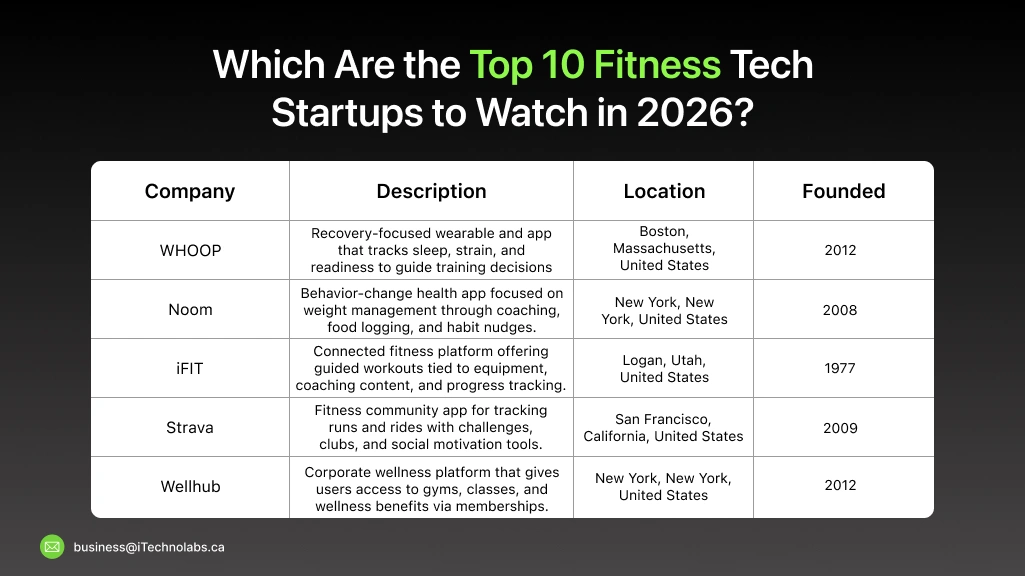
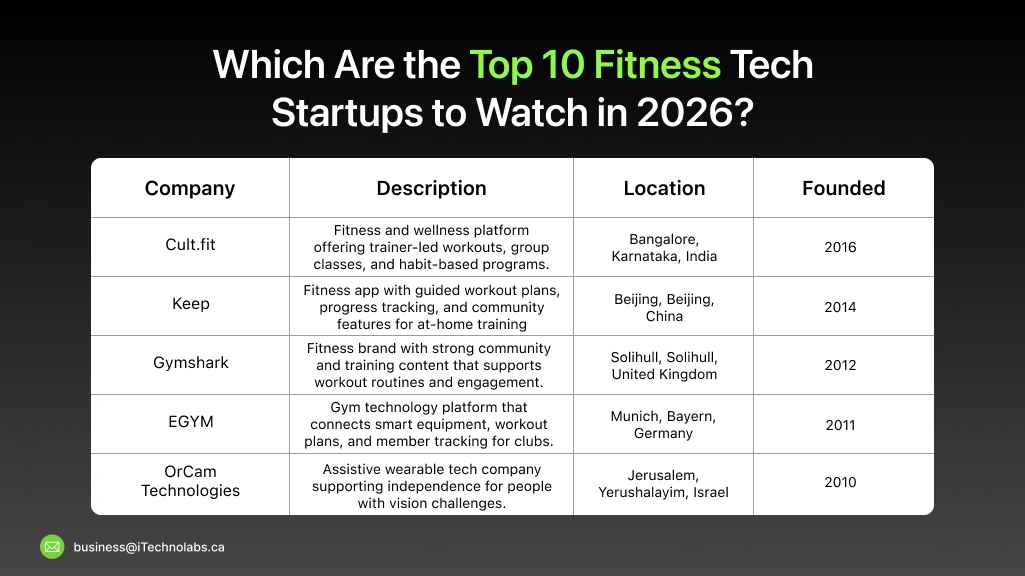
Some fitness apps only track steps. These names are building smarter products that shape habits, coaching, recovery, and even workplace wellness. This list of fitness tech startups is picked for one simple reason. They show strong product pull, clear funding signals, and features people actually use.
| Company | Description | Location | Founded | Current Stage | Private Funding Raised |
| WHOOP | Recovery-focused wearable and app that tracks sleep, strain, and readiness to guide training decisions. | Boston, Massachusetts, United States | 2012 | Series F | $404.8M |
| Noom | Behavior-change health app focused on weight management through coaching, food logging, and habit nudges. | New York, New York, United States | 2008 | Series F | $658.9M |
| iFIT | Connected fitness platform offering guided workouts tied to equipment, coaching content, and progress tracking. | Logan, Utah, United States | 1977 | Private Equity | $580M |
| Strava | Fitness community app for tracking runs and rides with challenges, clubs, and social motivation tools. | San Francisco, California, United States | 2009 | Venture Round | $151.9M |
| Wellhub | Corporate wellness platform that gives users access to gyms, classes, and wellness benefits via memberships. | New York, New York, United States | 2012 | Series F | $605M |
| Cult.fit | Fitness and wellness platform offering trainer-led workouts, group classes, and habit-based programs. | Bangalore, Karnataka, India | 2016 | Corporate Round | $636.8M |
| Keep | Fitness app with guided workout plans, progress tracking, and community features for at-home training. | Beijing, Beijing, China | 2014 | Series F | $614M |
| Gymshark | Fitness brand with strong community and training content that supports workout routines and engagement. | Solihull, Solihull, United Kingdom | 2012 | Private Equity | £200M |
| EGYM | Gym technology platform that connects smart equipment, workout plans, and member tracking for clubs. | Munich, Bayern, Germany | 2011 | Series G | $609.2M |
| OrCam Technologies | Assistive wearable tech company supporting independence for people with vision challenges. | Jerusalem, Yerushalayim, Israel | 2010 | Venture Round | $86.4M |
WHOOP
- Headquarters: Boston, Massachusetts, United States.
- Year Founded: 2012.
- Founders: Aurelian Nicolae, John Capodilupo, Will Ahmed.
WHOOP is built for people who care about recovery, not just workouts. It tracks strain, sleep, and readiness, then shows when to push and when to slow down. That is why it stands out among fitness tech startups. It feels less like a step counter, and more like a daily decision tool.
Why This App Is Trending
- Recovery First. Focuses on recovery, not only workouts.
- Daily Readiness. Uses sleep, strain, and readiness signals for decisions.
- Burnout Control. Fits the “train smart, avoid burnout” mindset.
Cool Features Inside
- Actionable Insights. Recovery and sleep data that leads to clear next steps.
- Guided Coaching. Coaching-style guidance, not just charts and numbers.
- Decision Tool. Helps decide push days versus rest days.
How They Earn Revenue
- Membership Model. Main revenue comes from subscriptions.
- Ongoing Value. Users pay for continuous insights and updates.
- Feature Depth. Coaching and analytics strengthen paid retention.
Who Is It For
- Serious Trainees. Regular gym-goers, runners, and athletes.
- Recovery Seekers. People tracking fatigue, sleep, and training load.
- Group Programs. Teams, clubs, and gyms running challenges.
Noom
- Headquarters: New York, New York, United States.
- Year Founded: 2008.
- Founders: Artem Petakov, Saeju Jeong.
Noom is not a “diet chart” app. It is built around behavior change, so users stick to habits for weeks, not just three days. It mixes food logging with coaching and psychology-style nudges. That approach keeps it relevant in the smart fitness solutions space, even when people get tired of strict plans.
Why This App Is Trending
- Habit Focus. Noom targets behaviour change, not quick diet rules.
- Coaching Style. It uses nudges that feel like support, not pressure.
- Long-Term Use. People stick longer because it feels practical.
Cool Features Inside
- Food Logging Ease. Tracking feels simpler, so users do not quit fast.
- Daily Nudges. Small reminders that push consistency, not guilt.
- Progress Clarity. Simple signals that show improvement over weeks.
How They Earn Revenue
- Subscription Plans. Most revenue comes from monthly and yearly plans.
- Premium Access. Paid users get deeper coaching and structured programs.
- Add-On Programs. Extra packs and plans can support upsells.
Who Is It For
- Beginners. People who want a simple plan without strict gym routines.
- Weight Goals. Users focused on weight loss and healthier eating habits.
- Consistency Struggle. People who start and stop often, and need structure.
iFIT
- Headquarters: Logan, Utah, United States.
- Year Founded: 1977.
- Founders: Gary Stevenson, Scott Watterson.
iFIT sits in the “guided training” space, but it feels bigger than a workout library. It connects workouts with equipment, coaching, and progress tracking in one place. For many users, that tight ecosystem is the real hook, and it is a solid example of smart fitness solutions that keep people consistent at home.
Why This App Is Trending
- Guided Training Feel. iFIT turns home workouts into structured programs, not random videos.
- Equipment Ecosystem. It connects training with equipment, so users stay inside one system.
- Routine Builder. It helps people follow a plan week after week.
Cool Features Inside
- Trainer-Led Workouts. Guided sessions that tell you what to do, step by step.
- Plan Progression. Workouts move from easier to harder in a clear flow.
- Progress Tracking. Users can see streaks, history, and improvements over time.
How They Earn Revenue
- Subscription Access. Most features are unlocked through paid plans.
- Content Library. Users pay for continued access to workouts and programs.
- Device Tie-In. Many users join through connected fitness equipment bundles.
Who Is It For
- Home Workout Users. People who prefer training at home over gyms.
- Plan Followers. Users who want a ready-made routine and clear guidance.
- Equipment Owners. People using smart treadmills, bikes, or home gym setups.
Strava
- Headquarters: San Francisco, California, United States.
- Year Founded: 2009.
- Founders: Mark Gainey, Mark Shaw, Michael Horvath.
Strava turns solo workouts into something you want to repeat. It tracks runs and rides, then adds community, challenges, and friendly competition on top. For many users, it is one of those smart fitness solutions that keeps motivation alive, even without a personal coach.
Why This App Is Trending
- Community Pull. Strava makes people repeat workouts because friends can see it.
- Challenge Motivation. Badges, segments, and goals push users to stay active.
- Habit Loop. It turns solo runs and rides into a daily routine.
Cool Features Inside
- Route Tracking. Runs and rides are logged with maps and pace details.
- Segments And Leaderboards. Friendly competition that feels fun, not forced.
- Clubs And Challenges. Group goals that keep motivation alive.
How They Earn Revenue
- Subscription Plans. Strava earns through premium memberships.
- Advanced Tools. Paid users get deeper insights, training tools, and better planning features.
- Retention Hooks. Challenges and community help keep users active, which supports upgrades.
Who Is It For
- Runners And Cyclists. People who track outdoor workouts regularly.
- Social Motivated Users. Those who love sharing progress and competing lightly.
- Goal Chasers. Users training for events, PBs, or weekly targets.
Wellhub
- Headquarters: New York, New York, United States.
- Year Founded: 2012.
- Founders: Cesar Carvalho, Joao Barbosa.
Wellhub is built for people who want options, not one fixed routine. It connects users to gyms, studios, classes, and wellness perks through a single membership. For many companies, it is also an employee benefit. That makes it one of the fitness tech startups shaping how “fitness access” is sold, not just how workouts are tracked.
Why This App Is Trending
- All-In-One Access. Wellhub gives one membership for gyms, classes, and wellness perks.
- Workplace Push. Many companies offer it as an employee benefit, so adoption is easier.
- Choice Matters. Users stay consistent because they can switch workouts anytime.
Cool Features Inside
- Gym And Studio Network. Access to partner gyms, studios, and training options.
- Class Variety. Yoga, strength, cardio, and wellness sessions in one place.
- Challenge Support. Group-style activities that help teams stay active.
How They Earn Revenue
- B2B Contracts. Companies pay to offer Wellhub to employees.
- Membership Plans. Users access a bundle through a paid membership tier.
- Partner Revenue. Wellhub earns through partnerships with gyms and wellness providers.
Who Is It For
- Employees. People who get it through their workplace benefits.
- Routine Switchers. Users who get bored and want many options.
- Beginners. People who want to try fitness without picking one gym first.
Cult.fit
- Headquarters: Bangalore, Karnataka, India.
- Year Founded: 2016.
- Founders: Ankit Nagori, Mukesh Bansal.
Cult.fit is built around one simple truth. Most people do not quit fitness because they hate exercise. They quit because they feel alone, bored, or lost. Cult.fit fixes that with group energy, guided sessions, and a strong community vibe. That makes it one of the fitness tech startups that turned workouts into a habit, not a task.
Why This App Is Trending
- Group Energy. Cult.fit makes workouts feel social, so people do not quit fast.
- Habit Focus. It turns fitness into a routine, not a one-time motivation burst.
- All-Round Wellness. It blends workouts with yoga and mindfulness options.
Cool Features Inside
- Guided Sessions. Trainer-led classes that tell users what to do, step by step.
- Flexible Formats. Options for strength, dance, yoga, and quick home workouts.
- Community Push. Challenges and group vibes that keep people showing up.
How They Earn Revenue
- Membership Plans. Most revenue comes from paid memberships for classes and programs.
- Pack Sales. Users can buy specific plans or class packs in some cases.
- Partner Network. Tie-ups with centers and services support the business model.
Who Is It For
- People Who Need Motivation. Users who struggle to work out alone.
- Class Lovers. Those who enjoy trainer-led group workouts.
- Busy Schedules. People who want quick sessions with clear guidance.
Keep
- Headquarters: Beijing, Beijing, China.
- Year Founded: 2014.
- Founders: Ning Wang, Wei Peng.
Keep is built for people who want fitness guidance without a gym membership. It mixes workout plans, tracking, and community-style motivation inside one app. Its scale and funding also make it a name worth watching among fitness tech startups in 2026.
Why This App Is Trending
- All-In-One Fitness. Keep mixes plans, tracking, and motivation in one app.
- Low Friction. It is built to make daily fitness feel easy, not like homework.
- Scale Signal. Its reach and growth keep it on the 2026 watch list.
Cool Features Inside
- Workout Programs. Ready plans for different goals and fitness levels.
- Tracking + Progress. Logs workouts and shows improvement over time.
- Community Motivation. Social features that push consistency without a gym.
How They Earn Revenue
- Subscriptions. Premium plans unlock deeper programs and features.
- Paid Content. Special packs and guided plans support extra revenue.
- Ecosystem Upsell. Add-ons can extend value for long-term users.
Who Is It For
- Gym Avoiders. People who want guidance without a gym membership.
- Beginners. Users who need ready workouts and simple progress tracking.
- Consistency Seekers. People who want daily structure and motivation.
Gymshark
- Headquarters: Solihull, United Kingdom.
- Year Founded: 2012.
- Founders: Ben Francis, Lewis Morgan.
Gymshark is not a typical fitness app company. It is a fitness brand that grew by building a strong community first, then turning that attention into products people actually buy. Its real edge is how it mixes content, creators, and identity. That is why it still gets counted when people talk about fitness tech startups and modern fitness-led brands.
Why This App Is Trending
- Community Power. Gymshark built a loyal audience first, then added training tools.
- Content-Led Fitness. Creators and workouts keep people engaged beyond products.
- Brand Habit. Users return because the brand feels like an identity, not just an app.
Cool Features Inside
- Workout Plans. Ready routines that guide training week by week.
- Training Library. Sessions for strength, conditioning, and beginner basics.
- Progress Support. Simple tracking that helps users stay consistent.
How They Earn Revenue
- Core Brand Sales. Main revenue comes from apparel and product sales.
- App As Support. The app strengthens loyalty and repeat buying, not direct income only.
- Creator Engine. Influencer content drives discovery and conversions.
Who Is It For
- Gym Regulars. People who train often and want structured routines.
- Brand Fans. Users who like creator-led fitness content.
- Beginners Too. People who want simple plans without heavy tracking.
EGYM
- Headquarters: Munich, Bayern, Germany.
- Year Founded: 2011.
- Founders: Florian Sauter, Philipp Schlanderer.
EGYM helps gyms run smarter, and helps members train with more structure. It connects fitness equipment, workout plans, and club management into one ecosystem. That is why many people tag it as one of the smart fitness solutions to watch in 2026.
Why This App Is Trending
- Gym Tech Upgrade. EGYM helps gyms run smarter, not just train harder.
- Connected Ecosystem. It links equipment, member progress, and gym systems together.
- Personalized Training. Gyms can offer structured plans that feel tailored to each member.
Cool Features Inside
- Smart Strength Circuit. Equipment adjusts settings based on user profile and goals.
- Progress Tracking. Members and trainers can see clear improvements over time.
- Gym Management Tools. Helps clubs manage member journeys, not only workouts.
How They Earn Revenue
- B2B Sales. Gyms pay for equipment, software, and ongoing service.
- Software Subscriptions. Recurring revenue comes from platform access and support.
- Enterprise Deals. Larger gym chains drive bigger long-term contracts.
Who Is It For
- Gym Owners. Clubs that want better member retention and premium services.
- Trainers. Coaches who need structured programs and tracking at scale.
- Members. People who want guided strength training without guesswork.
OrCam Technologies
- Headquarters: Jerusalem, Yerushalayim, Israel.
- Year Founded: 2010.
- Founders: Amnon Shashua, Ziv Aviram.
OrCam Technologies is not a classic “gym app” company. It is more about assistive wearable tech that helps people with vision challenges. Still, it fits this list because fitness is not only for athletes. Accessibility tech is becoming part of smart fitness solutions, especially for safe outdoor movement, independent workouts, and daily activity tracking.
Why This App Is Trending
- Accessibility First. OrCam supports people with vision challenges, which is a big gap in fitness and daily movement tools.
- Wearable Help. It brings assistive tech into real-world activity, not just indoor routines.
- Wider Fitness Future. More products are being built for different abilities, not only athletes.
Cool Features Inside
- Wearable Assistance. Helps users interact with text and surroundings through a wearable device.
- On-The-Go Support. Works in daily life situations like walking outdoors or moving independently.
- Confidence Boost. Reduces dependence on others for basic activity and navigation tasks.
How They Earn Revenue
- Device Sales. Main revenue comes from selling assistive wearable hardware.
- Service And Support. Setup help, training, and support add to the business model.
- Partner Channels. Distribution through partners helps reach more users.
Who Is It For
- People With Vision Challenges. Users who need support for reading and navigation.
- Independent Movers. People who want safer daily movement and outdoor activity.
- Care Networks. Families, caregivers, and support groups helping users stay active.
How Fitness Tracking Apps Work With Wearables And IoT?
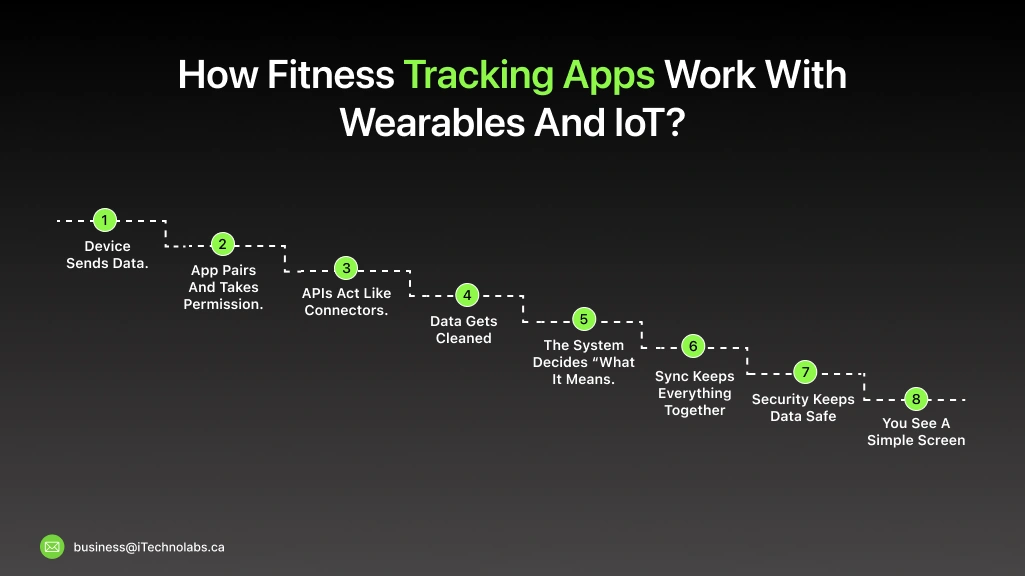
A fitness app does not “magic” your steps and heart rate. Your watch, band, or gym machine sends small data signals. The app collects them, cleans them, stores them, and then shows them as simple progress. If any one step breaks, the app feels wrong, like missing steps, wrong calories, or broken sync. That is why fitness tech startups put real effort into this backend flow, to make smart fitness solutions feel accurate and easy.
- Device Sends Data. Your watch or band tracks movement, heart rate, sleep, and workouts. It sends this data to your phone using Bluetooth, sometimes Wi-Fi if it supports it.
- App Pairs And Takes Permission. The first time you connect, the app asks to pair the device and asks permission to read health data. Without this, the app cannot legally or technically pull your metrics.
- APIs Act Like Connectors. Instead of reading every device directly, apps often use connectors like Apple Health or Google Fit. Think of them as a common plug point where many devices can share data safely.
- Data Gets Cleaned. Real life data is messy. Your phone shakes in your bag. GPS jumps near tall buildings. A watch may miss heart beats for a few seconds. The app removes noise and fills small gaps so your report looks sensible.
- The System Decides “What It Means.” Raw numbers are not helpful on their own. The app uses simple rules to label activity like walk, run, workout. It also calculates zones, totals, streaks, and weekly goals.
- Sync Keeps Everything Together. Recent data may stay on your phone so it loads fast and works offline. Long history goes to the cloud so you can switch phones and still see your past progress.
- Security Keeps Data Safe. Health data is sensitive. Apps use login tokens, encryption, and access controls so random people or apps cannot read your data. This also helps with compliance.
- You See A Simple Screen. After all that backend work, the app shows you easy stuff, like weekly steps, sleep trend, recovery hints, and reminders. Good apps show “what to do next,” not only charts.
What Are the Core Features That Define a Modern Fitness App?
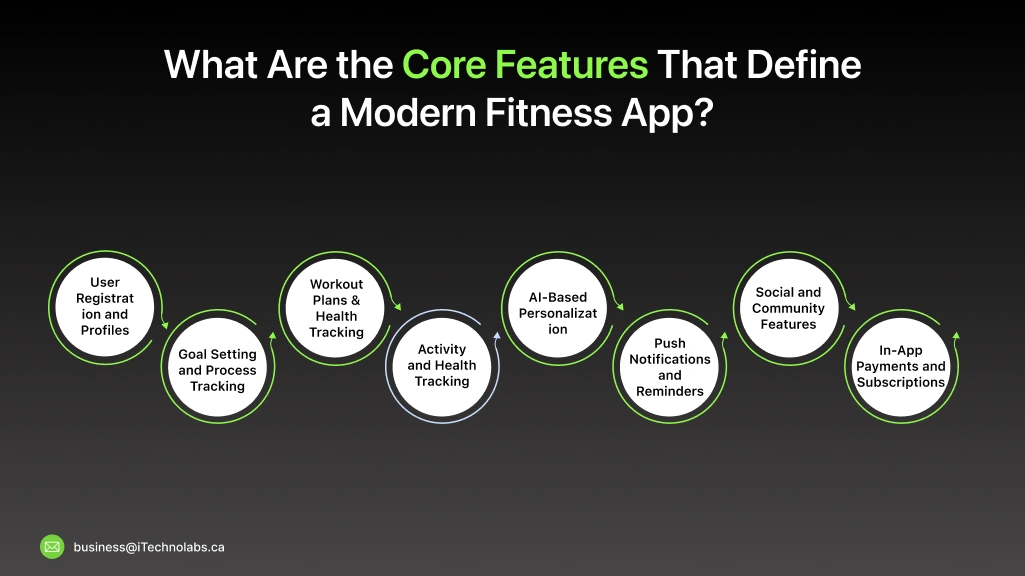
A modern fitness app is not “more features.” It is the right features in the right order. If you are exploring fitness startup ideas, these are the building blocks that most fitness tech startups use to create smart fitness solutions people actually stick with.
User Registration and Profiles
Users want to start fast, but still feel the app knows them. A good profile setup keeps friction low and makes recommendations feel relevant.
- Quick Sign-Up. Email, phone, Apple, Google, with fewer steps.
- Basic Profile Setup. Age range, goals, activity level, health notes.
- Privacy Controls. Clear toggles for sharing, syncing, and visibility.
- Device Pairing. Easy connect for wearables and health apps.
Goal Setting and Process Tracking
People do not chase “fitness.” They chase a result like fat loss, strength, better sleep, or lower stress. Goals also need progress signals, or users quit.
- Goal Templates. Weight loss, muscle gain, steps, stress, sleep, rehab.
- Milestones. Weekly targets that feel doable, not scary.
- Progress Views. Charts that show trend, not just daily numbers.
- Streak Logic. Gentle streaks that do not punish missed days.
Workout Plans & Health Tracking
Plans keep users from guessing. Tracking helps them see what is working. Together, they build trust and habit.
- Structured Plans. Beginner to advanced, with clear weekly flow.
- Guided Workouts. Video, audio, timers, and rest cues.
- Health Logs. Sleep, soreness, energy, hydration, basic nutrition.
- Safety Notes. Warm-up, cooldown, and form reminders.
Activity and Health Tracking
This is the “always-on” part of the app. It captures daily movement, workouts, and basic body signals, so users can improve with real data.
- Steps And Distance. Phone plus wearable tracking with sync.
- Heart Rate And Zones. Useful for cardio and recovery patterns.
- Sleep Signals. Time asleep, wake-ups, and consistency.
- Workout History. Logs, PRs, and weekly summaries.
AI-Based Personalization
This is where many fitness tech startups try to stand out. AI matters only when it makes the plan feel personal and easier, not confusing.
- Adaptive Plans. Adjust intensity based on progress and fatigue.
- Smarter Recommendations. Suggest next workout, rest, or recovery.
- Habit Patterns. Learn what time users actually work out.
- Risk Flags. Spot overtraining and repeated pain signals early.
Push Notifications and Reminders
Reminders can help, but they can also annoy. Good reminders feel timed, relevant, and easy to control.
- Personal Timing. Nudges based on user routine, not random hours.
- Quiet Hours. Auto-silence at night and during work blocks.
- Action-Based Nudges. “Log water” or “stretch 5 mins,” not generic lines.
- Opt-Out Control. Users can switch off categories, not the whole app.
Social and Community Features
Community can do what reminders cannot. It gives users a reason to show up, especially on low-motivation days.
- Challenges. Steps, workouts, streaks, and team goals.
- Clubs And Groups. Private circles for friends or gym members.
- Sharing Controls. Users pick what to share and with whom.
- Support Tools. Comments, cheers, and simple accountability.
In-App Payments and Subscriptions
If your product is strong, payments should feel simple and transparent. Many smart fitness solutions win by offering a free start, then a clear upgrade path.
- Free + Premium Tiers. Clear difference between free and paid value.
- Monthly And Yearly Plans. Simple pricing, easy cancel flow.
- Add-Ons. Coaching calls, programs, meal plans, challenges.
- Secure Payments. PCI-safe handling and clean invoice history.
What Compliances Are Involved in Fitness App Development?
Compliance is not just paperwork. It decides what you can collect, how you store it, and what you can claim in ads. Many fitness tech startups get into trouble when a “wellness app” quietly becomes a “health app” with sensitive data and big promises.
HIPAA (US): HIPAA applies only if you are a covered entity (like a healthcare provider/insurer) or a business associate working for one. If your fitness app is direct-to-consumer, HIPAA may not apply, but privacy and security still matter.
HITECH Act: HITECH strengthens HIPAA enforcement and adds breach notification duties. If a breach impacts 500+ people, notice can involve affected individuals, HHS, and sometimes media.
GDPR (EU): Fitness and health signals can become “special category” data, which needs stronger protections. If you rely on consent for health data, it often needs to be explicit, and users must be able to withdraw it.
CCPA (California): CCPA gives California users rights like knowing what you collect, deleting data, and opting out of certain data sharing. Your privacy policy and in-app controls must match what you actually do.
Data Security Practices: Even when HIPAA does not apply, security basics are non-negotiable. If you do fall under HIPAA, the Security Rule expects administrative, physical, and technical safeguards for ePHI.
PCI DSS (Payments): If you accept cards, PCI DSS matters for any system that stores, processes, or transmits card data. Best move is to offload payments to a compliant processor and avoid storing card details yourself.
Accessibility Standards: Accessibility is both a usability win and a risk reducer. WCAG 2.2 is a widely used standard, and W3C also provides guidance for applying WCAG 2.2 to mobile apps.
Advertising and Marketing Rules: Fitness apps often get in trouble for claims like “clinically proven” or “guaranteed weight loss.” The FTC expects health-related claims to be truthful and backed by proper evidence.
Medical Device Regulations: Most fitness apps are “general wellness,” but you can cross the line if you claim to diagnose, treat, or function like a medical device. FDA guidance explains how they look at device software functions and mobile medical apps.
Final Thoughts
Fitness apps look easy until real users show up. They skip workouts, forget wearables, lose network, and still expect the app to “just work.” The winners in 2026 will be the ones that keep tracking accurate, plans simple, and progress easy to understand.
If you are exploring fitness startup ideas, start small and ship a clean MVP. Then grow into smart fitness solutions with real data, not guesses. That is also how the best fitness tech startups stay ahead, they improve the habit loop first, and add fancy layers later.
If you want a team that can help you go from idea to launch without the usual chaos, talk to iTechnolabs Inc. They can help you scope the MVP, design the UX, build the app, and support it after launch, so your product stays stable as users grow.
FAQs
What is the best MVP for fitness startup ideas in 2026?
Start with one clear use case, like step tracking plus a simple goal and weekly progress view. Keep it to a small daily loop that users can repeat. Add one standout feature only after retention looks stable.
How do fitness tech startups keep tracking accurate on different phones?
They test on older devices, weak networks, and real outdoor routes. They also clean sensor noise, handle missing data, and allow users to edit logs. Accuracy builds trust faster than fancy screens.
Do smart fitness solutions need AI from day one?
No. AI helps only when it makes the plan easier and more personal, like adjusting workouts after missed days. Many apps succeed first with strong basics, then add AI once they have enough user data.
What integrations matter most for a fitness tracking app?
Most teams start with Apple Health and Google Fit because they cover common health data flows. Wearable integrations matter when your users rely on heart rate, sleep, or recovery tracking. Payments are also key if subscriptions are part of the plan.
What is the safest monetization model for a new fitness app?
A freemium model with a clear premium upgrade is usually the easiest start. It lets users build habit before paying, and you can price premium around deeper insights, plans, or coaching. Keep pricing simple and cancellation easy to protect trust.