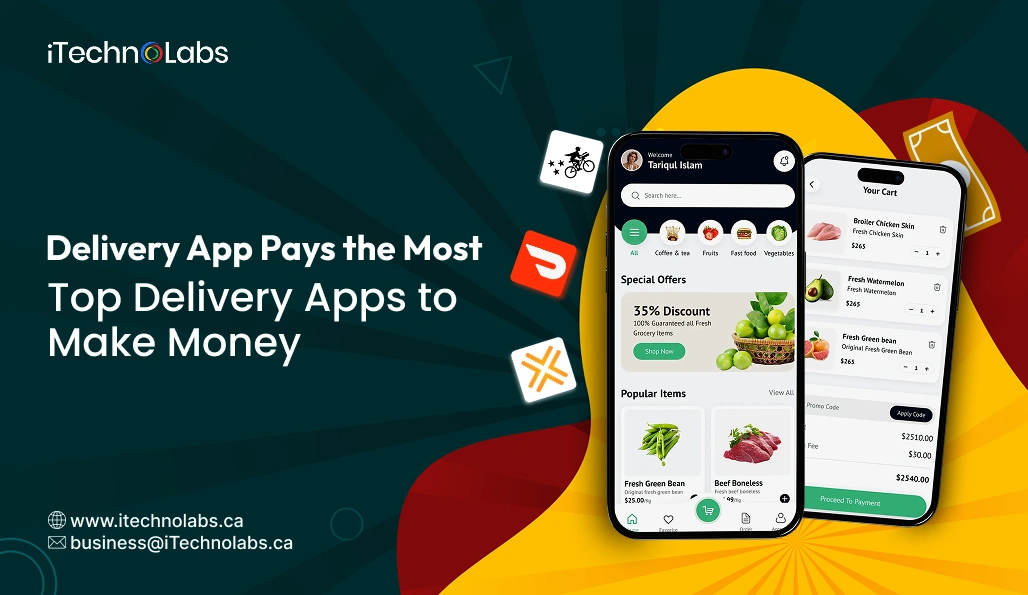
If you want to increase your income as a delivery driver in 2026, choosing the right app matters more than ever. Today’s on-demand economy includes food, grocery, and package delivery platforms, each with different payout models, incentives, and demand levels. This rapid growth is also driving demand for every mobile app development company building next-gen delivery platforms, driver apps, and logistics systems for businesses worldwide.
Some platforms help top drivers cross $30/hour, while others struggle to offer even $15/hour, depending on location and pay structure. That’s why this guide breaks down exactly what affects delivery driver income and ranks the best delivery apps to make money in 2026.
Table of Contents
How to Choose a Delivery Job That Pays More
Delivery jobs don’t offer the same earning potential. A truly high-paying delivery job depends on the delivery type, working flexibility, real operating costs, workload intensity, and bonus structure. If you want to maximize profit, you must evaluate the platform’s payment model, demand, tips, and hidden expenses before choosing the right app.
1) Type of Delivery Matters
The different delivery categories have different rates of payment according to order frequency, average order value, and customer tipping habits. Quick trips and tips are offered by food delivery, while grocery and parcel delivery may have higher pay per order but require more time and effort. The delivery type must be chosen according to your vehicle, schedule, and earning goal.
What to check:
- Food delivery vs grocery delivery earning difference
- Parcel/courier payouts and route structure
- Availability of orders in your city
- Vehicle requirement (car/bike/scooter)
- Tip potential based on delivery category
2) Flexibility vs. Stability
Some delivery apps allow you to work anytime, while others pay better when you choose scheduled shifts or delivery blocks. Flexible work suits side hustles, but stable shifts may offer higher order flow and guaranteed earnings. The best option depends on whether you want control or consistent income.
What to check:
- Option to log in anytime without scheduling
- Availability of delivery blocks or shifts
- Guaranteed pay zones or hourly minimums
- Peak-time priority access
- Ability to switch between zones easily
3) Hidden Costs Can Add Up
A delivery job can look high-paying until you calculate actual expenses. Fuel, repairs, maintenance, insurance, and vehicle depreciation reduce your real profit. Apps with longer delivery distances may pay more per trip but cost you more in fuel and time. Always evaluate profit, not just payout.
What to check:
- Fuel cost vs payout per mile/km
- Average trip distance in your area
- Maintenance and wear-and-tear impact
- Insurance requirements and costs
- Parking/toll expenses for city deliveries
4) Physical Demands
Delivery work can be physically demanding depending on order size, delivery locations, and workload. Grocery orders may involve heavy bags, stairs, and longer shopping time. Parcel delivery can be repetitive and tiring. Choose a platform that matches your daily energy level so you can work consistently without burnout.
What to check:
- Weight of average order (food vs grocery)
- Stairs/apartment delivery frequency
- Driving hours required for good pay
- Shopping requirement (if applicable)
- Safety and comfort in delivery areas
5) Payment and Perks
The highest-paying apps often stand out because of bonuses, incentives, and better payout systems. Apart from base pay, tips, peak bonuses, and delivery challenges make a huge difference. Understanding payment frequency and incentive rules helps you choose the platform that becomes the Delivery App Pays the Most in your city.
What to check:
- Weekly vs instant payout options
- Peak-hour bonuses and surge pay
- Delivery challenges and incentive programs
- Tip policy and customer tipping trend
- Referral bonuses and driver reward perks
Also Read : Food Delivery App Development: A Complete Guide 2026
Trying to Earn More as a Delivery Driver? These Factors Decide Your Pay
In 2026, delivery driving has become one of the most reliable gig options, but earnings aren’t the same for everyone. While many drivers average around $15–$25 per hour, top drivers often earn significantly more by working smarter, not harder. Your income depends on where you drive, when you drive, which deliveries you accept, and how well you use incentives. That’s why choosing the right platform can determine which Delivery App Pays the Most in your city.
If your goal is to maximize income through delivery apps to make money, focus on these key earning factors:
1) Location (High-Demand Zones)
Your profit margins expand in case you provide services for regions where order volume is very high all the time. Generally, city centers, restaurant hubs, areas with many apartments, and retail clusters are the places that produce the most delivery requests, thus decreasing the waiting time between orders. High-demand regions especially bring the opportunities of better incentives and surge pay that together make a significant impact on the total income.
2) Hours Worked and Peak Timing
Putting in more hours means more money, but when you work is even more important than that for your income. Usually, service-oriented sectors like restaurants and cafes experience the highest demand along with the best payouts at lunch and dinner rush hours, weekends, and holidays. During these times many apps offer drivers peak bonuses, thus enabling them to get more on account of fewer hours than if they worked during slow times.
3) Delivery Type You Choose
Not all delivery categories pay the same. Food delivery typically offers faster order turnover and higher tipping frequency, while grocery delivery often pays more per order but takes longer due to shopping and heavier loads. Parcel deliveries can offer stable routes or fixed blocks but may provide fewer promotions depending on the platform and location.
4) Bonuses, Incentives, and Promotions
In 2026, incentives often decide earnings more than base pay. Delivery apps frequently offer surge pricing, peak pay, delivery streak rewards, and challenges that provide extra payout after completing a certain number of deliveries. Drivers who actively track promotions and plan their working hours around incentives usually earn more than drivers who work without strategy.
5) Customer Tips and Service Quality
Tips are a major reason why some drivers earn more than others on delivery apps to make money. Customers are more likely to tip well when deliveries arrive on time, orders are handled carefully, and communication is polite and professional. Over time, consistent service quality improves ratings and increases tip frequency, boosting weekly income.
Also Read : Mobile App Development Cost in 2026: Complete Cost Guide, Pricing Factors, and Low-Cost Options
Top Delivery Apps That Pay the Most in 2026
Below is the list of platforms that consistently rank among the best-paying options, based on earnings ranges, bonuses, and overall driver earning potential.
| Rank | App | Founded | Avg Earnings (Per Hour) | Bonus / Incentives |
| 1 | Amazon Flex | 2015 | $18–$25/hr | Hourly pay, tips |
| 2 | DoorDash | 2013 | $20–$25/hr | Peak pay, challenges, tips |
| 3 | Instacart | 2012 | $15–$20/hr | Tips, batch bonuses |
| 4 | Uber Eats | 2014 | $18–$24/hr | Surge pricing, tips, hourly guarantees |
| 5 | GoPuff | 2013 | $16–$20/hr | Tips, promotions |
| 6 | Shipt | 2014 | $15–$22/hr | Tips, bonuses, hourly guarantees |
| 7 | Postmates (Uber) | 2011 | $18–$22/hr | Peak pay, tips, challenges |
| 8 | Grubhub | 2004 | $15–$22/hr | Tips, promotions |
| 9 | Spark Driver (Walmart) | 2018 | $15–$22/hr | Incentives, tips, high-volume routes |
| 10 | Roadie | 2014 | $15–$23/hr | Long-distance gigs, batch delivery pay |
1. Amazon Flex – Best for High Hourly Pay

- Founded: 2015
- Average earnings: $18–$25 per hour
- Bonuses/Incentives: hourly pay, tips
Amazon Flex stands out because drivers schedule delivery blocks in advance, making income more predictable than demand-based gigs. Amazon also provides minimum payouts for blocks, and tips can boost earnings on eligible deliveries. It works well for drivers who prefer structured delivery time windows instead of constant app-based requests.
Pro tip: Choose high-demand delivery blocks and stick to efficient route planning to reduce fuel costs.
Amazon Flex Pros vs Cons
| Pros | Cons |
| Competitive hourly earning potential | Tips available only on selected deliveries |
| Auto insurance coverage included in many cases | Availability depends heavily on city |
| Fuel/vehicle rewards programs | No passengers or pets during deliveries |
2. DoorDash – The Market Leader in Earnings

- Founded: 2013
- Average earnings: $20–$25 per hour
- Bonuses/Incentives: peak pay, delivery challenges, tips
DoorDash is one of the most popular platforms because it combines base pay, peak bonuses, and strong tipping potential. The platform also provides challenge incentives that reward drivers for completing a specific number of deliveries within a set time window. In many cities, it remains a top option for consistent earning.
Pro tip: Focus on lunch and dinner rush hours, and prioritize orders with higher tip potential.
DoorDash Pros vs Cons
| Pros | Cons |
| Drivers keep 100% of their tips | Instant cashout can include a fee |
| Flexible schedule | Cashout limits per day |
| Extra earning potential per mile | Background check required |
| Fuel discounts available | — |
3. Instacart – Ideal for Bulk Orders

- Founded: 2012
- Average earnings: $15–$20 per hour
- Bonuses/Incentives: tips, batch bonuses
Instacart works differently because many shoppers pick, pack, and deliver grocery orders. It offers two main modes: in-store shoppers, who prepare orders in-store and are often paid hourly, and full-service shoppers, who handle shopping plus delivery as independent contractors. Payout depends on order size, distance, and time spent shopping.
Pro tip: Accept multi-customer batch orders only when payout-to-effort is strong.
Instacart Pros vs Cons
| Pros | Cons |
| Full-service shoppers can work any time | Base pay cuts reported over time |
| In-store role doesn’t require a car | Some physical lifting required |
| Tip protection policies in some cases | Instant payout fee may apply |
4. Uber Eats – Best for Surge Pricing

- Founded: 2014
- Average earnings: $18–$24 per hour
- Bonuses/Incentives: surge pricing, tips, hourly guarantee options
Uber Eats becomes highly profitable during peak demand because surge pricing increases payouts when orders spike. In some regions, drivers may also receive minimum hourly guarantee options. Since Uber operates across multiple mobility services, some drivers can switch between rides and deliveries where available to expand earning opportunities.
Pro tip: Watch surge zones closely and accept stacked orders to increase payout per trip.
Uber Eats Pros vs Cons
| Pros | Cons |
| Surge pricing increases earnings fast | Fees can apply on withdrawals/cashouts |
| Strong order volume in big cities | Fast pay requires debit card setup |
| Extra discount perks in some regions | — |
5. GoPuff – Best for Fast, Simple Deliveries

- Founded: 2013
- Average earnings: $16–$20 per hour
- Bonuses/Incentives: tips, promotions
GoPuff operates using stored inventory, so drivers often pick up from a GoPuff facility instead of restaurant-to-restaurant pickups. This reduces wait times and can speed up delivery cycles, especially during late-night demand. It’s a strong option for drivers who want quick deliveries and fewer pickup issues.
Pro tip: Stick to active zones near GoPuff facilities to complete more deliveries per hour.
GoPuff Pros vs Cons
| Pros | Cons |
| Fixed payout per order | Limited service areas |
| Faster pickup process (no restaurant wait) | Drivers cover vehicle-related costs |
| Late-night earning potential | No extra pay for long waits/drives |
6. Shipt – Best for Grocery Delivery

- Founded: 2014
- Average earnings: $15–$22 per hour
- Bonuses/Incentives: tips, bonuses, hourly guarantees
Shipt focuses primarily on grocery delivery, meaning higher basket values and often stronger tip potential. Some locations also offer guarantee structures to make earnings more stable. This platform works well for drivers who prefer fewer but larger orders instead of rapid small deliveries.
Pro tip: Prioritize higher-value orders since bigger bills usually lead to bigger tips.
Shipt Pros vs Cons
| Pros | Cons |
| Free Shipt membership perk | 4-door vehicle requirement |
| Strong shopper community support | Drivers may carry loads up to ~50 lbs |
| Minimum pay per order | Instant payout fee may apply |
7. Postmates (Now Part of Uber)

- Founded: 2011
- Average earnings: $18–$22 per hour
- Bonuses/Incentives: peak pay, tips, challenges
Postmates expanded beyond food delivery and includes groceries and retail items, especially after becoming part of Uber’s delivery network. This broader request variety improves order frequency in many areas. More delivery options usually result in less downtime and better consistency for drivers.
Pro tip: Run Postmates alongside Uber Eats to increase order flow and reduce idle time.
Also Read : A Brief Guide to Travel App Development Using Flutter
Postmates Pros vs Cons
| Pros | Cons |
| Per-mile pay plus pickup fee | Background check required |
| Time-based pay boosts in some cities | Higher minimum age rules for some deliveries |
8. Grubhub – Great for Consistent Orders

- Founded: 2004
- Average earnings: $15–$22 per hour
- Bonuses/Incentives: tips and promotions
Grubhub may not always have the highest base pay, but it often keeps drivers consistently active in strong markets. Promotions and tipping can significantly improve totals. It is especially useful for drivers who prefer steady order flow over relying on surge-only earnings.
Pro tip: Larger group orders and catering-style deliveries often bring better tips.
Grubhub Pros vs Cons
| Pros | Cons |
| Instant cashout available | Cashout fees may apply depending on bank/card |
| Support programs available for drivers | New driver onboarding may be limited sometimes |
| Guaranteed earnings in scheduled blocks (in some cases) | Age restrictions for alcohol deliveries |
9. Spark Driver (Walmart) – Best for High-Volume Retail Deliveries

- Founded: 2018
- Average earnings: $15–$22 per hour
- Bonuses/Incentives: incentives, tips, high-volume delivery routes
Spark Driver is Walmart’s delivery platform that focuses on retail and grocery drop-offs. In many locations, drivers get steady work because Walmart stores generate consistent demand throughout the day. Earnings depend on order size, distance, and local delivery volume, while incentives help boost overall income during busy periods.
Pro tip: Focus on larger grocery orders and time windows with incentives to maximize payout per trip.
Spark Driver Pros vs Cons
| Pros | Cons |
| Strong daily order volume in many areas | Pay varies heavily by region |
| Tips available on many deliveries | Some orders can be bulky/heavy |
| Incentives can boost earnings | Waiting time at pickup can happen |
| Good option for drivers who want stable demand | Limited earnings in low-demand zones |
10. Roadie – Best for Long-Distance and Bulk Delivery Gigs

- Founded: 2014
- Average earnings: $15–$23 per hour
- Bonuses/Incentives: long-distance gigs, batch delivery pay
Roadie works differently than standard food delivery apps. Instead of frequent restaurant orders, it offers delivery gigs that can include retail items, large packages, or even long-distance trips. Drivers choose gigs based on distance and payout, which makes it ideal for people who want fewer deliveries but higher value per job.
Pro tip: Select gigs that align with your route and avoid low-payout long-distance deliveries that increase fuel expenses.
Roadie Pros vs Cons
| Pros | Cons |
| Option to choose delivery gigs freely | Income may be inconsistent in small cities |
| Higher payout possible for long-distance gigs | Some gigs involve heavy/bulky items |
| Good for drivers who prefer fewer orders | Fuel cost can reduce profit on long routes |
| Flexible schedule without fixed shifts | Limited demand in certain regions |
Conclusion
To make more money in 2026, you’ve got to understand how these apps actually pay you: base pay, tips, and whatever promos, streaks, or “complete X trips” challenges they’re running. That stuff exists almost everywhere. But the real difference? Picking the right app for where you live and showing up with a plan instead of just driving around hoping something good pops up.
If you’re trying to figure out which delivery app pays most, don’t get stuck on what people say online in general—look at what wins in your city and what has steady order volume when it counts. And, yeah, peak hours matter. So do hot zones. Drivers who camp out in high-demand areas, say no to low-profit orders, and time their shifts around surge pricing or bonus challenges usually pull in way more than the folks who stay logged in all day with no strategy.
And if you’re hunting for the best delivery apps to make money, start with the names you already know (and the ones mentioned earlier), try a few in your area, and then stick to a routine that hits lunch, dinner, weekends, and those promo windows the apps love to push. Keep it simple. Track what pays. Adjust when it doesn’t (because it won’t always). With a decent schedule, smart zone choices, and a little attention to incentives, delivery driving can turn into reliable income in 2026—why make it harder than it needs to be?
FAQs
Which Delivery App Pays the Most in 2026?
The Delivery App Pays the Most depends on your city, demand, and peak-hour availability. DoorDash and Uber Eats often lead in high-volume areas, while Amazon Flex can offer strong hourly blocks. Grocery apps like Instacart and Shipt may pay higher per order, especially for bulk deliveries.
How much can delivery drivers earn per hour in 2026?
Most delivery drivers earn around $15–$25 per hour, but earnings can go higher during peak times. Drivers working the lunch and dinner rush, weekends, and high-demand zones usually earn more. Bonuses, surge pricing, and tips strongly influence hourly rates across delivery apps to make money.
What factors affect delivery driver earnings the most?
The biggest factors are location, peak-hour timing, delivery type, incentives, and customer tips. Driving in busy zones reduces downtime, and working during rush hours increases payouts. Apps with strong bonus programs can also boost income. These factors decide which Delivery App Pays the Most for you.
Is it better to work with one delivery app or multiple apps?
Using multiple delivery apps to make money can increase earnings because it reduces idle time and helps you find better-paying orders. Many drivers switch between DoorDash and Uber Eats or combine food and grocery platforms. However, managing multiple apps requires planning to avoid delays or missed requests.
What are the best ways to earn more tips as a delivery driver?
To earn higher tips, deliver on time, follow customer instructions, and handle items carefully to avoid spills or damage. Polite communication also helps. Drivers who provide consistent service quality often receive better ratings and repeat customers, improving overall earnings on most delivery platforms.