Cars are changing fast. And it’s not just about horsepower anymore, because the stuff that really shapes the driving experience now is data, connectivity, and “smart” tech that talks to everything else around it. Automotive IoT sits right in the middle of that, basically a connected setup that ties vehicles to roads and infrastructure, cloud systems, and digital services so mobility gets safer, smarter, and (ideally) less wasteful.
So how does it work? Cars constantly collect and trade real-time info, and they do it through sensors built into the vehicle plus outside data sources feeding in updates. In one moment you’ve got sensors watching engine behavior, tire pressure, battery condition, or fuel use, and in the next you’re pulling in traffic slowdowns, weather shifts, road hazards, or even signals from nearby vehicles- lots of moving parts, all talking at once (which is kind of the point).
But the bigger shift is this: vehicles don’t act like isolated machines anymore. And once a car becomes part of a wider transportation network, it can download over-the-air updates, nudge you when maintenance is coming up, pick better routes using live traffic, and support driver-assistance features that creep toward semi-autonomous driving. Still, none of this comes free, cybersecurity threats are real, and privacy worries aren’t going away, and the whole system depends on strong communication infrastructure if we actually want that “fully connected” future to hold up.
Table of Contents
IoT in the Automotive Industry
Automotive IoT refers to a sophisticated network of sensors, embedded software, and wireless communication technologies integrated into modern vehicles. The systems enable cars to perform continuous data collection while executing real-time data transmission and reception activities. Through automotive IoT, vehicles establish connections with drivers and other vehicles and roadside infrastructure and cloud-based platforms and mobile devices to create a smart transportation network that operates with high connectivity.
The system enables vehicles to access advanced functions through its data sharing capabilities. Automotive IoT connectivity supports a variety of features that include intelligent navigation with live traffic updates, remote vehicle access and control, real-time safety warnings, and predictive maintenance functions. The vehicles use built-in systems to track their operational status, which enables them to spot emerging problems and transmit vital details that help prevent collisions while optimizing traffic management.
The integration of automotive IoT technology converts conventional vehicles into intelligent systems that possess the ability to perceive their surroundings and make immediate adjustments to various driving scenarios. The combination of real-time data, cloud computing, and advanced analytics enables automotive IoT to improve safety and operational efficiency and decrease maintenance expenses while providing drivers with a customized and efficient driving experience.
IoT Use Cases in the Automotive Industry
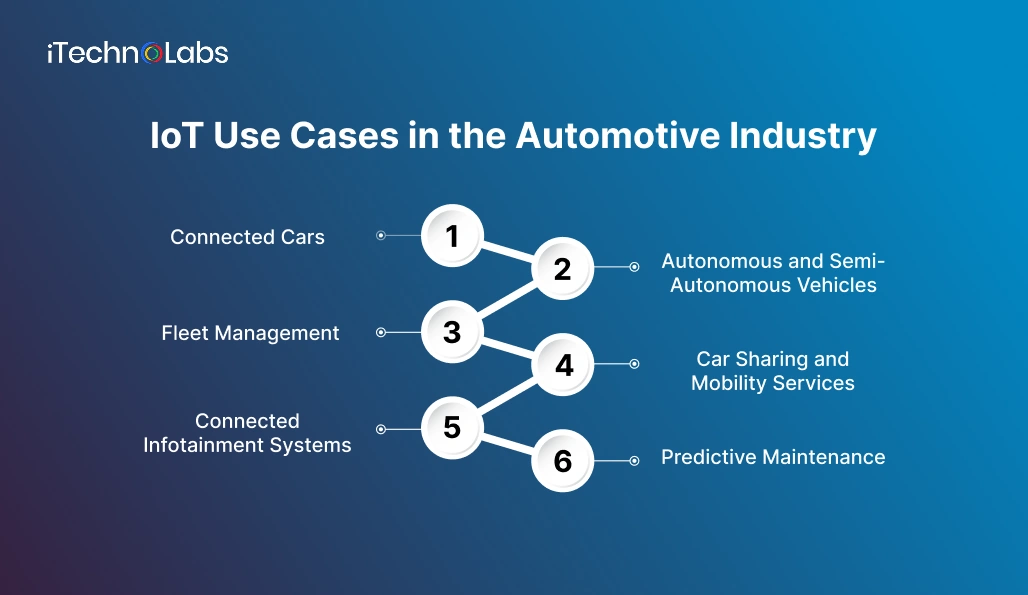
The transportation industry uses automotive IoT technology to create various practical applications that operate in the real world. The advanced technologies enable vehicle operations through their implementation in connected vehicles and fleet tracking systems and their use in maintenance forecasting and intelligent entertainment solutions. The following list presents the most important automotive IoT applications which create technological progress and operational improvements.
1. Connected Cars
The Internet of Things in the automotive industry shows its most prominent application through connected cars, which allow vehicles to interact with their environment at all times. Smart vehicles use data sharing and data receiving processes to enhance their navigation capabilities, together with their safety measures and operational efficiency. The system establishes intelligent transportation networks through its ability to maintain connections with multiple operational systems.
- Vehicle-to-Vehicle (V2V) communication for collision warnings
- Vehicle-to-Infrastructure (V2I) interaction with traffic systems
- Vehicle-to-Cloud (V2C) data sharing for diagnostics and updates
- Vehicle-to-Everything (V2X) ecosystem-wide connectivity
- Real-time traffic and route optimization
- Fuel efficiency improvements through smart routing
- Enhanced road safety through instant hazard alert
2. Autonomous and Semi-Autonomous Vehicles
Autonomous and semi-autonomous vehicles use automotive IoT technology to perceive their surroundings and make driving decisions. These vehicles use their sensors together with their advanced software systems to either support drivers or drive themselves during specific circumstances. The IoT connection allows vehicles to maintain continuous information streams which they need for safe and efficient automated driving operations.
- Cameras and radar for object detection
- LiDAR sensors for depth and distance measurement
- GPS for accurate positioning and navigation
- Real-time data processing for driving decisions
- Adaptive cruise control for speed management
- Lane-keeping assistance for safer highway driving
- Automated parking and maneuvering systems
3. Fleet Management
Automotive IoT has transformed fleet management because it enables businesses to track all aspects of their vehicle operations. Fleet operators use real-time data from their connected vehicles to enhance decision-making and optimize their logistics operations while minimizing their operational expenses. The information obtained through this method enables transportation services to operate more securely and planners to create better maintenance schedules.
- Real-time vehicle location tracking
- Route history and optimization insights
- Fuel consumption monitoring
- Driver behavior analysis for safety
- Vehicle health diagnostics
- Cargo condition monitoring for sensitive goods
- Predictive maintenance scheduling
4. Car Sharing and Mobility Services
Car-sharing platforms and mobility platforms use automotive IoT technology to provide their customers with seamless and convenient services. Through IoT technology, operators can access, monitor, and control vehicles without needing physical keys or manual tracking systems. The system’s connectivity enhances user experience while operators use it to sustain fleet system reliability and availability.
- Remote vehicle unlocking and ignition
- App-based vehicle access for users
- Real-time vehicle location tracking
- Usage data monitoring and reporting
- Automated billing based on usage
- Instant alerts for mechanical issues
- Remote diagnostics and maintenance coordination
5. Connected Infotainment Systems
Automotive IoT devices enable connected infotainment systems to create better digital experiences for drivers and passengers. The systems combine entertainment, navigation, and communication functions into a single platform. The system connects to the internet and mobile devices to deliver personalized and live information and media services to passengers throughout their journey.
- Live navigation with traffic updates
- Music and video streaming services
- Voice-controlled virtual assistants
- Smartphone integration via apps
- Weather and news updates in real time
- Hands-free calling and messaging
- Personalized user profiles and settings
6. Predictive Maintenance
The automotive IoT system provides its primary benefit through predictive maintenance, which enables vehicles to continuously monitor their operational state. The system uses sensors to monitor performance metrics while detecting operational abnormalities that lead to system breakdowns. The system helps organizations save money on repairs while reducing operational interruptions and improving driver safety through its early detection of potential problems.
- Engine performance monitoring
- Tire pressure and condition tracking
- Temperature and vibration analysis
- Fluid level and oil quality checks
- Early fault detection through data patterns
- Automated maintenance alerts for drivers
- Reduced unexpected breakdowns and repair costs
Suggested Article: AI-Powered Mobile App Development Trends 2026
Advanced Automotive IoT Applications Transforming Modern Mobility
The automotive IoT system is developing at a fast pace, which creates transportation systems that operate with improved intelligence, safety, and efficiency. From intelligent route planning and self-driving technologies to connected fleet operations and predictive vehicle care, IoT is deeply embedded in today’s automotive innovations. The connected vehicle ecosystem exists because of these essential applications.
1. Smart Route Optimization and Safety with Connected Cars
Automotive IoT–connected cars bring substantial benefits to both route optimization and road safety. These vehicles use GPS, traffic monitoring systems, and weather services to create safer, faster routes that avoid hazardous or congested areas. This reduces travel time while also lowering fuel consumption and emissions. Advanced driver assistance systems rely on cameras and sensors to detect obstacles, provide drivers with danger warnings, and automatically apply braking to help prevent collisions.
2. Autonomous and Semi-Autonomous Driving Powered by Automotive IoT
Autonomous and semi-autonomous vehicles take automotive IoT a step further by reducing reliance on human drivers. Fully self-driving cars are still in development, but semi-autonomous vehicles already assist with tasks like lane changes, adaptive cruising, and parking. Using inputs from radars, LiDAR, GPS, and onboard cameras, these vehicles analyze their surroundings and make split-second driving decisions. As these systems mature, they hold the potential to reduce accidents caused by human error and improve overall traffic flow through connected communication.
3. Connected Fleet Management and Operational Intelligence
Fleet management has been transformed by automotive IoT through real-time tracking and performance monitoring of commercial vehicles. Sensors installed in trucks collect data on location, cargo load, fuel consumption, mileage, and driver behavior. This information is processed through cloud platforms and visual dashboards, allowing fleet managers to optimize routes, monitor traffic conditions, evaluate vehicle performance, and improve overall logistics efficiency. The result is lower operational costs, improved safety, and more streamlined fleet operations.
4. Car Sharing and Mobility Services Enabled by Automotive IoT
Car sharing and mobility services rely on automotive IoT technology to deliver seamless user experiences. Connected vehicles transmit real-time data about their location, operational status, and availability to central systems. Service providers use remote monitoring to track vehicle health, identify mechanical issues such as low tire pressure, and schedule maintenance activities.
Users can access vehicles through mobile applications or smart cards, eliminating the need for physical keys. IoT systems also provide instant user feedback and emergency support, promoting safer driving behavior while enhancing overall operational safety.
5. Connected Infotainment and In-Car Digital Experiences
The automotive IoT provides its main advantage through its connected infotainment systems, which change the way people experience entertainment and communication inside vehicles. The systems enable drivers and passengers to stream music, listen to online radio, use navigation systems, receive weather information, and discover nearby locations. Drivers can make hands-free calls and send messages while using smartphone integration, which also allows them to access apps during their trip. The combination of connectivity and entertainment through automotive IoT systems creates an interactive experience which enhances travel efficiency.
6. Predictive Maintenance and Vehicle Health Monitoring
Predictive maintenance functions as the most effective use case for automotive IoT technology. The vehicle system monitors its operational conditions through sensors that measure temperature, vibration, oil pressure, and other performance metrics in real-time monitoring. Maintenance schedules depend on advanced analytics, which identify unusual patterns through pattern detection that indicate potential equipment breakdowns. The system reduces downtime while decreasing repair expenses and enhancing safety through its ability to prevent critical system failures from occurring.
Benefits of Automotive IoT
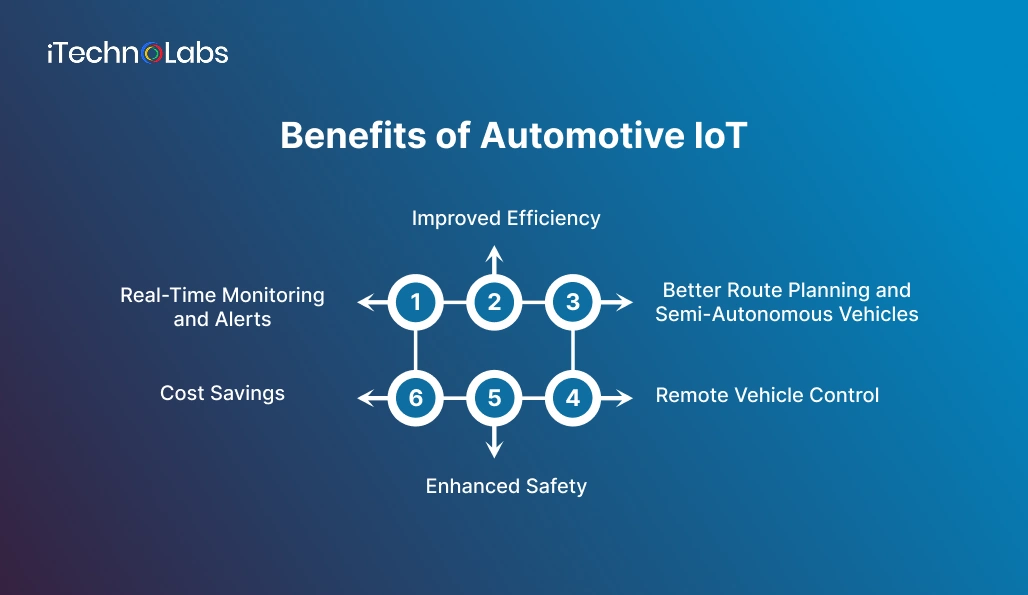
The implementation of automotive IoT technology provides drivers, car manufacturers, and business operations with important advantages. The automotive IoT system uses real-time data exchange together with advanced vehicle monitoring and improved connectivity to provide better security and operational productivity and lower maintenance expenses while delivering customized driving solutions that enable transportation industry innovation.
1. Real-Time Monitoring and Alerts
The automotive IoT technology enables vehicles to conduct ongoing assessments of their performance and their system health. The sensors monitor critical vehicle components while transmitting real-time information to either the onboard systems or the cloud platforms. The system alerts drivers immediately when it detects problems, which enables them to take preventive measures that protect their vehicles from developing major faults and enhance both safety and long-term operational efficiency.
- Continuous engine and system diagnostics
- Instant alerts for mechanical faults
- Early detection of component wear
- Monitoring of tire pressure and battery health
- Reduced risk of unexpected breakdowns
- Remote diagnostic data for service centers
Improved vehicle lifespan through timely action
2. Improved Efficiency
Automotive IoT enhances overall driving and operational efficiency by analyzing real-time and historical vehicle data. Connected systems evaluate fuel usage, driving patterns, and idle time to suggest improvements. This leads to smarter driving habits, better fuel economy, and reduced emissions, benefiting both individual drivers and fleet operators.
- Fuel consumption tracking and optimization
- Idle time monitoring and reduction
- Driving behavior analysis
- Data-driven efficiency insights
- Lower fuel expenses for drivers and fleets
- Reduced environmental impact
- Smarter performance management
3. Better Route Planning
Through automotive IoT, vehicles access live traffic, road conditions, and weather updates to plan optimal routes. Smart navigation systems adjust directions in real time to avoid congestion, accidents, or road closures. This reduces travel time, improves punctuality, and ensures smoother journeys for both personal and commercial transportation.
- Real-time traffic data integration
- Dynamic rerouting during congestion
- Weather-aware navigation adjustments
- Accident and hazard avoidance
- Shorter travel times
- Fuel savings through efficient routing
- Reduced driver stress and delays
4. Remote Vehicle Control
Through Automotive Internet of Things (IoT) technology, drivers gain remote access to their vehicles, which they control through smartphones and other connected devices. The ability to access vehicles remotely, from security features to convenience functions, provides users with a better experience while maintaining vehicle safety, especially during emergency situations and in locations they do not know.
- Remote locking and unlocking of doors
- Engine start and stop from a distance
- Vehicle location tracking
- Geofencing alerts for security
- Climate control activation before entry
- Remote status checks (fuel, battery, etc.)
- Enhanced convenience and peace of mind
5. Enhanced Safety
The main benefit of automotive IoT technology provides drivers with improved safety. The connected vehicles exchange real-time safety information, which enables them to avoid accidents while protecting their passengers. The IoT sensors enable advanced driver assistance systems to monitor their environment and detect potential dangers for immediate response.
- Collision detection and warning systems
- Blind-spot and lane departure alerts
- Automatic emergency braking
- Real-time hazard notifications
- Pedestrian and obstacle detection
- Safer driving through driver assistance
- Faster emergency response capabilities
6. Cost Savings
By improving maintenance planning and fuel efficiency, automotive IoT helps lower overall vehicle ownership and operational costs. Predictive analytics reduce expensive repairs, while smarter routing and driving behavior decrease fuel and wear-related expenses.
- Predictive maintenance reduces repair bills
- Fewer unexpected mechanical failures
- Lower fuel consumption costs
- Reduced downtime for commercial vehicles
- Optimized service scheduling
- Longer vehicle component lifespan
- Better return on investment for fleets
Challenges and Concerns in Automotive IoT Implementation
Automotive IoT offers many advantages but also presents significant challenges that require careful attention. The adoption of autonomous vehicles is hindered by cybersecurity risks, data privacy concerns, system interoperability issues, infrastructure limitations, and regulatory uncertainty. Researchers and developers must address these obstacles before automotive IoT technologies can achieve safe, reliable, and scalable deployment across industries.
- Cybersecurity Risks: Connected vehicles can be targets for hacking. Without strong security measures, attackers could gain access to sensitive data or vehicle systems.
- Interoperability Issues: Different manufacturers use different technologies and protocols, which can create compatibility issues between systems.
- Infrastructure Limitations: For full connectivity benefits, roads and cities need smart infrastructure — something that requires significant investment and time.
- Privacy Concerns: Connected vehicles generate large amounts of data about location and driving behavior. Clear policies are needed to protect user privacy.
- Legal and Liability Questions: In accidents involving connected or autonomous systems, determining responsibility between driver, manufacturer, or software provider can be complex.
- Data Ownership: Questions about who owns vehicle-generated data — drivers, automakers, or service providers — remain an ongoing debate.
Also, read: How To Create A Fleet Management System In 2026? A Complete Guide
Conclusion
Automotive IoT is transforming transportation by making vehicles more intelligent, connected, and operationally efficient. IoT technology expands vehicle capabilities through predictive maintenance, fleet optimization, autonomous driving, and connected infotainment. However, the industry must address cybersecurity, privacy, infrastructure, and regulatory challenges to reach its full potential. Once these issues are resolved, automotive IoT will help create safer roads, smarter mobility, and more sustainable transportation systems.
FAQ
1. What is automotive IoT?
Automotive IoT refers to the integration of internet-connected sensors, software, and communication technologies within vehicles. These connected systems enable cars to collect, analyze, and exchange real-time data with drivers, other vehicles, road infrastructure, and cloud platforms. Automotive IoT enhances vehicle performance, safety, predictive maintenance, navigation, and overall driving experiences while supporting the development of smarter transportation ecosystems.
2. How does automotive IoT improve safety?
Automotive IoT improves road safety by enabling vehicles to continuously monitor their surroundings and communicate with nearby vehicles, infrastructure, and cloud-based systems. Connected technologies can detect potential hazards, monitor driver behavior, and provide real-time alerts to prevent accidents. Features such as collision avoidance, emergency braking, lane-keeping assistance, and traffic warnings help drivers make safer decisions and reduce the risk of road incidents.
3. What are the benefits of automotive IoT?
Automotive IoT offers numerous advantages, including enhanced vehicle safety, predictive maintenance, real-time vehicle tracking, improved fuel efficiency, and a more personalized driving experience. It also enables better fleet management, reduces operational costs, and supports smarter transportation systems. By leveraging real-time data and connectivity, automotive IoT helps manufacturers, businesses, and drivers improve vehicle performance, reliability, and overall mobility.
4. How does automotive IoT support predictive maintenance?
Automotive IoT supports predictive maintenance by using connected sensors to continuously monitor the condition of critical vehicle components such as engines, batteries, brakes, and tires. The collected data is analyzed to identify potential issues before they become major problems. This allows vehicle owners and fleet operators to schedule maintenance proactively, reduce unexpected breakdowns, extend vehicle lifespan, and minimize repair costs.
5. What is the future of automotive IoT?
The future of automotive IoT is closely linked to advancements in connected mobility, autonomous driving, artificial intelligence, and smart city infrastructure. As vehicles become more intelligent and interconnected, automotive IoT will enable real-time vehicle-to-everything (V2X) communication, advanced driver assistance systems, and optimized traffic management. These innovations will contribute to safer roads, improved transportation efficiency, and a more sustainable mobility ecosystem.