The worldwide marketplace economy is flourishing in 2026. From the e-commerce marketplaces and service platforms to the rental and peer-to-peer marketplaces, various organizations are increasingly turning to online marketplace solutions for facilitating business interactions between buyers and sellers in a unified digital framework.
From a revenue-generation perspective, the leading marketplace businesses, such as Amazon, Etsy, Airbnb, and Upwork, stand as proof that there’s enormous profit to be made in this business model. Therefore, both startups and established businesses are now examining marketplace website development so as to set up scalable digital platforms that generate continuous revenue streams via commissions, subscriptions, listing fees, or advertisements.
One question, though, that every aspiring entrepreneur faces when considering developing a marketplace:
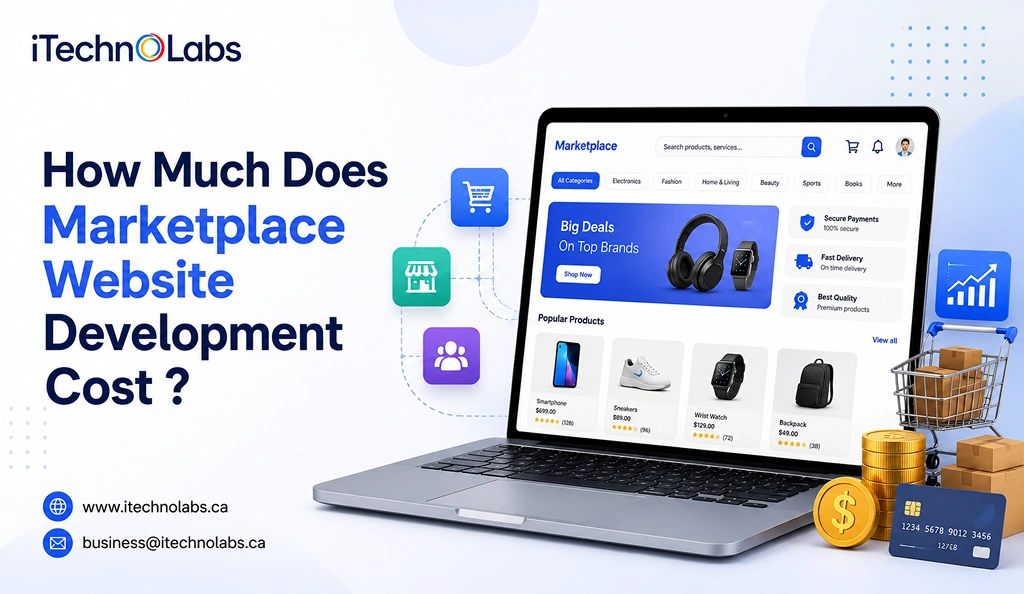
“What is the cost of marketplace website development in 2026?”
The cost can vary dramatically depending on the complexity of the platform, the business model, the technology stack to be used, the custom requirements of the business, and the potential for scalability of the system. Thus, while a simple marketplace MVP can cost as little as thousands of dollars, building an enterprise-level, thoroughly customized solution can cost as much as hundreds of thousands of dollars.
This guide examines the cost of marketplace development in detail, from what to consider to pricing factors, development models, and other hidden costs, and how to increase the ROI.
TL;DR
- Marketplace development prices start at $5,000 and run as high as $500,000.
- Development takes place over 2-18 months.
- Price is based on features, design, integrations, and scalability.
- Custom marketplaces may be more flexible with future expansion and scalability in mind.
- The ongoing costs are hosting, maintenance, security, and marketing.
Key Points
- The cost of a marketplace website depends on the complexity of the platform, custom features, third-party integrations, the type of development approach, scaling needed, etc.
- To reduce initial investment, an MVP can be launched to test your business ideas and gather user feedback.
- The advantages of custom marketplace development lie in its great flexibility, performance, security, and the ability to scale up with your business in the long run.
- The development of mobile applications can enhance the user experience, retention rate, and customer loyalty, and eventually grow your marketplace.
- Keep in mind the additional costs that will be incurred on a regular basis, which include website maintenance, server hosting, compliance with security standards, software updates, and marketing.
Table of Contents
- Understanding Marketplace Website Development
- Marketplace Website Development Cost Breakdown in 2026
- Marketplace Website Development Cost Breakdown by Development Stage
- Major Factors Affecting Marketplace Website Development Costs
- Technology Stack and Development Costs
- Marketplace Mobile App Development Costs
- Third-Party Integrations and Their Impact on Costs
- Hidden Costs of Marketplace Website Development
- Marketplace Development Timeline
- Future Trends Shaping Marketplace Website Development
- Why Choose iTechnolabs for Marketplace Website Development?
- Conclusion
- FAQs
Understanding Marketplace Website Development
A marketplace website is a platform where many sellers, vendors, or service providers and consumers are put together online. Unlike the business selling many products and/or services under the same brand name, on a marketplace site, numerous individual sellers would put up and advertise their products and/or services, and let the owner be the intermediary to maintain a unified customer experience.
Marketplace platforms act as intermediaries between the buyer and the seller, providing features such as vendor registration, product and/or service listing, payment gateway, order management, customer reviews, and commission management.
Some of the most successful marketplace platforms include:
- Amazon – A product-based marketplace that provides a platform where millions of buyers and sellers come together to do transactions.
- Etsy – A marketplace for handcrafted, vintage, and unique products.
- Airbnb – A marketplace where hosts offer rooms or whole houses for travelers.
- Upwork – A platform that helps companies in outsourcing freelancers from various industries.
- Fiverr – A marketplace where freelance services are being offered.
- Uber – A ride-hailing app that connects drivers and passengers.
Marketplace platforms tend to be more complex than conventional eCommerce websites, as they have to cater to numerous roles (e.g., vendors and buyers), handle an enormous amount of transactions, and offer real-time, seamless communication between buyers and sellers. Development cost and complexity increase due to vendors’ backends, commission management, sophisticated search functionality, instant notifications, integration of payment gateway, administration features, etc.
Marketplace Website Development Cost Breakdown in 2026
It’s challenging to provide exact figures since marketplace website development costs in 2026 may differ on various points of your website development, such as platform types, features, custom design needs, third-party integrations, and scalability requirements. Whether you’re launching your start-up marketplace or an enterprise-level one, estimating project costs can assist you in budgeting the expenses better.
Here’s a general breakdown of marketplace website development costs:
| Marketplace Type | Estimated Development Cost |
| Marketplace MVP | $5,000 – $20,000 |
| Small Business Marketplace | $20,000 – $60,000 |
| Mid-Sized Marketplace | $60,000 – $150,000 |
| Enterprise Marketplace | $150,000 – $500,000+ |
| Large-Scale Marketplace Ecosystem | $500,000 – $1 Million+ |
1. Marketplace MVP ($5,000 – $20,000)
MVP (Minimum Viable Product), a product, sufficient to check your marketplace concept, that is the system having the minimum set of functionality (user and seller registration, adding products, getting money, and some backend functions).
2. Small Business Marketplace ($20,000 – $60,000)
Basically, the level contained many additional features, corporate identities, easier navigation, advanced searching functionality, comment/review features, and different ways to pay. These were most appropriate for businesses that were rapidly growing.
3. Mid-Sized Marketplace ($60,000 – $150,000)
For mid-level marketplaces, there is a need for a custom workflow and for the marketplace to be responsive for mobile, for an analytics dashboard, tools for managing vendors, auto payment of commissions, and for integration of third parties to facilitate this growth.
4. Enterprise Marketplace ($150,000 – $500,000+)
Enterprise platforms can handle large volumes of traffic and have intricate functionalities. Security features, AI recommendations, support for multiple languages and currencies, integrations with various systems, and scalability of cloud infrastructure are some of the key elements.
5. Large-Scale Marketplace Ecosystem ($500,000 – $1 Million+)
These platforms have to be worldwide. They must feature highly specialized architectures, stream processing, complex analytics, machine learning, and the high capacity of processing to serve millions of users and transactions.
Marketplace Website Development Cost Breakdown by Development Stage
When you decide to make a marketplace website, it’s crucial that you are fully aware of how the money will be spent at each stage of the development of your platform. Every step in the development chain is deeply influential in creating a solid, secure, and scalable e-commerce platform that can be the basis of your business for many years.
The table below provides a general overview of how development costs are typically allocated:
| Development Stage | Budget Share | Estimated Cost Range |
| Business Analysis & Planning | 5% – 10% | $2,500 – $20,000+ |
| UI/UX Design | 10% – 20% | $5,000 – $40,000+ |
| Frontend Development | 20% – 30% | $10,000 – $75,000+ |
| Backend Development | 25% – 35% | $15,000 – $120,000+ |
| Third-Party Integrations | 10% – 15% | $5,000 – $30,000+ |
| Testing & Quality Assurance | 10% – 15% | $5,000 – $25,000+ |
| Deployment & Launch | 5% – 10% | $2,500 – $15,000+ |
1. Business Analysis & Planning (5% – 10%)
Estimated Cost: $2,500 – $20,000+
A successful marketplace starts with careful planning and a clear strategy. During this phase, business analysts and development teams define project requirements, identify target users, outline key features, and determine the technical framework. Thorough planning helps reduce potential risks, avoid expensive revisions, and ensure the marketplace aligns with the company’s long-term goals and vision.
2. UI/UX Design (10% – 20%)
Estimated Cost: $5,000 – $40,000+
User experience is often one of the most important factors that determine the success of a marketplace platform. This stage focuses on creating an intuitive and engaging experience through wireframing, user journey mapping, interactive prototyping, responsive design, and brand-focused visual elements. A well-designed marketplace makes it easier for buyers and sellers to navigate the platform, leading to higher user engagement, improved conversion rates, and stronger long-term customer retention.
3. Frontend Development (20% – 30%)
Estimated Cost: $10,000 – $75,000+
Frontend development focuses on building the user-facing components of a marketplace platform. This includes creating intuitive vendor dashboards, product and service listing pages, advanced search and filtering features, seamless checkout processes, and responsive interfaces that deliver a consistent experience across desktops, tablets, and mobile devices. A well-developed frontend enhances usability, improves customer satisfaction, and encourages users to engage with the platform more effectively.
4. Backend Development (25% – 35%)
Estimated Cost: $15,000 – $120,000+
The backend forms the backbone of the marketplace. It is the part that takes care of user sign-in, organizing the database, handling from payment to delivery, calculating commissions, sending messages, and maintaining the entire platform. As backend systems are responsible for operating the main components of the marketplace, this stage usually represents the biggest fraction of the budget.
5. Third-Party Integrations (10% – 15%)
Estimated Cost: $5,000 – $30,000+
Today’s e-marketplaces depend on several third-party services to improve their functionalities. Among the usual integrations are payment gateways, shipping platforms, CRM systems, analytics applications, marketing automation software, and cloud storage solutions. Opening up for more integrations and their complexity would increase the total costs of the development.
6. Testing & Quality Assurance (10% – 15%)
Estimated Cost: $5,000 – $25,000+
Before launch, the platform undergoes extensive testing to ensure performance, security, usability, and reliability. Quality assurance teams identify bugs, test workflows, verify integrations, and ensure the marketplace delivers a smooth experience for vendors, buyers, and administrators.
7. Deployment & Launch (5% – 10%)
Estimated Cost: $2,500 – $15,000+
The last step is setting up the servers, pushing the app live on production, adding security features, keeping an eye on the performance, and giving support right after the launch. The right way of rolling out a product ensures a smooth launch and quite a bit reduces the number of changes required after the platform goes live.
Major Factors Affecting Marketplace Website Development Costs
The cost of marketplace website development in 2026 is influenced by several factors, including the marketplace type, feature complexity, design requirements, and development approach. While a basic marketplace can be developed on a modest budget, advanced platforms with custom functionality, seamless user experiences, and enterprise-level scalability require a significantly larger investment. Understanding these factors can help businesses estimate costs more accurately and prioritize features that deliver the highest return on investment.
1. Marketplace Type
What kind of marketplace you’re going to develop is probably the largest factor in determining how much it will cost you. That is because various types of market models need different users, work processes, transactions, and site features, etc., all of which define the complexity of the project.
Common marketplace types include:
- B2C Marketplaces – Platforms where businesses sell directly to consumers, such as Amazon and Walmart Marketplace.
- B2B Marketplaces – Platforms that facilitate transactions between businesses, such as Alibaba.
- C2C Marketplaces – Platforms where consumers buy and sell directly with each other, such as eBay.
- Service Marketplaces – Platforms that connect service providers with customers, such as Upwork and Fiverr.
Each marketplace model requires different features and technical capabilities. For example, a B2B marketplace may need bulk ordering, custom pricing, and quote management systems, while a service marketplace may require booking functionality, project management tools, and milestone-based payments. As the complexity of the marketplace increases, so do the development costs.
Estimated Cost Impact: $20,000 – $500,000+
2. Marketplace Features and Functionality
Features are often the largest contributor to marketplace development costs. The number of features, their complexity, and the level of customization required can significantly influence the overall project budget.
Essential Marketplace Features
Every marketplace platform typically requires a set of core functionalities, including:
- User registration and authentication
- Vendor onboarding and management
- Product or service listings
- Shopping cart and checkout functionality
- Payment gateway integration
- Search and filtering options
- Ratings and reviews
- Order management
- Admin dashboard
Advanced Marketplace Features
To improve user experience and gain a competitive edge, many businesses choose to implement advanced features such as:
- AI-powered recommendations
- Personalized user experiences
- Real-time chat and messaging
- Dynamic pricing systems
- Subscription and membership plans
- Loyalty and rewards programs
- Multi-language support
- Multi-currency support
- Vendor analytics dashboards
- Advanced reporting and business intelligence tools
While these features can significantly enhance platform performance and user engagement, they also increase development time and costs.
Estimated Cost Impact: $10,000 – $200,000+
3. UI/UX Design Requirements
The cost of a custom-designed interface is typically higher than a template-based interface. However, it is more likely to have higher user engagement, better conversion rates, and increased brand recognition.
A professional UI/UX design process typically includes:
- User research and competitor analysis
- Wireframing and user flow creation
- Interactive prototyping
- Responsive design for mobile and desktop devices
- Accessibility optimization
- Brand identity and visual design development
Bespoke interfaces are normally more expensive than templated ones, but they are often associated with increased user satisfaction, higher conversion rates, and more brand awareness.
Estimated Cost Impact: $5,000 – $50,000+
4. Development Approach
The type of development methodology you select will have a great influence on the initial and ongoing costs. Businesses generally have a choice between the use of marketplace builders, open-source software, or custom development.
Marketplace Builders (SaaS Solutions)
Marketplace builders offer pre-built functionality and allow businesses to launch quickly with minimal investment.
Benefits:
- Faster deployment
- Lower initial costs
- Easy setup and maintenance
Limitations:
- Limited customization
- Ongoing subscription fees
- Scalability constraints
Estimated Cost: $50 – $500 per month
Open-Source Marketplace Solutions
Open-source platforms provide greater flexibility while maintaining relatively affordable development costs.
Benefits:
- Cost-effective
- Flexible customization options
- Faster implementation compared to custom builds
Limitations:
- Ongoing maintenance requirements
- Plugin dependency issues
- Additional security management
Estimated Cost: $10,000 – $50,000+
Fully Custom Marketplace Development
Custom marketplace development offers complete control over design, functionality, integrations, and scalability.
Benefits:
- Unlimited customization
- Better performance and security
- Full ownership of the platform
- Superior scalability for future growth
Limitations:
- Higher upfront investment
- Longer development timelines
- Increased maintenance responsibilities
Estimated Cost: $50,000 – $500,000+
5. Third-Party Integrations
Most modern marketplaces rely on third-party integrations to provide essential functionality and improve operational efficiency. The number and complexity of integrations can significantly affect development costs.
Common integrations include:
- Payment gateways (Stripe, PayPal, Razorpay)
- Shipping and logistics providers
- CRM systems
- Marketing automation platforms
- Analytics and reporting tools
- Cloud storage services
- Communication and messaging APIs
The more integrations required, the more development, testing, and maintenance effort is needed.
Estimated Cost Impact: $5,000 – $30,000+
6. Scalability and Performance Requirements
If your marketplace is expected to handle thousands of users, vendors, and transactions, you’ll need a scalable architecture capable of supporting future growth.
Scalability considerations include:
- Cloud infrastructure
- Load balancing
- Database optimization
- Performance monitoring
- Security enhancements
- Content delivery networks (CDNs)
Although scalable systems require a higher initial investment, they help prevent costly platform rebuilds as your business grows.
Estimated Cost Impact: $10,000 – $100,000+
7. Security and Compliance Requirements
Security is particularly important for marketplaces that process payments and store sensitive user data. Compliance requirements vary based on industry and geographical location.
Common security measures include:
- SSL encryption
- Secure payment processing
- Multi-factor authentication
- Fraud detection systems
- PCI DSS compliance
- GDPR and data privacy compliance
- Regular security audits
Investing in security helps protect user data, build trust, and reduce the risk of costly cyber incidents.
Estimated Cost Impact: $5,000 – $50,000+
Technology Stack and Development Costs
When selecting technology stacks for a marketplace website, it becomes a great part in defining its development cost, scalability, performance, and maintenance. Even if modern technology requires more initial investment, security benefits, high performance, integrations, and scalability will lead to a reduction of operating costs, and a business will be able to fulfill its further goals more efficiently.
1. Frontend Technologies
- React.js
- Angular
- Vue.js
- Next.js
2. Backend Technologies
- Node.js
- Laravel
- Django
- ASP.NET
3. Database Solutions
- PostgreSQL
- MySQL
- MongoDB
4. Cloud Infrastructure
- AWS
- Microsoft Azure
- Google Cloud Platform
Enterprise-grade technologies may increase development costs initially, but often reduce long-term maintenance expenses.
Marketplace Mobile App Development Costs
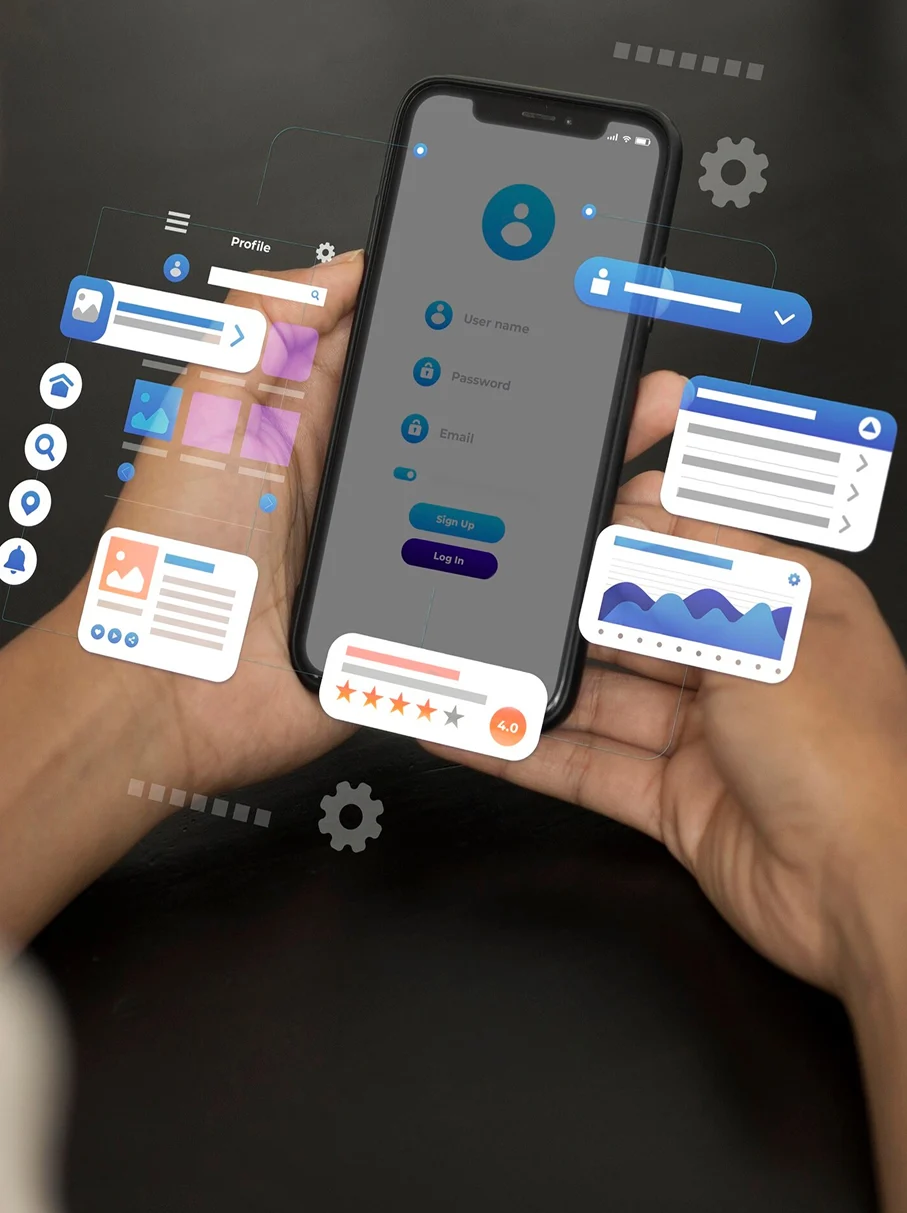
With the increase in mobile commerce, many businesses in the marketplace invest in developing a mobile application to enhance user engagement, conversion rates, and shopping experience. The price of marketplace app development is determined by platform, features, integrations, and customizations.
| App Type | Estimated Development Cost |
| Single Platform App (iOS or Android) | $20,000 – $60,000 |
| Cross-Platform App | $30,000 – $100,000 |
| Enterprise Mobile Marketplace App | $100,000 – $300,000+ |
1. Single Platform App (iOS or Android)
Building an app for just one platform is generally the most affordable approach for small companies and startups. Although this option ensures a native look and feel and better performance, it will narrow down your target users (to only iOS or Android users).
2. Cross-Platform App
With cross-platform development, a single app can be developed and utilized on both the Android and iOS platforms. Frameworks such as Flutter and React Native are used to speed up the process, reduce the expenses, and maintain ease of support with a standard user interface.
3. Enterprise Mobile Marketplace App
Applications for business marketplaces that aim at large audiences and multiple transactions tend to possess superior functionality—machine learning recommendations, instant messaging features, multi-vendor services, sophisticated analytics, loyalty programs, augmented security, etc. That is the reason of a much higher cost.
For businesses looking to maximize reach while controlling costs, cross-platform development is often the preferred choice, offering a balance between affordability, performance, and scalability.
Third-Party Integrations and Their Impact on Costs
Current marketplace solutions rely on third-party integrations to automate business tasks, facilitate, and enhance user interaction. Such integrations could be payment gateways, shipping companies, CRM’s, marketing automation, analytics platforms, cloud services, and communication APIs, among others. The number and difficulty of third-party integrations increase the development time, testing time, and maintenance costs.
1. Payment Gateways
- Stripe
- PayPal
- Razorpay
- Authorize.net
2. Shipping Providers
- FedEx
- UPS
- DHL
3. CRM Systems
- Salesforce
- HubSpot
4. Marketing Tools
- Mailchimp
- Klaviyo
5. Analytics Platforms
- Google Analytics
- Mixpanel
Each integration increases development effort and testing requirements.
Suggested Article: How To Hire An Affordable Website Development Company?
Hidden Costs of Marketplace Website Development
Several enterprises concentrate their analysis only on the startup budget and the ongoing cost involved in operating, maintaining, and scaling a profitable marketplace platform, which may often get neglected, and which may considerably increase the total cost of ownership.
1. Hosting and Infrastructure
A marketplace website requires reliable hosting and cloud infrastructure to ensure optimal performance, security, and scalability. As user traffic, transactions, and data storage needs grow, infrastructure costs increase accordingly.
Estimated Costs:
- Startup Marketplace: $50 – $500/month
- Growing Marketplace: $500 – $2,000/month
- Enterprise Marketplace: $5,000+/month
Infrastructure expenses may include cloud hosting, databases, content delivery networks (CDNs), load balancing, and backup services.
2. Maintenance and Support
Launching a marketplace is only the beginning. Regular maintenance is essential to keep the platform secure, functional, and up to date.
Estimated Annual Cost: 15%–25% of the original development budget
Maintenance typically includes:
- Bug fixes and troubleshooting
- Security patches and updates
- Performance optimization
- Server monitoring
- Platform upgrades
- Feature enhancements
- Technical support
Without ongoing maintenance, marketplaces risk security vulnerabilities, downtime, and poor user experiences.
3. Security and Compliance
Since marketplaces handle sensitive customer information and online transactions, security should be a top priority. Compliance requirements can also vary depending on the industry and target regions.
Common Security Expenses Include:
- SSL certificates
- PCI DSS compliance
- GDPR compliance
- Data encryption solutions
- Fraud detection systems
- Security audits and penetration testing
- Multi-factor authentication
Estimated Cost: $1,000 – $20,000+ annually
Investing in security helps protect user data, maintain trust, and avoid costly legal or regulatory issues.
4. Marketing and User Acquisition
In order to create a successful marketplace, it is important to keep buyers and sellers interested in your platform. After a while, a developed market must be continuously marketed in order to build a stable user base and the necessary amount of traffic.
Common Marketing Expenses Include:
- Search Engine Optimization (SEO)
- Pay-Per-Click (PPC) advertising
- Social media marketing
- Influencer partnerships
- Content marketing
- Email marketing campaigns
- Referral and affiliate programs
Estimated Cost: $1,000 – $50,000+ per month, depending on competition and growth goals.
Because marketplaces must grow two audiences simultaneously—vendors and customers—marketing often becomes one of the largest long-term investments after development.
Marketplace Development Timeline
A timeline to develop a marketplace website can be quite wide-ranging, and it is influenced by the complexity of the platform, bespoke features, integration with third-party solutions, specific design demands, and scope. Simple MVP versions may be launched in a couple of months, while enterprise-level marketplaces may need more than a year in development, testing, and refinement.
| Project Type | Estimated Development Time |
| MVP Marketplace | 2–4 Months |
| Small Marketplace | 4–6 Months |
| Mid-Level Marketplace | 6–9 Months |
| Enterprise Marketplace | 9–18 Months |
Future Trends Shaping Marketplace Website Development
As technological advances keep pushing the frontier, marketplace platforms are the first to adopt new methods not only to enrich customer interaction but also to boost operational capacity and help businesses’ overall development. These 5 prominent trends stand as the potential game changers for marketplace evolution in 2026 and later on:
1. AI-Powered Personalization
Marketplaces are now able to offer each shopper a uniquely tailored experience by understanding their preferences based on behavior and purchase history with the help of Artificial Intelligence. The use of AI-powered product suggestions, enhanced search result presentation, and targeted ads, etc., can definitely help to increase customer engagement and lead to more sales.
2. Mobile-First Marketplace Experiences
As more people are shopping on their phones, mobile-first designs have become a major priority. Responsive web design, progressive web apps (PWAs), and cross-platform mobile apps all provide an optimal user experience no matter what device they are browsing on, and can increase customer retention.
3. Real-Time Communication Features
Today, contemporary marketplaces are equipped with the capabilities of real-time messaging, live chat, and instant notifications. These functionalities have fostered communication between buyers and sellers, facilitated better decision-making, and improved the overall satisfaction of users.
4. Multi-Currency and Multi-Language Support
Global marketplaces need to have the capability to handle multiple currencies and languages. This enables firms to tap into a global marketplace and serve clients internationally, providing them with relevant services and more potential for cross-border selling.
5. Advanced Security and Fraud Prevention
A critical component of marketplace platforms remains cybersecurity. In the coming marketplace environments, they will most likely make use of multi-factor authentication, AI-driven fraud detection, data encryption, and compliance measures in order to ensure the security of user data, as well as the trust of users.
With the integration of these future-proof trends, firms may establish user-friendly marketplace platforms for better scalability and long-term competitive advantages.
Why Choose iTechnolabs for Marketplace Website Development?
A successful marketplace requires not just expertisedevelopment but but also a strategic partner who understands the objectives of your business, your customers, and how you intend to scale up. iTechnolabs is your ideal partner when it comes to building secure, scalable, and high-performance marketplace platforms that help you unite buyers and sellers while offering them a seamless user experience.
Whether you wish to create a B2B marketplace, multi-vendor eCommerce platform, service marketplace, or rental marketplace, we utilize the latest technologies and industry standards to build solutions based on your business-specific needs.
Our Marketplace Development Expertise
We offer end-to-end marketplace development services, including:
- Multi-vendor marketplace development
- B2B marketplace solutions
- B2C marketplace platforms
- Service marketplace development
- Rental and booking marketplace applications
- Custom mobile marketplace apps
- AI-powered recommendation systems
- Cloud-native marketplace architecture
- Secure payment gateway integrations
- Marketplace maintenance and support services
Our development team follows an agile methodology to ensure faster project delivery, continuous collaboration, and the flexibility to adapt to evolving business needs.
What Sets iTechnolabs Apart?
1. Experienced Marketplace Development Team
The experienced team of developers, designers, and business analysts has vast experience in creating marketplace platforms for different industries and the expertise required to deliver on time and with the highest standards.
2. Customized Solutions for Every Business
We believe in “no one size fits all” solutions. The marketplaces we develop are fully custom and tailored to fit your business model, users’ needs, and future goals.
3. Transparent Pricing and Development Process
We’re transparent about every part of the project, from realistic timeframes and progress updates to guaranteed costs with no surprise expenses.
4. Modern and Scalable Technology Stack
Our team is building next-generation marketplace platforms leveraging cutting-edge technologies and frameworks to ensure you get ultimate performance, security, and scalability for your application.
5. Dedicated Project Management
Every project is assigned a dedicated project manager who ensures smooth communication, efficient coordination, and timely delivery from concept to launch.
6. Long-Term Support and Maintenance
Our commitment doesn’t end after deployment. We provide ongoing maintenance, security updates, performance optimization, and technical support to help your marketplace grow successfully.
7. Partner with iTechnolabs
From the first consult and strategizing all through to the final build and post-launch maintenance, iTechnolabs acts as your partner and provider throughout the marketplace development journey. Through our keen eye on innovation, quality, and client satisfaction, we help businesses launch robust marketplaces to encourage interaction, revenue, and lasting triumph.
Also, read: Cost to Develop a Marketplace App like Craigslist
Conclusion
When looking at the cost to develop a marketplace website in 2026, the final figures can range drastically from just over $5,000 for an MVP (minimum viable product), and the top-tier enterprise marketplace ecosystems can go north of $1 million. The range will fluctuate significantly depending on such factors as the type of platform, the number of custom features added, the difficulty and intricacy of the UI/UX, integrations and additions, the development of the native mobile app, and the scalability of the platform.
Companies that plan their marketplace roadmap effectively, focus on features that will contribute most to ROI, and choose an experienced development team to assist will find that they can enhance their ROI and decrease risks to a far greater extent. Whether starting a niche marketplace start-up or the next revolutionary business across the industries that requires an entire marketplace ecosystem, careful planning of technological resources is essential.
FAQs
1. How much does it cost to build a marketplace website in 2026?
A marketplace website development may range from $5000 to $500000+, depending upon the sophistication of the website, functionality, third-party integration, features, the design of the website, scalability, and scope.
2. How long does it take to develop a marketplace platform?
Development timelines differ depending on how ambitious your project is. An MVP of a straightforward marketplace, for instance, will take about 2-4 months to build, while a fully tailored enterprise marketplace can take between 9-18 months to develop, test, and deploy.
3. What features are essential for a marketplace website?
The primary functionalities for the marketplace would include vendor sign-up, product/service listing, secure payment processing, search/filtering functionality, order management, customer reviews, customer profile page, and a master admin interface.
4. Is custom marketplace development better than ready-made solutions?
There is more extensibility, scalability, security, and branding with custom marketplace development. This is better suited for companies that need a one-of-a-kind functionality and sustainable growth rather than being limited by a ready-made marketplace.
5. What are the ongoing costs of running a marketplace website?
The main ongoing expenses tend to include hosting, maintenance, security patches, third-party integrations, support, new features/development, and marketing costs (required to attract buyers and sellers).