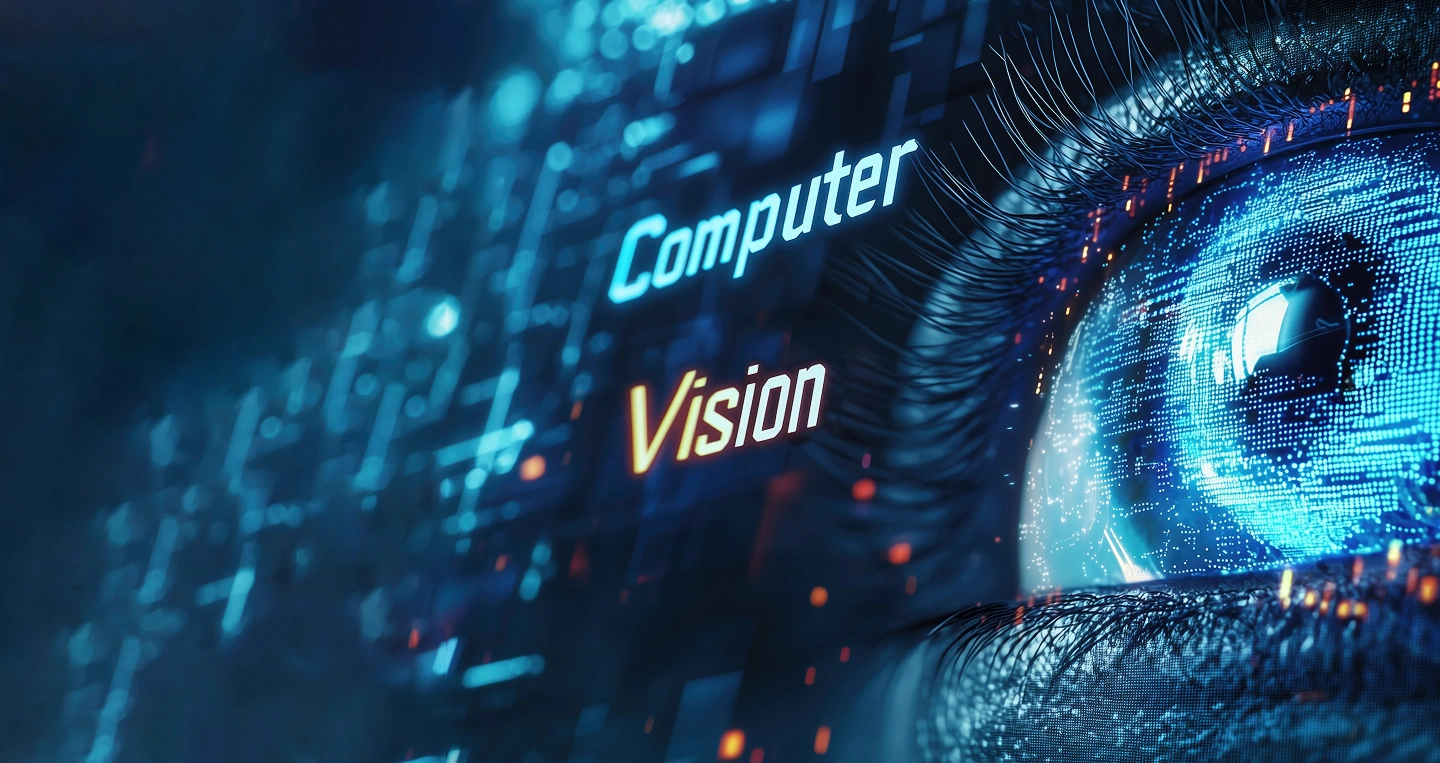
Computer Vision That Checks Quality Faster for Better Business Outcomes
Our computer vision systems read images and video from your cameras and lines, then flag defects, track stock and feed clean data into your existing systems.
- Protect visual data with enterprise security and strict confidentiality agreements.
- Develop custom computer vision solutions for your business needs.
- Build scalable visual intelligence platforms for long-term growth.
- Deploy cross-platform computer vision applications with faster development.
- Partner with expert computer vision developers focused on business results.

Computer vision experts
Custom CV solutions delivered

Years of industry experience
Businesses transformed with AI
Computer Vision Development Services From Data to Deployment
Our computer vision development services enable businesses to build AI-powered visual applications for image analysis, object recognition, video intelligence, and automated inspection.
Computer Vision Consulting Services
Custom Computer Vision Application Development
Computer Vision Integration Solutions
Computer Vision Model Optimization
Image Data Annotation and Processing
Computer Vision Consulting Services
Our specialists assess your business requirements and identify where computer vision can create the greatest impact. We define implementation strategies, recommend suitable technologies, and create a practical roadmap that helps you adopt visual AI solutions with confidence while supporting long-term business growth.
Custom Computer Vision Application Development
We develop custom computer vision applications tailored to your operational needs. From image classification and facial recognition to defect detection and video analytics, our solutions automate visual tasks, improve productivity, and deliver reliable insights from complex image and video data.
Computer Vision Integration Solutions
Our team integrates computer vision capabilities into your existing digital ecosystem without disrupting daily operations. We connect AI-powered visual systems with enterprise software, cloud platforms, IoT devices, cameras, and business applications to ensure efficient performance and smooth data exchange.
Computer Vision Model Optimization
We improve the accuracy, efficiency, and scalability of computer vision models through continuous optimization. Our experts fine-tune algorithms, enhance inference speed, reduce processing costs, and optimize models to deliver consistent results across production environments and evolving business scenarios.
Image Data Annotation and Processing
We prepare high-quality image and video datasets for successful computer vision model training. Our team manages data collection, annotation, labeling, validation, and preprocessing to improve model performance, increase prediction accuracy, and support dependable visual intelligence applications.
Computer Vision Capabilities We Build For You
We build vision systems that read images, track objects, check documents and work in real conditions, from factory floors to retail shelves.
Real-Time Video Analytics
Systems that watch live camera feeds, spot patterns and flag events as they happen, from safety risks on site to bottlenecks on a production line.
Object Detection and Tracking
Models that identify, count and follow products, vehicles or parts across frames, built for manufacturing, logistics and retail operations.
Facial Analysis and Identity Verification
Face matching for secure sign-in, identity checks and access control, with consent and data handling planned in from the first sprint.
Document Vision and OCR
Turn invoices, forms and handwritten records into searchable data, cutting manual entry and catching errors before they reach your systems.
Scene Understanding
Models that read whole environments, including how people, objects and spaces relate, for robotics, surveillance and location-aware apps.
Image Enhancement
Clean up blurry, dark or noisy images before analysis, so your vision models stay accurate in poor lighting and difficult conditions.
Start With One Thing Your Cameras Should Catch
Tell us what your team checks by eye today. Our computer vision engineers will assess your images and video, recommend the right approach and scope a pilot that proves accuracy on your real data before a full build.
Book a Computer Vision Pilot Review
Share what you need to detect, count or inspect. We’ll reply within 24 hours.
The Technology Behind Our Computer Vision Systems
We pick models, frameworks and infrastructure to match your accuracy targets, speed needs and where the system has to run.
Vision Models
YOLO, Faster R-CNN, Vision Transformers and segmentation models, chosen for each task, whether that’s detection, classification or pixel-level inspection.
ML Frameworks
PyTorch, TensorFlow, Keras and OpenCV for training, tuning and running models, plus scikit-learn for supporting analytics.
Model Training and Tuning
Transfer learning, data augmentation and fine-tuning on your own images, so models reach target accuracy with less labelled data.
Data Engineering
Pipelines for collecting, labelling and versioning large image and video datasets, using tools like Label Studio, DVC and Apache Airflow.
Cloud Infrastructure
AWS, Azure and Google Cloud for training at scale and serving models, with Docker and Kubernetes for reliable deployment.
Edge AI
Models optimized with TensorRT and ONNX to run on cameras and devices like NVIDIA Jetson, for real-time results without cloud delays.
AR and VR Integration
Computer vision combined with augmented and virtual reality for product visualization, remote assistance and workforce training.
Vision-Language Models
Models such as GPT-4o and Claude read images and text together, powering visual search, document understanding and image-based assistants.
Choose iTechnolabs for Vision Systems That Reach Production
Our computer vision work is backed by audited processes, an in-house engineering team and a track record of shipping software that runs in real operations.
ISO-Certified Security
Your images and video are handled under ISO 27001:2013 information security and ISO 9001:2015 quality processes, with access controls and data masking built into every project.
Engineers Who Ship to Production
Our vision engineers have trained and deployed models on real camera feeds, documents and product images, not just demo datasets. They’re part of a 300+ developer in-house team.
Built Around Your Operations
Each system is trained on your own visual data and connected to the ERP, inventory or quality systems you already run, so results land where your team works.
Built to Handle Growth
We plan for more cameras, sites and image volume from the first sprint, choosing edge, cloud or hybrid deployment based on speed and cost.
Bring Computer Vision Into Industry-Specific Operations
We train vision models on the images, video and documents your industry already produces, so inspection, tracking and verification run faster and with fewer errors.

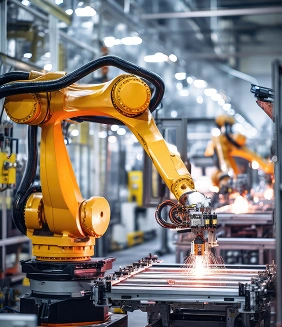
Manufacturing
Automated inspection that spots defects on the line and tracks quality across every shift.


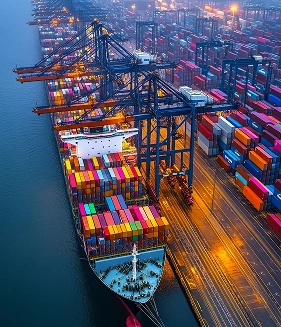
Logistics and Warehousing
Package tracking, dock monitoring and inventory counts that run without manual scanning.
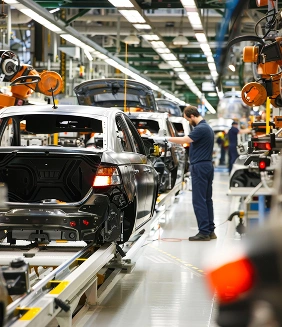

Media and Social Platforms
Visual AI powers content moderation, image categorization, and intelligent search capabilities.

Travel and Aviation
Passenger verification, baggage handling and aircraft inspection support for airports and airlines.

Banking and Financial Services
Document verification, ID checks and fraud signals from images, built for audit and compliance.

Move From Manual Checks to Automated Inspection
Whether you need one inspection station or vision across every site, our engineers scope the model, the hardware and the integrations, then deliver in phases so each stage proves accuracy before the next one starts.
Start Your Computer Vision Project
Tell us your use case and sites. A computer vision engineer will reply within 24 hours.
The Technology Stack Behind Our Vision Systems
We pick frameworks, models and infrastructure to match your accuracy targets, speed needs and whether the system runs on cameras, in the cloud or both.
- OpenAl
- Meta
- Mistral Al
- Hugging Face
- Grok
- MongoDB
- Chroma
- Meta
- drant
- Pinecone
- Milvus
- LangChain
- Llamaindex
- Haystack
- Microsoft
- NVIDIA
- vertex ai
- Kubernetes
- Hugging Face
- Docker
Move From Raw Images to Live Vision Systems
Eight stages take your project from business goal to production, each with an output you review before the next one starts.
Discovery and Use Case Planning
We learn your goals, workflows and camera setup, define what the system must detect, and agree on the accuracy it needs to hit.
Architecture Planning
We choose the models, hardware and deployment approach, whether edge, cloud or hybrid, and set milestones, costs and timelines.
Data Preparation
We collect, clean and label your images and video, so the model learns from examples that match real conditions on your site.
Model Development
We train and fine-tune vision models on your data for detection, classification or inspection, measured against the accuracy target from step 1.
Dashboard and UI Design
We design the screens your team uses to see alerts, review results and act on what the system finds.
Testing and Validation
We test models on new data, edge cases and poor lighting, and release only once they meet the thresholds you approve.
Deployment and Integration
We deploy to your cameras, cloud or devices and connect results to your ERP, quality or inventory systems with minimal disruption.
Monitoring and Support
We track accuracy after launch, retrain when conditions change and keep models, security and software up to date.
Get Started in Four Simple Steps
Share Your Use Case
Tell us what you need to detect, count or inspect, and where your cameras or images come from.
Send Sample Images
Share a small set of your real images or video. Our engineers check whether the use case is feasible and what accuracy to expect.
Receive Your Proposal
Get a scoped plan with the approach, timeline, cost and success criteria, ready for leadership review.
Start With a Pilot
We prove accuracy on one site or line first, then scale to the rest once results hold.
Build Intelligent Computer Vision Solutions
Share your project details, and our experts will reach out within 24 hours
Latest Insights


Frequently Asked Questions
How does computer vision help businesses automate operations?
Computer vision enables businesses to automate image- and video-based tasks such as quality inspection, object detection, facial recognition, inventory tracking, and visual monitoring. By reducing manual intervention and improving processing speed, organizations can increase productivity, enhance operational accuracy, and make faster decisions using real-time visual insights.
How do you ensure high performance in computer vision solutions?
We build high-performing computer vision systems using quality datasets, advanced AI models, and continuous optimization techniques. Our experts validate model accuracy through extensive testing, refine algorithms for real-world conditions, and monitor performance after deployment to ensure consistent, reliable, and scalable results.
Can you build industry-specific computer vision applications?
Yes. We develop custom computer vision applications tailored to the unique requirements of different industries. Whether you need intelligent healthcare imaging, automated manufacturing inspection, retail analytics, logistics tracking, or security monitoring, our solutions are designed to solve industry-specific challenges and integrate with existing business processes.
Can computer vision software integrate with existing enterprise systems?
Yes. Our computer vision solutions integrate seamlessly with ERP platforms, CRM software, cloud environments, IoT devices, mobile applications, and third-party systems. This allows businesses to automate workflows, centralize visual data, improve operational efficiency, and maximize the value of their existing technology investments.
How much does computer vision software development cost and how long does it take?
The cost of computer vision software development typically ranges from $20,000 to $150,000 or more, depending on application complexity, AI models, integrations, and deployment requirements. A basic solution generally takes 8 to 12 weeks, while advanced enterprise-grade platforms may require 4 to 8 months to design, develop, test, and deploy.
How do you protect data security and privacy in computer vision projects?
We implement enterprise-grade security practices throughout the development lifecycle, including encrypted data transmission, secure storage, role-based access controls, and protected AI infrastructure. Our team also follows industry standards and compliance requirements to safeguard sensitive visual data and maintain the integrity of every computer vision solution.