Agentic RPA That Handles the Whole Workflow
iTechnolabs delivers RPA solutions built with agentic AI capabilities, so bots handle not just routine, repetitive tasks but also complex, multi-step workflows with minimal human input. Instead of automating one task in isolation, our bots make decisions along the way, adapt to exceptions, and keep processes moving without constant oversight.
We build on proven low-code platforms like UiPath and Microsoft Power Automate to deliver automation that fits your existing systems. That means less disruption during rollout and workflows that run end-to-end, from data intake to final output, without your team stitching pieces together manually.
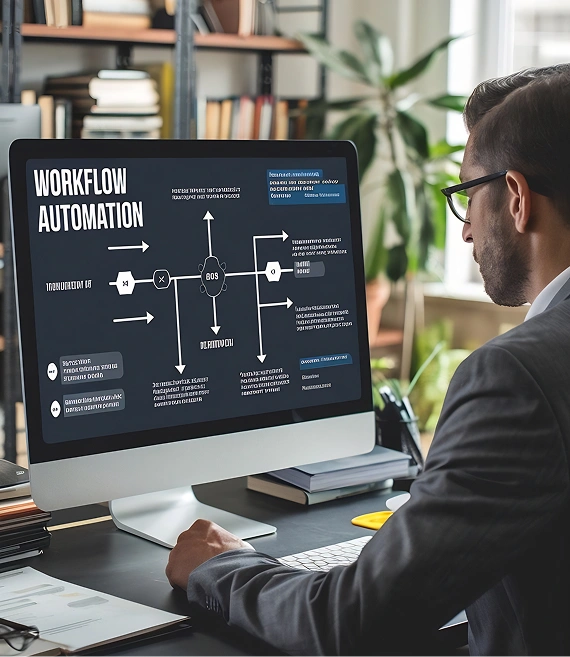
Robotic Process Automation Services From Assessment to Support
iTechnolabs offers a full range of RPA services, from initial consulting to ongoing maintenance, built around what your business actually needs automated.

Consulting
We assess your workflows and map out where automation delivers the fastest return, before any code gets written.
Automation Solutions Implementation
We build and deploy bots tailored to your processes, from simple tasks to full workflow automation.
Process Automation Migration
We move your existing automation to a new platform or framework without disrupting daily operations.
Agentic RPA Automation Maintenance
We keep your bots running smoothly with ongoing updates, monitoring, and fixes as your systems change.
Choose the Automation Model That Fits Your Workflows
Not sure if you need unattended, attended, or hybrid automation? Share your process details and we'll point you to the right setup, no guesswork on your end.
Tell Us Which Task to Automate First
A few details help us match you with the right automation model fast.
Bring RPA Services Into Industry-Specific Operations
We serve industries where manual work slows teams down most, building RPA solutions tailored to each sector's actual workflows and compliance needs.

RPA in Banking
Automate account reconciliation, KYC checks, and transaction processing to cut errors and speed up daily operations.




RPA in Automotive
Automate supply chain tracking, quality reports, and inventory management across production lines.

RPA in Logistics
Automate shipment tracking, freight documentation, and order matching to speed up deliveries.

RPA in Insurance
Automate claims handling, policy renewals, and fraud checks to speed up turnaround and cut manual review.

RPA in Manufacturing
Automate inventory tracking, quality control reports, and order processing to reduce floor-level delays.


RPA in IT
Automate ticket routing, system monitoring, and routine maintenance tasks to free up your technical team.

RPA in Telecom
Automate billing, customer data updates, and network monitoring to improve service reliability.

Bring RPA Into the Departments That Run on Repeat
iTechnolabs serves every department bogged down by repetitive tasks, automating workflows so your teams spend less time on manual work and more on real output.
Finance & Accounting
Automate invoicing, reconciliation, and reporting so your finance team spends less time on data entry and more on analysis.
- Invoice processing and matching
- Accounts payable and receivable automation
- Financial report generation
- Expense reconciliation and audit trails

HR
Automate onboarding, payroll checks, and record updates to free your HR team from repetitive administrative work.
- Employee onboarding and offboarding
- Payroll data verification
- Leave and attendance tracking
- Resume screening and data entry

Supply Chain
Automate inventory tracking and order processing to keep your supply chain running without manual bottlenecks.
- Inventory level monitoring
- Purchase order processing
- Vendor data reconciliation
- Shipment status updates

Customer Support
Automate ticket routing and data lookups so your support team resolves issues faster with less manual digging.
- Ticket categorization and routing
- Customer data updates across systems
- Order status and refund processing
- Knowledge base and FAQ updates

IT
Automate routine maintenance and monitoring tasks so your IT team focuses on higher-priority system work.
- System health monitoring and alerts
- User account provisioning
- Software patch and update tracking
- Routine data backup checks
Get Your Automation Setup Recommended in 24 Hours
Every business runs differently, so your automation model should too. Share what you're working with and we'll recommend the model that fits.
Start With One Process Worth Automating
Quick details now, the right recommendation within a day.
How We Take RPA From Assessment to Production
We follow a straightforward process from analysis to delivery, so every automation project stays on track and built around what your business actually needs.

Analysis
We review your current workflows and identify which processes deliver the fastest return once automated.

Design
We map out the automation blueprint, including bot logic, exception handling, and integration points.

Development
Our developers build and test the bots against real scenarios before anything goes into production.

Delivery
We deploy the bots, monitor early performance, and hand off with documentation and support in place.
Choose the RPA Platform That Solves the Problem
We work across leading automation platforms, choosing the right one based on your existing systems and the complexity of what you need automated.
RPA Features Built for Real Workflows
Our automation solutions are built to fit into your business the way it already runs, without adding risk or complexity.
Transparent
Every bot action gets logged, so you have a clear audit trail of what ran, when, and what changed.
Scalable
Start with one process and expand to hundreds without rebuilding your automation from scratch.
Non-Invasive
Automation works with your existing systems as they are, no need to rebuild or replace what's already working.
Secure
Bots run within strict access controls and permissions, keeping sensitive data protected at every step.

Choose the Automation Model That Fits Your Workflows
We offer unattended, attended, and hybrid automation models, so you pick the setup that fits how your team actually works.
Unattended Automation |
Attended Automation |
Hybrid Automation |
|
|---|---|---|---|
Overview |
Runs on its own schedule or trigger, handling complex, repetitive tasks without anyone at the keyboard. It manages exceptions, pulls in extra data when needed, and flags high-risk actions for approval. | Kicks in only when someone starts it, working on a user's machine in the background without getting in the way of their tasks. Built-in logic gives the bot context or decision support as it runs. | Blends the two. Unattended bots handle the high-volume, repetitive parts while attended bots step in for work that still needs a person watching over it. |
Use Cases |
|
|
|
Benefits |
|
|
|
Every Workflow Needs a Different Kind of Bot
Skip the trial and error of picking a model on your own. Tell us about your process and budget, and we'll handle the rest.
Let’s Find What You Can Automate Today
Share a few quick details and we'll follow up with the model that fits your business best.
Frequently Asked Questions
What processes are best suited for Robotic Process Automation?
RPA works best on processes that are repetitive, high-volume, rule-based, and use structured digital data. Typical examples are invoice processing, data entry between systems, report generation, employee onboarding, order processing, and account reconciliation. Processes that need frequent human judgment or deal with constantly changing rules are poorer candidates.
How much does it cost to develop an RPA solution?
Cost depends on how many processes you automate, how many systems they touch, how complex the rules are, and which RPA platform you use. A single simple bot costs far less than a multi-system workflow. After a discovery phase, we provide a fixed or phased quote that includes licensing and ongoing running costs.
How long does it take to implement an RPA solution?
A single, well-defined process usually takes 4 to 8 weeks from discovery to go-live. Larger programs with several bots, complex exceptions, or legacy systems can take 3 to 6 months. Timelines depend on process documentation, system access, and testing needs. We confirm a firm estimate after discovery.
Can RPA work with our existing systems?
Yes. RPA bots work through the same screens your team uses, so they can operate with legacy applications, ERPs, CRMs, spreadsheets, and email, even when no API exists. Where APIs are available, we use them for greater stability. We review your systems and access rules before building, so we know what the bot can safely do.
What’s the difference between RPA and AI?
RPA follows fixed, predefined rules to repeat tasks exactly as programmed. AI learns from data to interpret language, images, and patterns, and can handle variation. RPA is the hands that do the work, while AI is the judgment that decides what to do. Combined, they automate processes that include unstructured inputs such as emails and scanned documents.
Will RPA replace employees?
RPA replaces tasks, not people. Bots take over repetitive work such as copying data between systems, so your team can spend time on customer service, analysis, and decisions that need judgment. Most organizations redeploy staff to higher-value roles instead of reducing headcount. We recommend involving your team early to identify which tasks they would like to hand off.
How do you identify automation opportunities in an organization?
We start with workshops and process mapping with the teams who do the work. We then score each process on volume, time spent, error rate, rule clarity, and system stability. Processes with high volume and clear rules rank highest. The result is a prioritized roadmap showing which to automate first and what return to expect.
Can RPA automate document processing?
Yes. Bots can pull data from invoices, forms, purchase orders, and emails, then enter it into your systems. For scanned or unstructured documents, we add OCR and AI-based extraction to read the content. Low-confidence results are routed to a person for review, so errors are caught before they reach your records.
How do you measure the ROI of RPA?
We compare results before and after automation. Core measures include hours saved, error rate reduction, processing time per transaction, cost per transaction, and the volume handled without added staff. We set a baseline during discovery, track these metrics after go-live, and weigh them against development, licensing, and maintenance costs to show payback time.
Do you provide ongoing support after deployment?
Yes. Our support covers bot monitoring, error handling, updates when your applications or workflows change, performance reporting, and security patches. RPA bots can break when a screen layout or system version changes, so regular maintenance keeps them reliable. You can choose a monthly support plan or request help as needed.