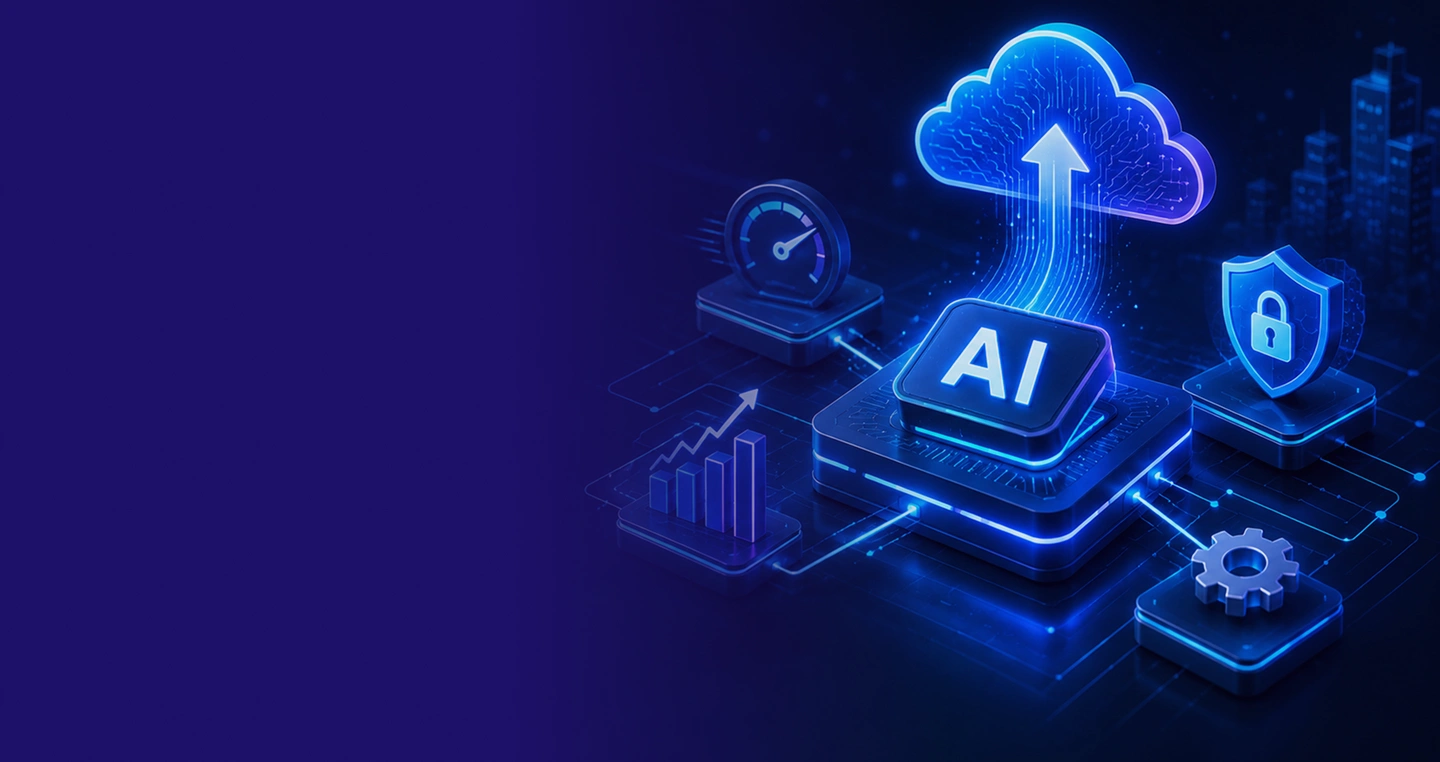
AI Modernization Aligned With Your Business Transformation Goals
We help businesses modernize legacy systems, address operational constraints, and integrate AI capabilities into existing applications to improve efficiency, simplify complex processes, and support evolving business requirements.
- AI Modernization Strategy and Consulting
- Legacy Application AI Transformation
- Intelligent Process Automation and Optimization
- AI System Integration and Continuous Enhancement




Improve Business Performance Through Practical AI Modernization
Modernization starts with understanding where existing technology limits business performance. We help organizations upgrade outdated systems, connect digital capabilities, and improve operational agility to support faster decisions and changing business demands.
Define Your Path to Intelligent Application Modernization
Moving beyond legacy technology requires a clear understanding of existing systems, business priorities, and future requirements. We help organizations identify modernization opportunities and adopt structured approaches that improve adaptability, strengthen performance, and support continuous innovation.
Rehost
2–6 WeeksMove Applications to Updated Technology Environments
- Transfer existing applications to modern platforms with limited architectural changes
- Adopt cloud capabilities to improve infrastructure flexibility and resource management
Ideal For:
Restructure
6–12 WeeksStrengthen Application Architecture for AI Adoptio
- Improve application structure to support changing workloads and business requirements
- Establish compatibility with AI services, intelligent APIs, and automated processes
Ideal For:
Integrate
8–16 WeeksConnect Existing Applications with Intelligent Technologies
- Develop integration layers that connect established systems with modern AI capabilities
- Enable information exchange across business applications, analytics platforms, and intelligent tools
Ideal For:
Reengineer
4–8+ WeeksDevelop Intelligent Applications Around Modern Architectures
- Build redesigned applications using adaptable architectures and contemporary development practices
- Incorporate AI capabilities into business processes, decision support, and digital experiences
Ideal For:
A Structured Approach to AI-Enabled Business Applications
We follow a four-phase modernization approach that connects technical discovery with business objectives, helping organizations upgrade existing applications, introduce intelligent capabilities, improve system reliability, and prepare for future growth.
Accelerate Digital Transformation Through Intelligent AI Solutions
Discover Your AI Modernization Pathway
Share your goals and explore tailored transformation opportunities with our specialists
Technologies That Support AI Modernization
We apply appropriate AI technologies to assess existing applications, improve software development processes, and strengthen system quality, helping businesses modernize their technology environment with greater reliability and scalability.
Enterprise AI Modernization With Security Built In
Modernizing enterprise systems requires careful attention to information security, regulatory obligations, and operational continuity. Our approach incorporates these requirements throughout the transformation process to help businesses upgrade existing technology while maintaining dependable operations.
Security and Compliance Across the Modernization Lifecycle
Successful AI modernization depends on protecting business information and meeting relevant regulatory requirements. We apply security-focused engineering practices and appropriate compliance measures to support responsible transformation and protect existing business operations.


Align Your Business With Intelligent AI Capabilities
We connect business priorities with practical modernization strategies, integrating AI into existing systems to create more connected, adaptable technology environments that support operational efficiency and long-term business growth.
Intelligent Application Transformation
We upgrade outdated software and disconnected infrastructure into integrated, AI-enabled solutions that simplify operations, improve resource utilization, and support evolving business requirements.
Cloud-Native Engineering
Create adaptable applications using modern cloud architectures that support intelligent capabilities, flexible scaling, and dependable performance across changing enterprise workloads.

Intelligent Data Management
Transform scattered information into accessible business intelligence through modern data architecture, effective governance, and advanced analytical capabilities that support informed decisions.
Enterprise Protection & Governance
Strengthen your technology environment with integrated security controls, responsible AI practices, and regulatory safeguards that protect information throughout modernization.
AI-Enabled Employee Experience
Equip teams with intelligent applications that simplify everyday tasks, improve knowledge sharing, and create more opportunities for collaboration, productivity, and innovation.
Upgrade Your Business with Intelligent AI Capabilities
Explore Your Modernization Strategy
Discuss your goals with our specialists and identify practical AI opportunities within 24 hours
AI Modernization and Migration Aligned With Business Priorities
We help businesses assess legacy environments, plan technology transitions, and apply intelligent engineering practices to replace outdated components with scalable, AI-enabled infrastructure while maintaining essential business capabilities.
AI Modernization Tailored to Industry Requirements
Different industries face distinct operational challenges, technology constraints, and compliance requirements. We tailor application modernization and data transformation approaches to industry workflows, helping organizations address existing limitations and prepare their systems for evolving business needs.
Medical & Biotechnology
Transform clinical applications and healthcare data environments with appropriate privacy safeguards, creating structured foundations for clinical analytics, research support, and intelligent healthcare workflows.
Banking & Insurance
Reengineer financial applications and data infrastructure to strengthen information accessibility, support transaction monitoring, and facilitate intelligent risk analysis and compliance operations.
Logistics & Transportation
Connect fragmented transportation and warehouse applications to improve supply chain visibility, support predictive planning, and enable data-driven routing and resource allocation.
Industrial & Manufacturing
Modernize production applications and equipment data environments to improve operational visibility, support predictive maintenance, and enable intelligent quality assurance processes.
Tourism & Accommodation
Upgrade reservation platforms and hospitality applications to improve service coordination, support demand analysis, and enable personalized guest experiences through intelligent data utilization.
Frequently Asked Questions
What Does AI Modernization Involve, and Why Do Businesses Need It?
AI modernization involves upgrading existing applications, infrastructure, and data environments to support intelligent technologies. It helps businesses improve operational efficiency, automate repetitive tasks, enhance decision-making, and adapt to changing requirements. Organizations can introduce AI capabilities into existing systems or redesign applications to support more advanced digital workflows.
How Much Time Should Businesses Allocate for AI Modernization?
AI modernization timelines depend on application complexity, infrastructure readiness, data quality, integration requirements, and project scope. Smaller upgrades may take a few weeks, while extensive application transformations can require several months. A detailed technical assessment helps establish realistic milestones, identify dependencies, and determine a suitable implementation schedule.
Which Business Sectors Can Benefit from AI Modernization?
AI modernization can support businesses across healthcare, financial services, retail, manufacturing, logistics, hospitality, and media. Organizations can use intelligent technologies to streamline workflows, analyze operational data, improve customer experiences, and support forecasting. The specific benefits depend on industry requirements, available data, existing systems, and the business processes being modernized.
How Are Data Security and Regulatory Requirements Addressed During AI Modernization?
Security and compliance are incorporated through access controls, encryption, data validation, security testing, and appropriate governance practices. Modernization teams assess applicable regulations and organizational requirements before implementation. For regulated industries, safeguards must reflect relevant obligations, such as HIPAA where applicable, alongside privacy policies, data handling requirements, and infrastructure security standards.
How Does Project-Based Modernization Differ from Managed Transition Services?
Project-based modernization focuses on delivering an agreed scope of work, milestones, and outcomes within a defined engagement. Managed transition services provide ongoing assistance throughout migration, system adoption, and operational stabilization. The appropriate model depends on internal technical resources, project complexity, desired ownership, support requirements, and the level of continued assistance needed.
Can Modernizing Legacy Applications with AI Lower Operational Expenses?
AI modernization can reduce operational expenses by automating repetitive activities, improving resource utilization, and reducing maintenance burdens associated with outdated systems. However, savings depend on implementation costs, infrastructure requirements, licensing, and actual productivity improvements. A business case should compare expected benefits against modernization and ongoing operating expenses before estimating financial returns.
Will Upgrading Legacy Systems Affect Existing Business Operations?
Modernization can affect operations, but careful planning helps limit disruption. Teams can use phased implementation, parallel system operation, controlled deployments, and recovery procedures to maintain essential services. The level of impact depends on system dependencies, migration complexity, downtime requirements, and testing coverage. A transition plan should address operational continuity before deployment.
How Can Businesses Evaluate the Return on AI Modernization Investments?
Businesses can evaluate ROI by comparing modernization costs with measurable improvements in productivity, operating expenses, processing speed, service quality, and revenue opportunities. Establishing baseline performance before implementation makes comparisons more meaningful. Evaluation should also account for infrastructure, licensing, training, maintenance, and adoption costs over an appropriate measurement period.
What Ongoing Assistance Is Available After AI Modernization?
Post-modernization assistance can include application monitoring, performance optimization, security updates, troubleshooting, and technical maintenance. Support arrangements vary depending on project scope and the selected service agreement. Businesses should clarify response expectations, maintenance responsibilities, system monitoring coverage, and future enhancement requirements to ensure their modernized applications continue meeting operational needs.
Which AI Technologies Help Modernize Existing Applications?
AI modernization may involve large language models, machine learning frameworks, intelligent coding assistants, automated testing tools, and AI-powered code analysis platforms. Depending on business requirements, teams may also use retrieval-augmented generation, predictive analytics, and workflow automation technologies. Tool selection depends on system architecture, data sensitivity, integration needs, infrastructure, and intended business outcomes.
Transform Your Legacy Applications with Intelligent AI Solutions
Discuss your modernization priorities and identify suitable approaches within 24 hours
Upgrade Existing Technology for Intelligent Business Growth
Advance your digital capabilities with AI modernization services from iTechnolabs. Our specialists help you upgrade legacy applications, integrate intelligent technologies, streamline business processes, and strengthen system performance. Whether you need application restructuring, cloud transformation, data platform upgrades, AI feature development, or custom system integration, we guide your project from technical assessment and modernization planning through development, validation, deployment, and ongoing optimization, with solutions aligned to your operational needs.