Key Takeaways
- A credible app like Uber Eats typically costs $40,000 to $120,000 for a single-city launch, and $140,000 to $240,000 or more for a multi-city platform.
- The biggest cost driver isn’t the customer app. A real marketplace needs four connected systems: customer, restaurant, delivery partner, and admin.
- Real-time tracking, payments, delivery assignment, and multi-city operations are what push budgets from “basic” to “advanced.”
- Starting with a scoped MVP lets you validate demand before spending on loyalty programs, AI recommendations, or multi-region support.
- A firm quote requires your platform count, feature list, integrations, and target markets to be defined first. Everything below is a planning range, not a fixed price.
Based on typical project scope, food delivery app development can range from $40,000 to $120,000 for a single-market platform and $140,000 to $240,000 or more for a multi-city product with advanced logistics. These are planning ranges, not fixed quotes.
The food delivery market has grown into a major digital commerce sector, creating strong demand for platforms that connect customers, restaurants, and delivery partners through a single app. The global online food delivery market was valued at $319.99 billion in 2025 and is projected to reach $728.83 billion by 2034, growing at a 9.58% CAGR.
The market is expected to keep expanding through mobile ordering, digital payments, real-time delivery tracking, grocery delivery, personalization, and AI-powered experiences. The global online food delivery market is expected to reach $505.5 billion by 2030, representing a 9.4% CAGR from 2025 to 2030.
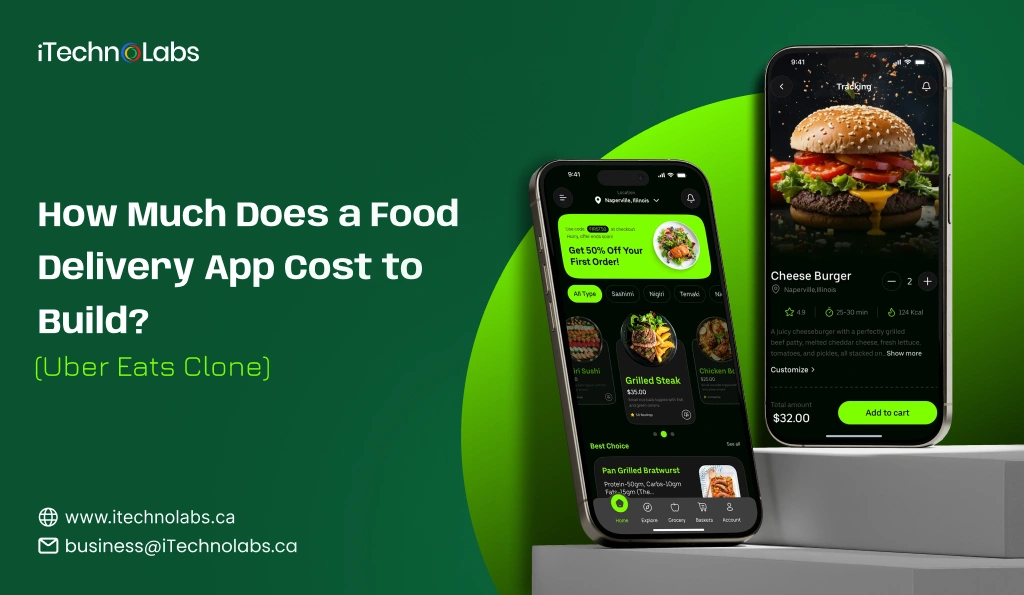
If you are planning to build an Uber Eats clone, the cost depends on much more than the customer app. You may need separate systems for customers, restaurants, delivery partners, and administrators, along with payments, maps, real-time tracking, backend infrastructure, and operational tools. This guide breaks down the food delivery app development cost, features, development stages, timelines, and ways to control the initial investment.
Table of Contents
Food Delivery App Development Cost by Stage
| Development Stage | Estimated Cost |
| Discovery and requirement analysis | $2,000–$5,000 |
| UI/UX design | $4,000–$10,000 |
| Customer app development | $8,000–$20,000 |
| Restaurant app or dashboard | $5,000–$15,000 |
| Delivery partner app | $6,000–$18,000 |
| Admin panel | $4,000–$10,000 |
| Backend and API development | $8,000–$20,000 |
| Third party integrations | $2,000–$8,000 |
| Testing and QA | $3,000–$8,000 |
| Deployment and launch | $1,000–$3,000 |
| Estimated total | $40,000–$240,000+ |
Cost by Complexity
| App Type | Estimated Cost | Timeline | Typical Scope |
| Basic MVP | $40,000–$60,000 | 3–5 months | Ordering, payments, restaurant management, basic delivery tracking |
| Multi-restaurant platform | $60,000–$120,000 | 5–8 months | Customer, restaurant, and delivery apps; live tracking; promotions |
| Advanced platform | $140,000–$240,000+ | 8–12+ months | Multi-city operations, advanced analytics, loyalty, automation, AI features |
Basic MVP: $40,000–$60,000
Built to validate the model, not to impress a VC deck. Covers customer registration and restaurant browsing, menu and cart, online payment, basic restaurant management, and basic delivery tracking. Right fit for a single-market launch with a narrow feature set. For teams starting with a focused product, MVP development services can help define the core feature set before expanding the platform.
Multi-Restaurant Platform: $60,000–$120,000
Adds the full three-sided app structure (customer, restaurant, delivery), real-time tracking, restaurant onboarding tools, coupons and ratings, and an admin dashboard with reporting. This is the tier most city-scale operators land on.
Advanced Platform: $140,000–$240,000+
Multi-city and multi-region support, business intelligence dashboards, loyalty programs, automated delivery assignment, and AI-driven personalization. This tier assumes you’ve already proven the model and are scaling deliberately, not guessing.
What’s Actually Inside an Uber Eats Like App
An Uber Eats like app is more than a customer facing mobile app. Mobile app development services for this type of marketplace typically involve multiple connected applications, each supporting a different part of the ordering and delivery workflow.
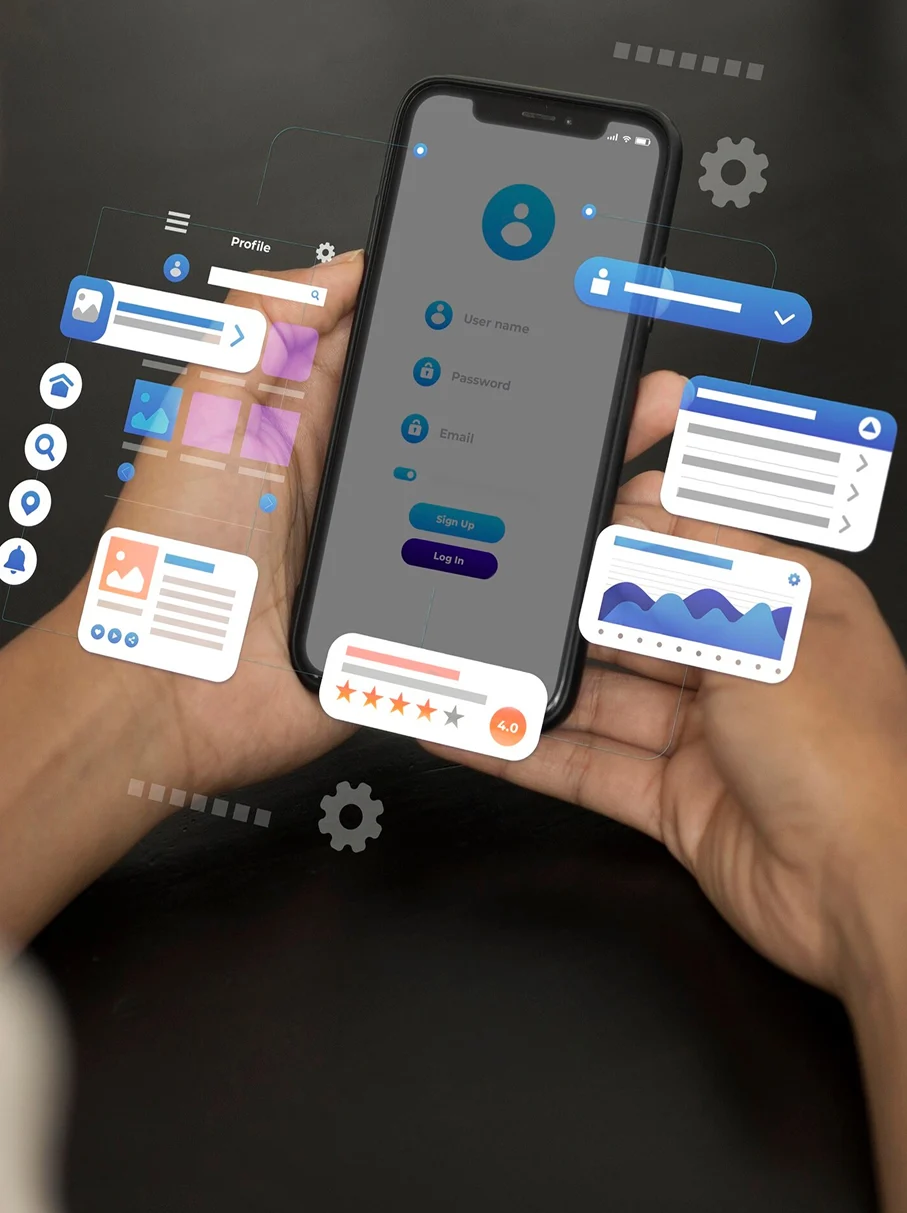
1. Customer App: Restaurant search and location-based discovery, cuisine/price/rating filters, digital menus with customization, cart and checkout, multiple payment options, real-time order tracking, push notifications, coupons, ratings, and order history.
2. Restaurant Dashboard: Profile and hours management, menu and pricing control, order notifications and status updates, sales history, and promotion management, independent of the main admin panel.
3. Delivery Partner App: Delivery request notifications, pickup/drop-off details, GPS navigation, real-time location sharing, status updates, and earnings tracking.
4. Admin Panel: Centralized control over customers, restaurants, and delivery partners; order and cancellation monitoring; payment, commission, and refund handling; coupon management; service area configuration; and platform-wide analytics.
5. Advanced Features (Add Later, Not First): AI-based recommendations, automated delivery assignment, route optimization, loyalty programs, subscriptions, scheduled orders, multi-city support, and multi-language/currency handling. None of these belong in an MVP. All of them belong in a phase-two roadmap once the core loop is proven.
What Affects Food Delivery App Cost to Build
The cost of building an app like Uber Eats depends on more than the number of screens or features. The biggest cost drivers are usually the platforms you support, the complexity of real-time functionality, payment and delivery workflows, and any custom features that require additional backend logic.
- Number of platforms. Native iOS and Android builds mean duplicated development and QA. A framework like Flutter app development can share code across both platforms, which can reduce duplicated development work when cross-platform delivery fits the product requirements.
- Real-time location tracking. GPS, mapping APIs, background location handling, and constant client-server sync are more expensive to build correctly than a simple order-status flag, and getting them wrong shows up immediately in customer complaints.
- Payment integration. This isn’t a checkout button. It’s payment processing, refunds, transaction status handling, marketplace payouts to restaurants and drivers, and ongoing processor fees that vary by payment method and card origin.
- Delivery management. Basic order assignment is simple. Automated matching, delivery zones, route optimization, and multi-location dispatch rules are not, and they scale in complexity with order volume.
- Custom features. Loyalty programs, subscriptions, AI recommendations, and dynamic delivery fees each add their own backend logic. Prioritize by business value and phase them in, don’t bundle them into launch.
How to Control Food Delivery App Development Cost
Keeping an Uber Eats like app within budget comes down to making deliberate decisions about scope, technology, and development priorities. Instead of trying to build every feature at launch, focus the initial release on the workflows that directly support ordering and delivery.
1. Start with an MVP. Ordering, payments, restaurant management, and delivery tracking. Everything else waits for post-launch data.
2. Pick cross-platform unless you have a specific reason not to. Flutter or React Native app development can reduce duplicated build and maintenance work when the technology fits your product requirements.
3. Use proven third-party services for commodity functions. Payments, maps, push notifications, and auth don’t need to be built in-house; they need to be integrated correctly.
4. Lock requirements before development starts. User roles, features, integrations, delivery workflows, and service areas defined up front prevent the mid-build scope changes that blow past budget.
Why iTechnolabs for Food Delivery App Development
iTechnolabs is ISO 27001:2013 and ISO 9001:2015 certified, which matters here specifically because a delivery marketplace handles live payment data, location data, and personal information across four user types simultaneously. For an Uber Eats like build, our scope typically covers:
- Customer app development and ordering workflows
- Restaurant app or dashboard development
- Delivery partner app and real-time tracking
- Backend development and API integration
- Payment gateway and third-party integrations
- Admin panel and marketplace management
- Cloud infrastructure, testing, deployment, and ongoing support
The right starting point depends on your business model, launch market, feature list, and budget. If you’re scoping a delivery platform, book a discovery call and we’ll help you size it properly before you commit to a number.
Conclusion
A food delivery app is a coordination problem wearing a UI. Customers, restaurants, delivery partners, and admins all need to see the same order state in real time, which is why this costs more than a standard ordering app and why the range is wide enough to be nearly useless without a real scoping conversation.
The path that works: scope a focused MVP, validate the model with real users, then expand based on actual demand data instead of a feature wishlist. Clear requirements and the right technology choices up front make the difference between a platform that scales cleanly and one that needs a rebuild at 10x order volume.
FAQs
1. How much does it cost to build an app like Uber Eats?
Building an app like Uber Eats typically costs $40,000 to $120,000 for a credible single market platform, and $140,000 to $240,000 or more for a multi city product. The final cost depends on features, platform count, integrations, and delivery operations complexity. These figures are planning ranges, not fixed quotes.
2. What’s the cheapest way to build a food delivery app?
A focused MVP is usually the lowest cost path. Building the core ordering, payment, restaurant management, and delivery tracking workflows first can keep the initial build closer to $40,000 to $60,000. Features such as loyalty programs, AI recommendations, subscriptions, and multi city support can be added after launch based on actual user demand.
3. How many apps does a food delivery platform actually need?
A full food delivery marketplace typically needs four connected systems: a customer app, a restaurant app or dashboard, a delivery partner app, and an admin panel. These systems share backend services and exchange order, payment, location, and status data, which makes the platform more complex than a single customer facing ordering app.
4. How long does it take to build an Uber Eats clone?
A focused MVP generally takes 3 to 5 months. A multi restaurant platform can take 5 to 8 months, while an advanced multi city platform with automation and analytics can take 8 to 12 months or longer. The actual timeline depends on platform count, integrations, feature scope, and delivery logistics complexity.
5. Can I build an Uber Eats clone with Flutter?
Yes. Flutter can support customer and delivery applications across iOS and Android from a shared codebase, which can reduce duplicated development work. Whether Flutter is the right choice depends on performance requirements, device coverage, integrations, and the long term product roadmap. The technology decision should follow the product requirements rather than cost alone.
6. What’s the single biggest cost driver in a food delivery app?
The number of connected applications and the real time infrastructure behind them are major cost drivers. A food delivery marketplace typically involves four systems that must coordinate order status, payments, location data, and delivery workflows. That level of coordination requires more backend logic, integrations, testing, and infrastructure than a standard ordering app.