If you want to be successful in business, you must know what’s going on.
In addition to researching your competitors, keep up with trends in your industry. We all know that our world is becoming more mobile.
Because of this, every business, no matter what kind, needs to keep up with new mobile trends. This is especially important for companies that have an app or mobile website.
Whether you make mobile apps or run a pizza shop, it’s essential to keep up with what’s happening in the mobile space.
This statement is valid even if you don’t have a mobile app. That’s because, if you aren’t already doing it, you should consider making mobile apps.
Mobile app development is evolving faster than ever in 2026. Technologies such as Artificial Intelligence (AI), 5G, Edge Computing, IoT, Augmented Reality (AR), Virtual Reality (VR), and Predictive Analytics are transforming how businesses build and scale mobile applications.
Organizations that adopt these innovations can deliver faster, smarter, and more personalized user experiences while gaining a competitive advantage in an increasingly digital marketplace.
In this guide, we explore the top emerging mobile app development technologies that are shaping the future of mobile experiences in 2026 and beyond.
Table of Contents
11 Emerging Mobile App Development Technologies
1. 5G technology
With lower latency, faster speeds, and faster data transfer, it’s easy to see why 5G technology is quickly becoming the standard for mobile technology by 2026.
As of mid-2026, global 5G adoption has surpassed 3.1 billion subscriptions, marking a major milestone in the transition to next-generation mobile connectivity. Industry forecasts suggest this number will continue to grow rapidly, reaching approximately 6.4 billion subscriptions by 2031.
The fifth generation of connections for mobile phones:
- Makes apps work better and lets developers add more features without affecting how well the app works.
- Makes it easier and faster to connect augmented reality (AR) and virtual reality (VR).
- It speeds up and makes mobile payments safer.
- Makes mobile streaming better.
2. Progressive Web Apps (PWAs)
Progressive Web Apps (PWAs) combine the functionality of native mobile applications with the accessibility of websites. Users can access PWAs directly through a browser, install them on their devices, and enjoy fast, app-like experiences without downloading large applications from app stores.
Progressive Web Apps (PWAs) continue to gain popularity because they offer app-like experiences without requiring users to download large native applications. Businesses increasingly adopt PWAs to improve loading speed, accessibility, and user engagement while reducing development costs.
3. Foldable Device Apps
As of mid‑2026, global foldable smartphone shipments remain around 18 million units, accounting for only 1.5% or less of total smartphone shipments. While shipments peaked in 2023 at over 20 million, the market has since plateaued and is projected to decline slightly in 2026. This illustrates that foldable devices are still a niche segment.
When users unfold the device to get a bigger screen, this can be a good thing:
- A bigger screen gives you more room to show more details and make the experience more authentic.
- With multiple windows, a user can do more than one thing simultaneously.
Video streaming and gaming apps will benefit greatly from foldable devices because they can increase their screen size or increase the amount of information and controls in the available space. Although foldable smartphones remain a niche market in 2026, developers are increasingly optimizing applications for flexible screen sizes, multi-window experiences, and adaptive layouts to ensure seamless user experiences across devices.
4. Artificial Intelligence
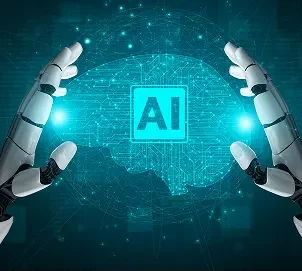
Artificial Intelligence is one of the fastest-growing mobile app development technologies that helps businesses create smarter and more efficient applications. AI enables mobile apps to analyze user behavior, learn from data, automate tasks, and deliver personalized experiences.
AI is used in mobile applications to understand how users interact with an app and continuously improve its performance. By analyzing large amounts of data, AI can help businesses make better decisions and enhance user engagement.
Some common applications of AI in mobile app development include:
- Personalized Recommendations: Apps like Netflix, Amazon, and Spotify use AI to recommend content, products, and services based on user preferences and past behavior.
- Smart Navigation: Apps such as Uber and Google Maps use AI to analyze real-time traffic conditions and suggest the fastest routes, helping users save time and improve travel efficiency.
- Enhanced Security: AI can identify unusual user behavior, detect fraudulent activities, and prevent unauthorized access, making mobile applications more secure.
AI provides a higher level of personalization, improves customer experiences, increases user engagement, and helps businesses deliver more relevant services. As AI technology continues to evolve, it is becoming an essential part of modern mobile app development.
One of the biggest advancements in mobile app development is the rise of Generative AI. Mobile applications now integrate AI-powered chatbots, virtual assistants, content generation tools, voice interfaces, and intelligent search capabilities to deliver more personalized and efficient user experiences. As large language models continue to improve, businesses are increasingly leveraging Generative AI to automate customer support, enhance engagement, and provide real-time assistance within mobile applications.
5. Predictive Analytics
Predictive analytics have been used for a while now to make mobile apps. Netflix employs predictive analytics to recommend movies and TV series based on user preferences. Amazon is precisely the same. But this technology will be used in new ways in the coming years.
Here are two places where this trend will become standard in 2026 and the years after that:
- Streamlining the app development process: Larger corporations and brands will utilize the analytics they have from developers to help develop predictions that will mitigate issues before they occur and provide actionable methods for the avoidance or handling of issues.
- Mobile apps will now utilize predictive analytics to shape the user experience, customizing and predicting user journeys.
Predictive analytics can help reduce the amount of time it takes to develop an application while continuing to provide a high-level experience and quality in the application experience.
6. AI-Assisted App Development
Artificial Intelligence is no longer just a feature inside mobile applications—it is also transforming how mobile apps are built. AI-powered development tools are helping developers write code faster, identify bugs earlier, automate testing, generate documentation, and streamline the entire development lifecycle.
Modern AI coding assistants can analyze project requirements, suggest code snippets, create UI components, and even help developers troubleshoot complex issues. As a result, businesses can reduce development time, improve code quality, and bring products to market more quickly.
Some of the key benefits of AI-assisted development include:
- Faster coding and development cycles
- Automated testing and bug detection
- Improved code quality and consistency
- Enhanced developer productivity
- Reduced development costs
As AI technology continues to evolve, AI-assisted software development is expected to become a standard part of mobile app development workflows, helping organizations build innovative applications more efficiently than ever before.
Popular AI-assisted development tools help developers generate code, automate repetitive tasks, identify vulnerabilities, and accelerate debugging. These solutions are increasingly being adopted by software teams to improve productivity and reduce time-to-market for mobile applications.
7. Low-Code and No-Code Development Platforms
Low-code and no-code development platforms are gaining significant traction in 2026 as businesses seek faster and more cost-effective ways to create mobile applications. These platforms allow developers and non-technical users to build applications using visual interfaces, drag-and-drop components, and pre-built templates instead of writing large amounts of code.
While traditional development remains essential for complex applications, low-code and no-code platforms can significantly accelerate development for internal business tools, customer portals, workflow automation solutions, and MVPs.
Key advantages of low-code and no-code development include:
- Faster application deployment
- Lower development costs
- Reduced reliance on large development teams
- Easier collaboration between technical and non-technical stakeholders
- Faster prototyping and product validation
Many organizations are using low-code and no-code tools alongside traditional development methods to improve agility and respond more quickly to changing market demands. As digital transformation continues to accelerate, these platforms are expected to play an increasingly important role in the future of mobile app development.
8. Geofencing
Geofencing is a technology that makes location-based marketing for mobile apps possible. With this technology, mobile app marketers can find out when users enter or leave a specific area to reach out to them at the right time. Here are a few examples of how marketers can make the most of this technology:
- Send push notifications when a customer walks by a store to get them to go there.
- Suggest products based on how customers have used the app in the past.
- Use social sharing to spread the word about your brand.
- Improve customer service by getting customer feedback or making it easier for customers and businesses to talk to each other.
Geofencing is likely one of the most common ways to reach your target audience. Because of this, brands are making the most of this technology. Adding geofencing to your mobile app can give your business an edge over the competition.
9. Internet of Things (IoT) and Cloud
The Internet of Things (IoT) and cloud computing continue to transform mobile app development by enabling connected devices to collect, share, and process data in real time. From smart homes and wearable devices to industrial equipment and connected vehicles, IoT-powered applications are becoming increasingly common across industries.
Cloud platforms play a crucial role in supporting IoT ecosystems by providing scalable storage, data processing, and remote device management capabilities. This allows mobile applications to access and analyze large volumes of data efficiently while ensuring seamless connectivity between devices.
The combination of IoT and cloud computing offers several benefits, including improved operational efficiency, real-time monitoring, enhanced security, reduced infrastructure costs, and easier integration with third-party services through APIs. As businesses continue to invest in connected technologies, IoT and cloud-based applications are expected to remain key drivers of digital innovation.
10. Virtual and Augmented Reality
Virtual Reality (VR) and Augmented Reality (AR) are becoming increasingly important in mobile app development, offering immersive and interactive experiences across industries such as gaming, entertainment, education, retail, healthcare, travel, and live streaming.
AR and VR technologies enable users to interact with digital content in more engaging ways, helping businesses create unique customer experiences. In particular, AR has transformed online shopping by allowing customers to visualize products before making a purchase.
Today, many mobile applications use AR and VR to help users preview:
- Furniture and home décor
- Paint colors and interior designs
- Clothing and accessories
- Hairstyles and hair colors
- Makeup products
- Eyeglasses and fashion items
These technologies help customers make more informed purchasing decisions while increasing confidence and engagement. However, before investing in AR or VR solutions, businesses should evaluate whether the technology aligns with their goals, target audience, and user experience requirements. When implemented strategically, AR and VR can provide a significant competitive advantage and enhance customer satisfaction.
11. Edge Computing
Edge computing is becoming increasingly important in mobile app development because it processes data closer to the user rather than relying entirely on centralized cloud servers. This approach significantly reduces latency, improves application performance, and enables real-time data processing.
The growth of 5G networks, IoT devices, connected vehicles, and smart infrastructure has accelerated the adoption of edge computing across industries. Mobile applications that require instant responses, such as autonomous systems, healthcare monitoring, gaming, and logistics platforms, benefit greatly from edge-based processing.
Key benefits of edge computing include:
- Faster response times
- Reduced network latency
- Improved reliability
- Enhanced data privacy and security
- Better support for real-time applications
As businesses continue to demand faster and more intelligent digital experiences, edge computing is expected to play a crucial role in the future of mobile app development.
Final Thoughts: The Future of Mobile App Development in 2026 and Beyond
The mobile app development landscape in 2026 is no longer just about building applications—it’s about creating intelligent, immersive, and highly personalized digital experiences. Emerging technologies such as 5G, Artificial Intelligence (AI), Augmented Reality (AR), Virtual Reality (VR), IoT, edge computing, and cloud solutions are transforming how businesses connect with their customers.
Organizations that embrace these innovations can improve operational efficiency, enhance user experiences, and gain a competitive advantage in an increasingly digital marketplace.
Whether you are a developer, entrepreneur, or business leader, now is the time to look beyond traditional app features and explore how emerging technologies can drive engagement, improve performance, and create new opportunities for growth. From foldable devices and progressive web apps to AI-assisted development, edge computing, and advanced personalization, the future of mobile applications is more intelligent, connected, and innovative than ever before.
While you don’t need to adopt every trend at once, staying informed and strategically implementing the right technologies can help your business remain competitive in a mobile-first world.
The question is: Is your mobile strategy ready for the future?
If not, 2026 is the perfect time to start building it.
FAQs
1. What are the most important mobile app development technologies in 2026?
The most important mobile app development technologies in 2026 include Artificial Intelligence (AI), 5G connectivity, Edge Computing, Internet of Things (IoT), Progressive Web Apps (PWAs), Augmented Reality (AR), Virtual Reality (VR), Predictive Analytics, Geofencing, and Cloud Computing. These technologies help businesses build faster, smarter, and more engaging mobile applications.
2. How is AI changing mobile app development?
AI is enabling mobile applications to deliver personalized experiences, automate customer support, improve security, analyze user behavior, and provide intelligent recommendations. Generative AI and AI assistants are becoming key features in modern mobile apps.
3. Why is 5G important for mobile applications?
5G offers significantly faster data speeds, lower latency, and improved network reliability. This enables mobile apps to support real-time features such as video streaming, cloud gaming, AR/VR experiences, and IoT connectivity more efficiently.
4. What are Progressive Web Apps (PWAs)?
Progressive Web Apps are web-based applications that provide an app-like experience on mobile devices. They load quickly, work offline in many cases, require less storage space, and eliminate the need for app store downloads.
5. How does Edge Computing improve mobile app performance?
Edge Computing processes data closer to the user rather than relying entirely on centralized cloud servers. This reduces latency, improves response times, enhances real-time processing, and supports applications such as IoT devices and autonomous systems.
6. What role does IoT play in mobile app development?
IoT enables mobile applications to connect with smart devices, sensors, wearables, and connected systems. This allows users to monitor, control, and receive real-time information from devices through mobile apps.
7. Are AR and VR still growing in mobile app development?
Yes. AR and VR continue to grow across industries such as retail, healthcare, education, gaming, and real estate. These technologies create immersive experiences that improve user engagement and decision-making.
8. How can businesses prepare for future mobile app development trends?
Businesses can stay competitive by investing in AI-powered features, optimizing apps for 5G networks, leveraging cloud and edge computing, integrating IoT capabilities, and continuously monitoring emerging technologies that improve customer experiences.