Somewhere between a SaaS platform closing a $2 million ARR year and a solo creator selling Notion templates from a Gumroad page, the term “digital product” is doing a lot of heavy lifting. Both are digital products. The decisions required to build them, price them, and scale them could not be more different.
The global digital products market is on track to exceed $700 billion by 2028. That number is not driven by eBooks. It is driven by software, AI-powered tools, data products, and platform businesses that compound in value the longer they run. The economics are straightforward: create it once, deliver it infinitely, with no incremental cost per unit sold. No warehouse. No supply chain. No inventory risk. That zero-marginal-cost structure is what makes digital products the most scalable business model available to founders and operators today.
But the category is far broader than the creator economy framing suggests. And the gap between a digital product that generates passive income and one that builds a defensible, scalable business comes down to decisions that most founders do not make carefully enough at the start. Which product type fits your market. Who your buyer actually is. What the right technical foundation looks like. Whether to build from scratch, license a white-label solution, or something in between.
This guide covers the 20 most profitable and in-demand digital product types in 2026 — what powers each, what each costs to build, and where the real opportunity sits for founders who want to build something that lasts.
TL;DR
- The digital products market will be one of the quickest-growing revenue categories worldwide in 2026, covering SaaS, AI tools, mobile apps, etc.
- Most digital products that fail do not usually fail because of a bad idea. They fail because of the poor build decisions made during the first 30 days.
- This guide presents 18 of the most lucrative and in-demand types of digital products that founders and businesses can choose from in 2026.
- Apart from listing product types, each one is also categorized according to monetization model, build complexity, and revenue potential, thus enabling you to assess which one is compatible with your aims.
- iTechnolabs stands on top of the list because deciding on the right development partner is by far the most significant decision you have to make before even drafting a single line of code.
Key Takeaways
- The global digital products market is projected to exceed $700 billion by 2028, driven by SaaS, AI tools, and online education.
- Most failed digital products fail not because of bad ideas, but because of poor architecture choices and underestimated technical scope.
- B2B digital products command 3x to 10x higher price points than consumer equivalents in the same category.
- AI-native digital products are the fastest-growing subcategory in 2026, but also the most technically demanding to build correctly.
- Choosing the right development partner before you choose your tech stack is the highest-leverage decision a founder can make.
Table of Contents
- What Are Digital Products?
- Consumer Digital Products vs. Business Digital Products
- Why the Distinction Matters for Your Build Decision
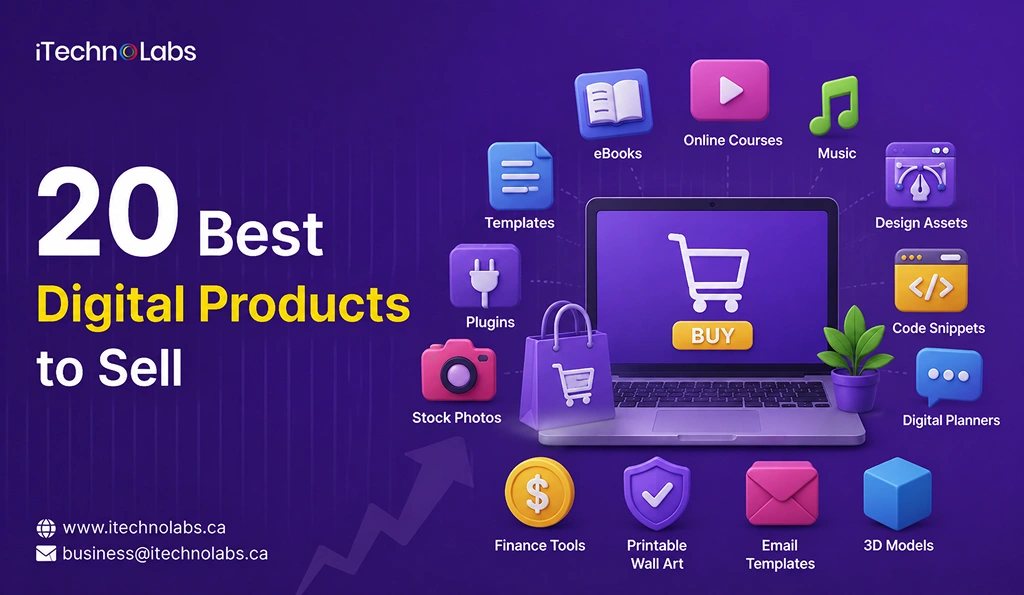
- 20 Best Digital Products to Sell in 2026
- B2B vs. Consumer Digital Products: Key Differences
- What Makes a Digital Product Scalable
- Where Most First-Build Digital Products Break Down
- How Much Does It Cost to Build a Digital Product in 2026
- Build, Buy, or White-Label Your Digital Product
- Future Trends in Digital Products to Watch Beyond 2026
- How iTechnolabs Builds Digital Products
- Conclusion
- FAQs
What Are Digital Products?
Digital products are non-physical products that are created, delivered, and used electronically. They are designed to provide information, services, entertainment, education, or software functionality through digital devices such as computers, smartphones, tablets, and web browsers. Unlike traditional physical products, digital products can be distributed instantly, updated easily, and accessed from virtually anywhere with an internet connection.
1. Examples of Digital Products
- Mobile applications
- Web applications
- SaaS (Software as a Service) platforms
- eBooks and digital guides
- Online courses and training programs
- Digital templates and design resources
- Websites and customer portals
- Subscription-based digital services
- Streaming video and audio content
- Cloud-based software solutions
2. Key Characteristics of Digital Products
- Delivered electronically without physical inventory
- Accessible across multiple devices and platforms
- Easily scalable to serve a large user base
- Can be updated and improved continuously
- Often supported by subscriptions or recurring revenue models
3. Benefits of Digital Products
- Lower production and distribution costs
- Faster launch and deployment timelines
- Global reach and accessibility
- Improved customer engagement and convenience
- Greater flexibility for updates and feature enhancements
- Enhanced data collection and performance tracking
- Increased opportunities for business growth and innovation
As businesses continue to embrace digital transformation, digital products have become essential for delivering value, improving customer experiences, and creating scalable revenue opportunities across industries.
Consumer Digital Products vs. Business Digital Products
The creator economy framing — “sell your knowledge as an eBook or online course” — captures only the thinnest slice of what digital products actually are. Consumer digital products are typically low-ticket, high-volume, and sold to individuals. Business digital products, by contrast, are sold to companies, command subscription or licensing fees, and require considerably more technical infrastructure to build and maintain.
| Dimension | Consumer Digital Products | Business Digital Products |
| Buyer | Individual consumer | Company or team |
| Price point | $10–$500 one-time | $500–$50,000+ annually |
| Delivery mechanism | Download, email, platform | SaaS dashboard, API, integration |
| Tech complexity | Low to medium | Medium to very high |
| Support requirements | Minimal | Ongoing, often contractual |
| Revenue model | One-time or low-cost subscription | Annual contract, usage-based, or seat licensing |
| Scalability ceiling | Audience size | Market size |
Why the Distinction Matters for Your Build Decision
If you are building a consumer digital product, your primary challenges are marketing, distribution, and content quality. If you are building a business digital product, your primary challenges are architecture, integrations, security, and reliability. These require fundamentally different approaches, different team compositions, and different development partners. Conflating the two is one of the most common and costly mistakes founders make at the start of a build.
20 Best Digital Products to Sell in 2026
Choosing who will develop your digital product is a decision that greatly impacts everything from your architecture to your timeline, budget, and your ability to scale. This is the main reason why the first item on this list is not a product category.
Here is a comparison of the 20 digital product types covered in this section:
| # | Digital Product Type | Build Complexity | Primary Monetization | Revenue Potential |
| 1 | SaaS Tools and Web Applications | High | Monthly/annual subscription | $50K–$10M+ ARR |
| 2 | Online Courses and Learning Platforms | Medium | One-time or subscription | $10K–$500K/year |
| 3 | Mobile Apps | High | Freemium, in-app, subscription | $20K–$5M+ ARR |
| 4 | AI-Native Digital Products | Very High | Usage-based or SaaS | $100K–$10M+ ARR |
| 5 | eBooks and Digital Guides | Low | One-time purchase | $5K–$100K/year |
| 6 | Templates and Done-for-You Resources | Low–Medium | One-time or bundle | $10K–$300K/year |
| 7 | Subscription Content and Media | Medium | Recurring subscription | $20K–$2M ARR |
| 8 | Data and API Products | High | Usage-based or licensing | $50K–$5M+ ARR |
| 9 | Digital Art and Design Assets | Low | One-time or license | $5K–$200K/year |
| 10 | Plugins and Browser Extensions | Medium | Freemium or one-time | $10K–$1M ARR |
| 11 | Stock Photography and Video | Low | Per-download or subscription | $5K–$500K/year |
| 12 | Music and Audio Products | Low–Medium | License or subscription | $5K–$300K/year |
| 13 | Fonts and Typography Assets | Low | One-time or license | $5K–$150K/year |
| 14 | Website Themes and UI Kits | Medium | One-time or subscription | $10K–$500K/year |
| 15 | NFTs and Blockchain-Based Assets | High | Primary sale + royalties | Variable |
| 16 | Printables and Digital Downloads | Low | One-time | $3K–$100K/year |
| 17 | White-Label Software Products | High | Licensing or reseller margin | $50K–$5M+ ARR |
| 18 | Membership and Community Platforms | Medium | Recurring subscription | $20K–$2M+ ARR |
| 19 | Virtual Events and Webinars | Medium | Ticket sales or subscription | $10K–$500K/year |
| 20 | Coaching and Digital Services | Low–Medium | One-time or retainer | $20K–$1M+/year |
1. SaaS Tools and Web Applications
SaaS remains the highest-value digital product category by revenue multiple. A well-architected SaaS product compounds: every new subscriber adds ARR without proportional cost growth. The challenge is that “well-architected” is doing a lot of work in that sentence.
Most SaaS products that fail in their first two years fail because of database design decisions made in week one, authentication systems that couldn’t handle scale, or API structures that couldn’t support the integrations enterprise buyers required. The technical foundation of a SaaS product is not something that is easy to retrofit.
Important architectural decisions of SaaS in 2026 are the following: a multi-tenancy model (one shared schema or one schema for each tenant), an authentication and authorization layer (OAuth 2.0, SAML for enterprise SSO), an API-first design to allow for flexible integration in the future, and infrastructure options that enable horizontal scaling without the need for changing the code.
2. Online Courses and Learning Platforms
The online education sector is a $350 billion worldwide market; however, the step from simply selling a course on a platform like Teachable to developing a full-featured learning platform is quite large. Entrepreneurs who begin using a hosted course solution and eventually find themselves in need of a custom platform often undergo a very painful and costly migration.
If your aim is a fully branded learning platform with features like custom enrollment flows, cohort management, progress tracking, certificates, and availability for integration with your CRM or community tools, then that calls for a custom web application built right from the beginning. Platform lock-in is a significant issue in this market. Having your own infrastructure means you have full control over learner data, you can set prices as you wish, and you can get the features that your users really want instead of having to rely on a third party’s development plan.
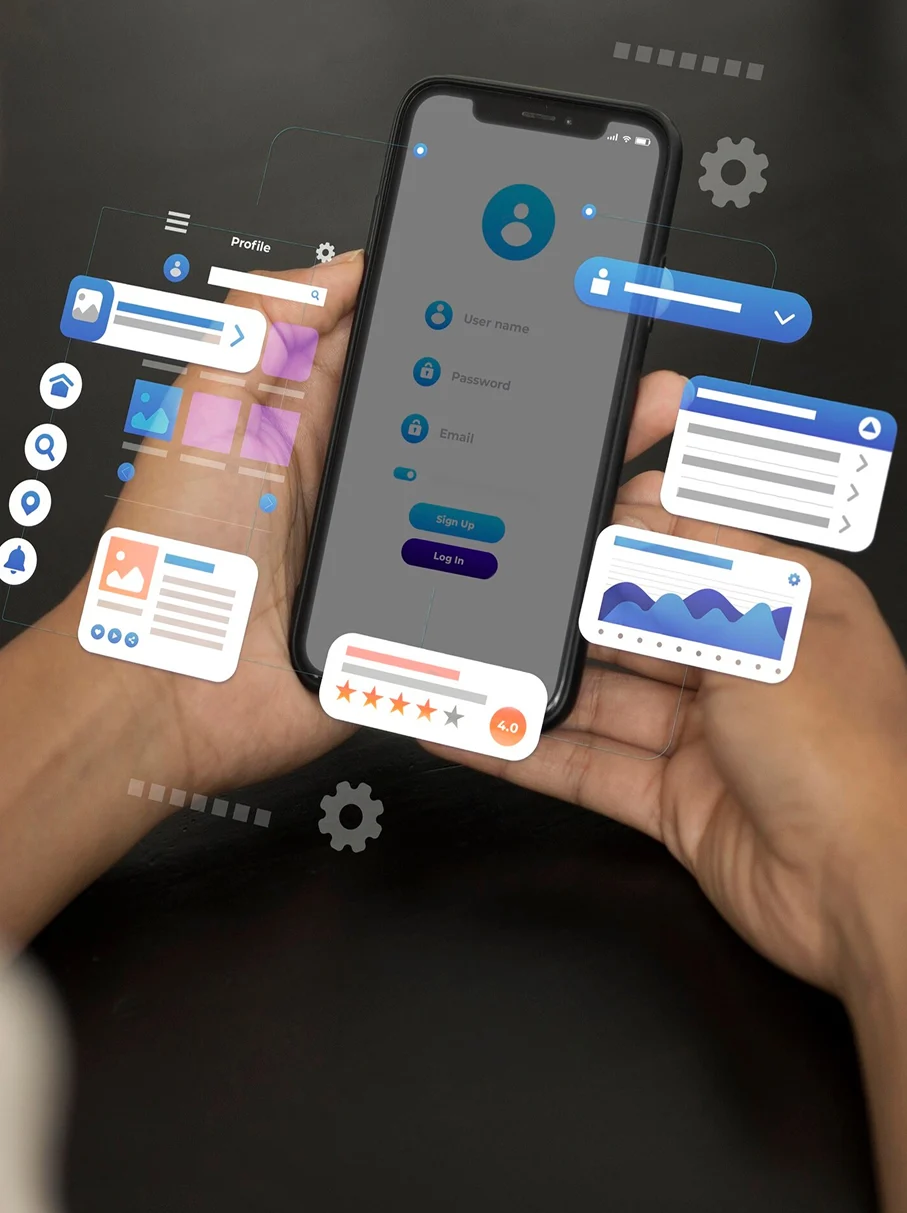
3. Mobile Apps
Mobile apps are digital products with a distribution advantage: app store discovery is a legitimate acquisition channel that websites cannot replicate. In 2026, the mobile app categories with the strongest monetization are productivity tools, health and fitness platforms, and B2B field operations tools.
The biggest build decision that makes a difference in mobile is cross-platform vs. native. React Native and Flutter both can give almost native-level performance for the majority of use cases while being significantly cheaper than maintaining two separate native codebases. However, for those apps that require complicated hardware access, real-time performance, or deep OS integration, native will still be the best option.
4. AI-Native Digital Products
AI-native digital products — tools where the core value proposition is delivered by an AI model rather than augmented by one — are the defining product category of 2026. The market is real, the demand is validated, and the technical complexity is higher than most founders expect.
Building an AI-native product requires decisions across model selection (OpenAI, Anthropic, open-source), infrastructure (inference costs, latency management, caching strategy), prompt engineering architecture, and data pipeline design for products that improve with use. Retrieval-Augmented Generation (RAG), fine-tuning, and agentic frameworks like LangGraph and CrewAI are all technical patterns that require experienced engineering judgment to implement correctly.
The founders who succeed in this category in 2026 are the ones who treat the AI layer as an engineering problem, not a prompt engineering exercise.
5. eBooks and Digital Guides
eBooks are the lowest-friction digital product to create and the lowest-ceiling in terms of revenue potential. They work best as top-of-funnel assets that build audience trust and move buyers toward higher-ticket products or services. For B2B companies, a well-researched industry guide can be a strong lead generation tool. As a standalone revenue product, the ceiling is real: pricing above $50 for an eBook requires significant authority and distribution.
6. Templates and Done-for-You Resources
Templates sell because the value is immediate and concrete. A buyer understands exactly what they are getting before they purchase. The highest-value template categories in 2026 are those requiring genuine expertise to create: financial models, legal document templates, technical architecture diagrams, and complex workflow systems in tools like Notion, Airtable, or Monday.com.
Template marketplaces — platforms that aggregate and sell templates from multiple creators — are themselves a digital product build opportunity, requiring an e-commerce layer, contributor management system, and review infrastructure.
7. Subscription Content and Media Products
Subscription content products include paid newsletters, private podcast feeds, research publications, and curated intelligence products. The business model is straightforward: recurring revenue from a defined audience willing to pay for consistent, high-quality information they cannot easily find elsewhere.
The technical requirements scale with ambition. A paid newsletter can run on Substack or beehiiv with no custom development. A research platform with custom dashboards, data visualization, member-only community features, and API access for enterprise subscribers requires a full custom build.
8. Data and API Products
Data products and API businesses are two of the most defensible kinds of digital products a company can create. The moat widens over time as more data is collected and the switching cost for buyers increases. A few examples are industry benchmarking data, real estate transaction data, supply chain intelligence feeds, and financial data APIs. Developing a data product means
Besides these, one must also consider API design and versioning, authentication and rate limiting, and developer documentation. Building such products is a major undertaking and heavily engineering-focused. Moreover, it requires a thorough understanding of the needs of enterprise buyers.
9. Digital Art and Design Assets
Marketing design assets such as icon sets, illustration packs, 3D models, and motion graphics mainly occur through marketplaces like Creative Market, Envato, and Adobe Stock. This category has relatively low entry barriers, but high competition. Differentiation is usually achieved through style uniqueness and niche targeting rather than quantity.
For studios and agencies, packaging design assets into branded libraries with custom licensing terms — sold directly rather than through marketplaces — represents a higher-margin approach.
10. Plugins and Browser Extensions
Plugins and browser extensions occupy a unique position: they distribute through established stores (WordPress plugin directory, Chrome Web Store) and benefit from discovery without requiring a full marketing budget. The monetization model is typically freemium — a free version that captures installs, with paid plans that unlock advanced features.
The build complexity is moderate, but the ongoing maintenance burden is higher than most founders anticipate. Browser APIs change. WordPress major releases break plugin compatibility. Extension stores have approval processes with real rejection rates. Budget for maintenance from day one.
Also, read: Top 15 Best SaaS/Micro-SaaS Ideas
11. Stock Photography and Video
Stock media is a volume business. Platforms like Shutterstock, Getty Images, and Adobe Stock pay per download, and meaningful income requires a large, consistently expanding library. The category is viable as a supplementary revenue stream for photographers and videographers, but difficult to build into a primary business without catalogue scale.
Niche stock libraries — highly specific visual content underrepresented on major platforms — command better per-asset pricing and are the more interesting opportunity in 2026.
12. Music and Audio Products
Audio digital products include royalty-free music libraries, sound effect packs, podcast intro tracks, and sample packs for music producers. Licensing is the primary revenue model, and the distinction between royalty-free and rights-managed licensing affects pricing and buyer expectations significantly.
Platforms like Epidemic Sound and Artlist have consolidated significant market share in the royalty-free music space. New entrants compete on niche genre specialization, faster search, or AI-assisted composition tools.
13. Fonts and Typography Assets
Typefaces are high-margin, low-maintenance digital products. A well-designed typeface sells for years after initial creation. The market for variable fonts — typefaces with adjustable weight, width, and other axes — is growing as web performance requirements push designers toward fewer HTTP requests and more versatile type systems.
Distribution through marketplaces (MyFonts, Creative Market) is the standard model, with direct licensing for enterprise clients offering better margins.
14. Website Themes and UI Kits
There are always large demands for website themes that are compatible with WordPress, Webflow Framer, and Shopify. Besides product design system UI kits for Figma, one can also find Sketch themes. This category is competitive, but quality is still a big differentiator. Themes that have been built using clean code, have carefully laid-out component architecture, and have made a real design investment score over the usual template-making factories. Besides product design system UI kits for Figma and Sketch, one can find themes for WordPress, Webflow Framer, and Shopify that are consistently in demand. This category is competitive, but quality is still a real differentiator. Themes that are built with clean code, have thoughtfully designed component architecture, and have made a real design investment are successful at outperforming generic template factories.
UI kits for design systems are a growing B2B opportunity as product teams standardize their component libraries and look for starting points that accelerate design-to-development handoff.
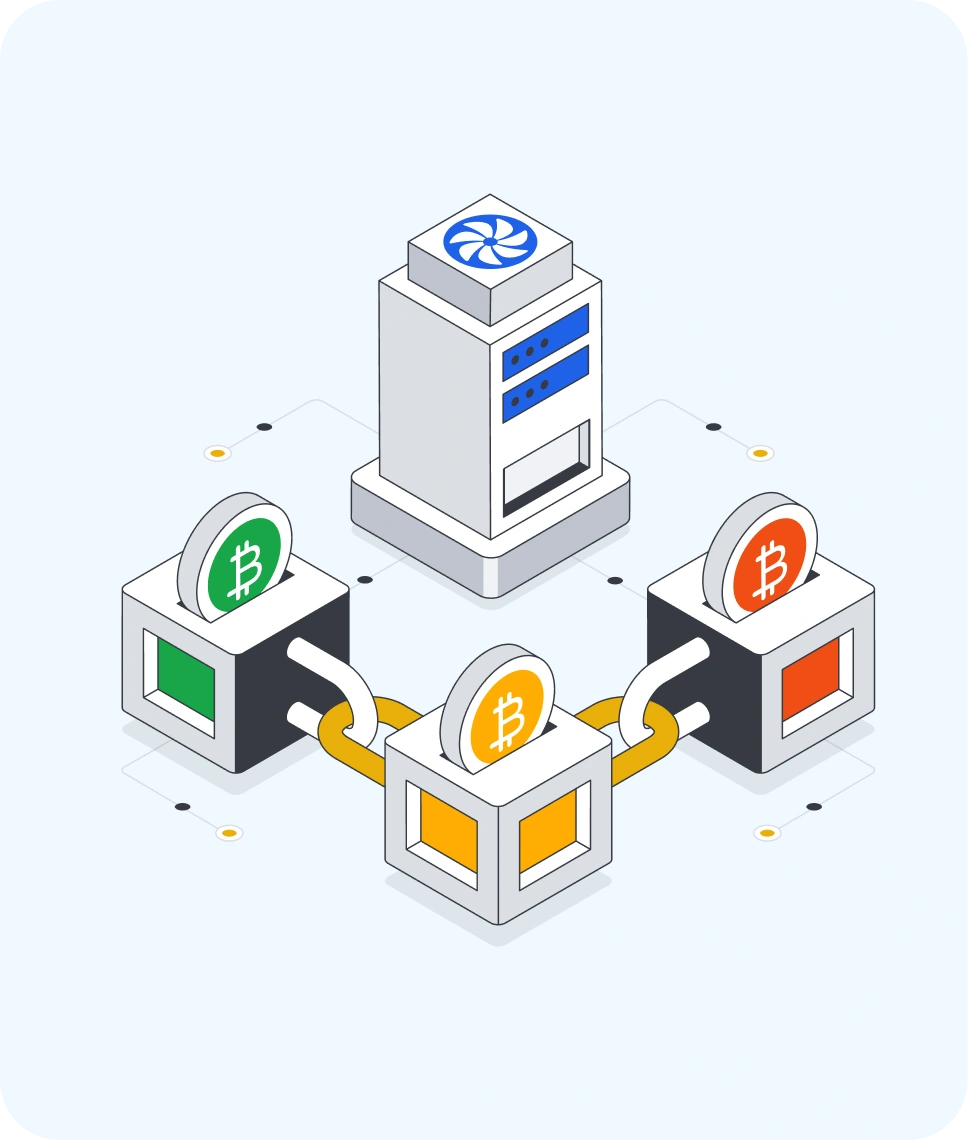
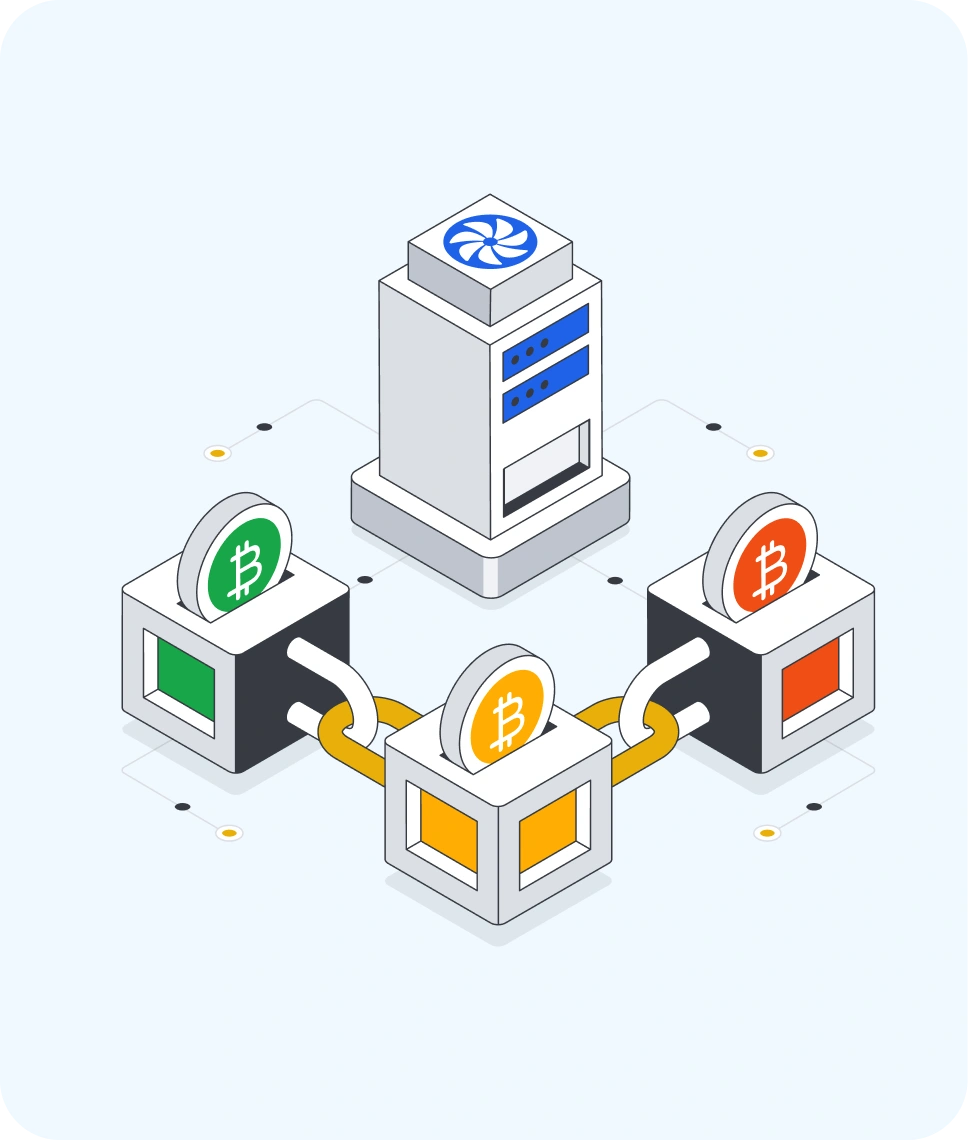
15. NFTs and Blockchain-Based Digital Assets
The NFT market has changed a lot since it hit its peak in 2021. By 2026, blockchain-based digital assets that have long-lasting use cases will mainly be found in areas like verifiable ownership records, event ticketing, membership access credentials, and limited-edition digital collectibles with a genuine community backing.
Building a blockchain-based digital product requires smart contract development, wallet integration, and a clear understanding of gas cost implications for your target chain. The technology is not inherently speculative — the speculation comes from the asset, not the infrastructure.
16. Printables and Digital Downloads
Printables — planners, worksheets, wall art, educational materials — are the entry point for many creators into digital products. Etsy and Gumroad provide distribution without requiring a website. Margins are high and production costs are zero after creation.
The ceiling is also real. Printables rarely scale past a certain income threshold without significant catalogue expansion or a shift toward adjacent higher-ticket products.
17. White-Label Software Products
The white-label solution is a type of digital product in which a company provides another company with access to a near-complete software platform and licenses it to the reseller to market and sell as their own. One of the fastest ways to develop a SaaS B2B model is to buy and sell white-label solutions rather than developing your own software from scratch.
One route is to develop a white-label product line from scratch for other enterprises to resell or acquire a ready-made white-label product for a particular market where it can be sold under one’s own brand. In either case, it is necessary to know which elements of the software can be altered and which ones cannot be changed, along with the ways the licensing model may constrain one’s freedom to set the prices of the solution.
18. Membership and Community Platforms
People are willing to pay for belonging to the right community. A membership platform gives your audience exclusive access to content, discussions, resources, and like-minded people they cannot find anywhere else. Whether it is a private forum, a learning community, or an industry network, the recurring subscription model means predictable revenue every single month.
The key is keeping members engaged enough that canceling feels like a real loss. Regular content updates, live sessions, member interactions, and genuine value delivery are what separate thriving membership platforms from ones that see high churn after the first month. Build the community first, then monetize it.
19. Virtual Events and Webinars
Online events have moved well past the pandemic phase — they are now a proper business model on their own. Selling tickets to webinars, workshops, live training sessions, or virtual summits gives creators and businesses a direct way to monetize their expertise. The overhead is low compared to physical events, and your audience can join from anywhere in the world.
Many businesses also record their sessions and resell them as on-demand content, turning one live event into multiple income streams over time. With the right topic and the right audience, a single virtual event can bring in significant revenue while also building your brand and growing your email list at the same time.
20. Coaching and Digital Services
Coaching is one of the most straightforward ways to package your knowledge and sell it directly to people who need it. Business coaching, career guidance, fitness planning, and creative mentorship all fall into this category. Clients pay for your time, experience, and the accountability that comes with having someone in their corner pushing them forward.
Starting with one-on-one sessions is the natural entry point, but scaling means moving toward group coaching programs or monthly retainer packages. This reduces the time-for-money trap that most solo coaches hit eventually. When your methods are proven, and your results speak for themselves, packaging that into a repeatable program is what turns coaching into a real, scalable digital business.
B2B vs. Consumer Digital Products: Key Differences
The product type you choose determines your buyer. And your buyer determines almost everything else — pricing, marketing channel, support model, integration requirements, and the technical complexity of what you build.
| Factor | Consumer Digital Products | B2B Digital Products |
| Sales cycle | Minutes to days | Weeks to months |
| Decision maker | Individual | Committee or department head |
| Price sensitivity | High | Lower, but ROI must be clear |
| Support expectations | Self-serve documentation | Dedicated onboarding and SLA |
| Integration requirements | None or minimal | CRM, ERP, SSO, API access |
| Security requirements | Basic | SOC 2, GDPR, HIPAA where relevant |
| Contract structure | No contract | Annual contract common |
| Churn driver | Price or better alternative | Poor onboarding or lack of adoption |
Most startup founders don’t think about the integration and security aspects of B2B digital products. Enterprise buyers regularly ask about features such as single sign-on, data residency, API rate limiting, and uptime SLAs as part of their purchasing decision process. If your product fails to demonstrate these capabilities during the product evaluation phase, you will be losing sales to those competitors who do.
What Makes a Digital Product Scalable
Launching a digital product is one problem. Scaling it is a different one entirely. The decisions that determine whether a digital product scales well or breaks under growth are almost all made in the first 60 days of development.
Architecture Decisions That Matter Early
Database design is the decision with the longest tail. A relational schema that works fine at 100 users can become a performance ceiling at 10,000. Choosing between PostgreSQL and a document store like MongoDB, designing indexes correctly from the start, and planning for read replica separation before you need it — these are architectural choices that are expensive to reverse.
Multi-tenancy model matters for any B2B digital product. Shared-schema multi-tenancy is cheaper to operate but harder to customize per enterprise client. Schema-per-tenant is more expensive to manage but gives enterprise buyers the data isolation they often require.
Suggested Article: 15 Best USA Based AI SaaS Development Companies in 2026
Where Most First-Build Digital Products Break Down
The most common failure modes are: authentication systems that were not designed for enterprise SSO requirements, file storage that was not abstracted away from local disk (blocking cloud deployment), hard-coded configuration that should have been environment-variable-driven from day one, and synchronous processing for tasks that should have been queued.
None of these are exotic engineering problems. All of them are predictable with the right experience in the room at the start of a project.
APIs, Integrations, and Third-Party Dependencies
Every API your digital product depends on is a risk. Third-party services change pricing models, deprecate endpoints, and occasionally shut down. Building abstraction layers around critical integrations — so that swapping a payment processor or an email provider does not require a rewrite — is a pattern that costs time upfront and saves significant time later.
Design your own API surface area with versioning in mind from the start. Breaking changes to your API are among the most damaging things you can do to a B2B customer relationship.
How Much Does It Cost to Build a Digital Product in 2026
The cost to develop a digital product will vary based on the complexity of the product, the location of the development team, and the number of features which need to be implemented. The following table shows the cost range for a typical planned project which a skilled development team will execute.
| Digital Product Type | MVP Build Cost | Full Product Build Cost | Primary Cost Drivers |
| SaaS Web Application | $25,000–$60,000 | $80,000–$300,000+ | Auth, multi-tenancy, integrations, admin dashboard |
| Mobile App (cross-platform) | $20,000–$50,000 | $70,000–$250,000+ | Real-time features, offline mode, device APIs |
| AI-Native Product | $30,000–$80,000 | $100,000–$500,000+ | Model infrastructure, RAG pipeline, fine-tuning |
| Online Course Platform | $15,000–$40,000 | $50,000–$150,000+ | Video hosting, progress tracking, payments |
| Data/API Product | $20,000–$60,000 | $80,000–$400,000+ | Data pipeline, normalization, API design |
| Plugin/Extension | $5,000–$20,000 | $20,000–$80,000+ | Compatibility, store approval, maintenance budget |
| White-Label SaaS Platform | $40,000–$100,000 | $150,000–$600,000+ | Customization layer, tenant management, branding |
| eBook/Template | $500–$3,000 | $3,000–$15,000 | Design, copywriting, platform setup |
These ranges assume a professional development team with proper project management, QA, and architecture review. Offshore teams with no architecture oversight can reduce upfront cost and multiply downstream cost significantly.
Build, Buy, or White-Label Your Digital Product
Three paths exist for bringing a digital product to market. The right choice depends on how differentiated your product needs to be, how fast you need to move, and what your budget supports.
1. When Custom Development Is the Right Call
Custom development is the right choice when your product’s value proposition depends on features, workflows, or integrations that no existing platform supports. When you need full ownership of your data and architecture. When your target market has security or compliance requirements that SaaS platforms cannot satisfy. And when you are building something you intend to be the core of a business, not a side revenue stream.
The cost is higher upfront. The compounding advantage of full ownership, full flexibility, and no platform dependency risk is significant over a 3–5 year horizon.
2. When White-Labeling Covers 80% of What You Need
White-label solutions are a rationale when the fundamental capabilities of your item don’t provide an obvious competitive edge for your business. A great example is putting out a fitness app with strong, unique value around community and content, rather than through innovative workout-tracking technology—you’d want to partner with another company on a white-label fitness platform so that you can brand your app and customize its content and get to market sooner and at a lower price point.
The things you want to consider include potential customization options, fixed options, whether or not the licensing terms permit you to price your app at any level, and what will happen to your company if a white-label provider changes the terms of their agreement or goes out of business.
Future Trends in Digital Products to Watch Beyond 2026
The digital products landscape does not sit still. The categories that dominate 2026 will look meaningfully different by 2028. Founders who build with an eye on where the market is heading — not just where it is — make better architecture decisions and stronger product bets.
1. AI Agents as Standalone Digital Products
The current wave of AI integration is primarily additive: AI features are bolted onto existing software. The next wave is different. Autonomous AI agents — systems that can research, plan, execute, and report on multi-step tasks without human intervention — are becoming viable standalone digital products. Tools built on agentic frameworks like LangGraph and CrewAI are already in production for specific workflows. By 2027 to 2028, agent-as-a-product will be a recognized category with its own pricing norms and buyer expectations.
2. Vertical SaaS Acceleration
Horizontal SaaS tools (project management, CRM, communication) are largely commoditized. The growth is in vertical SaaS — software built specifically for a defined industry with deep workflow integration, compliance handling, and domain-specific data models. Legal tech, construction management, agricultural operations, and independent medical practices are all active vertical SaaS opportunities where generic tools leave significant unmet need.
3. Usage-Based Pricing Replacing Seat Licensing
The seat-based SaaS pricing model is under pressure. Enterprise buyers increasingly prefer usage-based or outcome-based pricing where cost scales with value delivered rather than user count. Building a digital product with usage-based billing infrastructure from the start — metered API calls, consumption tracking, tiered rate limits — is a technical requirement that needs to be in the architecture, not retrofitted later.
4. Embedded Finance in Digital Products
Payment processing inside digital products is no longer enough. Embedded finance — integrating lending, insurance, payroll, or banking capabilities directly into a vertical SaaS product — is creating new revenue layers for digital product companies. A construction management platform that offers embedded project financing. A healthcare app that handles insurance claim processing natively. These are product expansions that require fintech infrastructure and regulatory awareness, but they significantly deepen switching costs and average contract value.
Privacy-First Architecture as a Competitive Advantage
GDPR enforcement has become more mature. US state privacy laws are very rampant. Enterprise buyers in regulated industries are focusing their attention on data handling practices at the procurement stage rather than as an afterthought. Digital products with privacy-first architecture, such as data minimization by default, clear retention policies, granular consent management, and audit logging, will definitely have an edge in enterprise sales cycles through to 2026 and beyond.
How iTechnolabs Builds Digital Products
iTechnolabs is a full-stack software and AI development company with a track record of building digital products that reach production, handle real user load, and support the business models they were designed to power.
What that looks like in practice:
- Product scoping and architecture review — defining the right technical foundation before development begins
- Custom SaaS development — multi-tenant web applications built for scale and enterprise requirements
- AI and ML integration — RAG pipelines, LLM integration, agentic workflow development using LangGraph and CrewAI
- Mobile app development — React Native and Flutter for cross-platform, native iOS and Android for performance-critical builds
- MVP development — scoped, fast, and built to extend rather than rebuild
- UI/UX design — product design that reduces onboarding friction and improves conversion
- Dedicated developer teams — embedded engineering capacity for companies that need to move fast without the hiring overhead
Clients across Canada, the US, the UAE, and the UK have used iTechnolabs to take digital products from concept to production. The starting point is always a scoping conversation — not a sales pitch.
Also, read: SaaS Application Development: The Complete Guide 2026
Conclusion
The 20 digital product categories covered in this guide represent the full spectrum of what founders and businesses can build and sell in 2026. The opportunity is real across every category. But the distance between a digital product that launches and one that scales into a sustainable business almost always comes down to decisions made before development begins.
Which product type fits your audience and monetization model. Whether you are building for consumers or businesses. How much technical complexity your timeline and budget can support. Whether to build custom, buy a solution, or license a white-label platform. These are strategic questions with architecture implications.
Getting those answers right is harder without experienced technical guidance. Getting them wrong is expensive to fix after the fact.
The founders and product teams that iTechnolabs works with share one pattern: they treat the scoping and architecture phase as seriously as the build phase itself. That discipline is what separates digital products that work from the ones that don’t.
If you are planning a digital product in 2026, the right starting point is a clear-eyed scoping conversation — not a sprint to a development contract.
FAQs
Q. What is a digital product?
Digital products are assets, tools, and services that exist purely in digital form. They include things like software programs, online training programs, digital books, templates, music files, design tools, background feeds, and application programming interfaces (APIs). What really makes a digital product different from traditional products is that you receive the digital item as soon as your order is placed; therefore, the cost of providing another customer with one more copy is almost nil – and this is the key reason why people view digital products as an ideal way to create a business!
Q. What are the most profitable digital products to sell in 2026?
SaaS applications and AI-native digital products are the highest-value categories when measured by revenue multiple and long-term value. They both generate recurring revenue, grow exponentially with scale, and remain well-protected over time through customer locking-in and data accumulation. Online course platforms, data products, and white-label software are also great options for founders who have the right audience and domain expertise. On the other hand, consumer digital products such as eBooks and templates have lower limits but also require less upfront investment, which makes them good first steps.
Q. How long does it take to build a digital product?
A well-scoped MVP for a SaaS application or mobile app typically takes 8 to 16 weeks with a professional development team. AI-native products can take longer due to model infrastructure setup, data pipeline work, and prompt engineering iteration. Consumer digital products like templates or eBooks can be completed in days to weeks. The key variable is not the product type but the clarity of the scope going into development. Poorly scoped projects routinely take 2x to 3x their original timeline estimate.
Q. What is the difference between a SaaS product and a digital product?
All SaaS products are digital products, but not all digital products are SaaS. SaaS (Software as a Service) refers specifically to software delivered over the internet on a subscription basis, where the provider hosts and maintains the application. A digital product is a broader category that includes SaaS, but also one-time downloadable assets, APIs, online courses, and any other digitally delivered offering. The distinction matters for business model planning: SaaS implies recurring revenue and ongoing hosting/support obligations, while other digital product types may involve one-time transactions.
Q. Do I need a technical co-founder to build a digital product?
No — but you need technical leadership somewhere in the process. A technical co-founder provides that leadership internally. A development partner like iTechnolabs provides it externally. What you cannot afford to skip is the architecture and scoping phase. Founders who go directly from idea to development without a senior technical perspective on their product plan consistently encounter the same set of expensive problems: over-built features in the wrong areas, under-built infrastructure in critical areas, and integration assumptions that do not survive contact with real buyers.
Q. How does iTechnolabs help with digital product development?
iTechnolabs works with founders and product teams across the full development lifecycle — from initial product scoping and architecture definition through MVP development, iteration, and production deployment. The engagement typically starts with a scoping session that covers product requirements, technical approach, integration mapping, and realistic cost and timeline modeling. From there, the team can take on full-cycle development or embed with an existing internal team. The company has built digital products across SaaS, mobile, AI, fintech, healthcare, and e-commerce categories for clients in Canada, the US, the UAE, and the UK.