Key Points
- Every tool on this list can generate a working app from a prompt. The real differences show up after launch: permissions, cost at scale, and who can maintain the app.
- Only a handful of builders produce true native mobile apps. Most generate web apps that run in a phone browser but can’t go into the App Store.
- Credit-based pricing is now the norm. A complex build can burn through a month of credits in a few days of debugging.
- Code ownership varies a lot. FlutterFlow, Lovable, Bolt.new, Replit, and Emergent let you take your code. Bubble, Softr, and Glide keep your app on their platform.
- Two widely used builders had serious, publicly documented security flaws in 2025. Both issues left private app data open to people who shouldn’t have seen it.
- A no-code prototype makes a strong spec for a development team. It cuts discovery time because everyone can click through the idea.
A working app used to take a funded team and a few months. Now a founder can type one paragraph and get a login screen, a database, and a live link before lunch. That shift is real. What happens after the demo is where most teams get stuck.
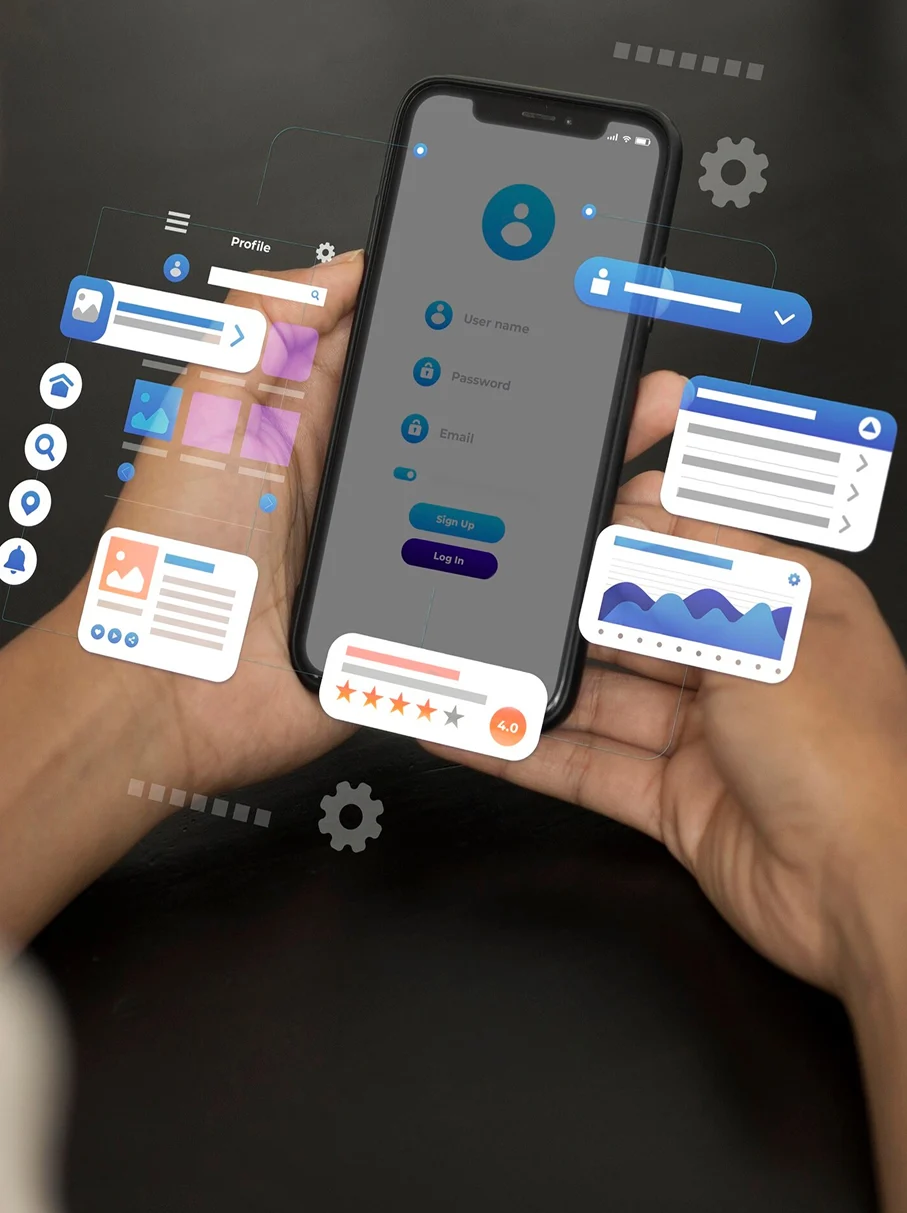
The move toward building without code isn’t new. Gartner found that 41% of employees outside IT already customize or build their own tech solutions. A no-code AI app builder takes that further. You describe the app in plain English, and the AI generates the screens, the logic, and often the backend too.
This matters most to startup founders without an engineering team. It also matters to product managers testing an idea, and to operators whose tool request keeps getting pushed back. The stakes are simple. Pick the right builder and you validate fast. Pick the wrong one and you rebuild from scratch six months later.
We’re iTechnolabs, an AI-first software and mobile app development company with teams across the US, Canada, the UAE, and the UK. We’ve delivered 500+ apps, and a growing share of our projects now start as no-code prototypes that a founder built first. We see what these tools do well, and we see what breaks when real users arrive.
This list comes from hands-on testing, vendor documentation read in September 2026, and what we’ve learned taking no-code apps into production.
Below, you’ll find the 10 builders worth your time and six more worth watching. You’ll also get a cost comparison against custom development and clear signs it’s time to bring in engineers.
Table of Contents
- What Is a No-Code AI App Builder, and How Is It Different From Vibe Coding and Low-Code?
- Our Selection Criteria for the Best No-Code AI App Builders
- 10 Best No-Code AI App Builders at a Glance
- 10 Best No-Code AI App Builders in 2026
- Steps to Build an App With a No-Code AI App Builder
- When to Move From a No-Code AI App Builder to a Development Team
- How Can iTechnolabs Help You Launch an App Beyond a No-Code AI App Builder
- Conclusion
- FAQs
What Is a No-Code AI App Builder, and How Is It Different From Vibe Coding and Low-Code?
A no-code AI app builder is a platform that generates a working app from a text prompt and lets you refine it without writing code. The AI handles the build. A visual editor or follow-up prompts handle the changes.
The terms get mixed up a lot, so here’s how they compare. Gartner’s own definition treats no-code as a subset of low-code, and it warns that “no code” doesn’t mean no specialist skill.
| Approach | How You Build | Who It Suits | Code Access | Typical Ceiling |
| No-Code AI App Builder | Prompt, then visual editing | Non-technical founders and operators | Limited or none on most platforms | Simple apps, MVPs, internal tools |
| Low-Code Platform | Visual tools plus custom scripts | Technical teams and IT departments | Partial | Complex internal systems |
| Vibe Coding Tools | Prompt the AI, which writes real code | Semi-technical founders and developers | Full codebase | Depends on who reviews the code |
| Custom Development | Engineers design and write the system | Products with real users, data, and revenue | Full ownership | Built to your requirements |
The lines are blurring fast. Lovable, Bolt.new, and Replit sit somewhere between no-code and vibe coding because they generate a real codebase you can export. That’s useful. It also means someone may need to read that code later.
Our Selection Criteria for the Best No-Code AI App Builders
We scored every platform on nine criteria. Each one reflects a problem we’ve watched founders hit after launch, not just during the demo.
Setup Speed
How long does it take to go from the first prompt to a working app with real data? The fastest tools do it in minutes. Slower ones need an afternoon of manual wiring first.
Backend Completeness
Does the builder give you a database, user logins, and server logic out of the box? Some tools produce a polished front end with nothing behind it. That looks great in a demo and fails on day one.
Permissions and Roles
Can different users see different records, not just different pages? Client portals and marketplaces live or die on this. It’s also where many AI-built apps quietly leak data.
Output Type
Does it build a web app, a native mobile app, or both? This single question cuts the list roughly in half.
Iteration Stability
When you ask for a change, does the AI edit one thing or rewrite half the app? Unstable iteration eats credits and breaks features that already worked.
Cost at Scale
We looked past the starting price. Credit, workload, and per-user pricing all move with activity, so we asked what a normal month with real users would cost.
Code Ownership and Exit Path
Can you export the code and host it elsewhere? If you can’t, your product lives or dies with that vendor’s roadmap and pricing.
Security and Compliance Posture
We checked for certifications, SSO, audit logs, and any public security incidents. For regulated data, this criterion matters more than all the others combined.
Integrations
Can the app connect to Stripe, your CRM, Google Sheets, or your own APIs? An app that can’t talk to your other tools becomes one more silo.
10 Best No-Code AI App Builders at a Glance
Here’s the short version. Prices are the lowest paid tier as listed in September 2026, in USD. Annual billing is usually cheaper than monthly.
| Tool | Best For | Output | Free Plan | Paid From |
| Lovable | Full-stack web MVPs | Web app | Yes, 5 credits/day | $25/month |
| Bubble | Complex web apps and SaaS | Web, plus native mobile on mobile plans | Development only | $29/month (web, annual) |
| FlutterFlow | Native mobile with code export | iOS, Android, web, desktop | Yes, no publishing or export | $39/month |
| Bolt.new | Fastest prompt to deploy | Web app | Yes, 1M tokens/month | $25/month |
| Replit | Full-stack builds with code control | Web app | Yes, limited | About $20/month |
| Base44 | Fast prototypes with a built-in backend | Web app | Yes, 25 message credits/month | $16/month (annual) |
| Softr | Portals and internal tools on existing data | Web app, PWA | Yes | $19/month (annual) |
| Glide | Spreadsheet-based internal tools | Web app | Yes, build only | $19/month (annual) |
| Microsoft Power Apps | Companies on Microsoft 365 | Web and mobile | Developer plan only | $20/user/month |
| Emergent | Prompt-to-app with code you own | Web and mobile | Yes, 10 credits | $20/month |
10 Best No-Code AI App Builders in 2026
1. Lovable
Lovable turns a prompt into a full-stack web app with a React front end and a Supabase backend. It’s one of the fastest ways to get a real product in front of users.
Key Features
- Prompt-to-app generation: Describe your app and Lovable builds a full-stack web app with a React and TypeScript front end.
- Built-in Supabase backend: Your database, auth, and storage come wired from the first build.
- Visual edit mode: Click any element on screen to change it without writing a new prompt.
- Agent Mode: The AI can explore your code, debug problems, and search the web for fixes on its own.
- GitHub sync: Push your code to GitHub and keep building anywhere you like.
Pros
- It’s one of the fastest routes from a prompt to a deployed web app.
- The code is clean, exportable, and yours to keep.
- Non-technical founders can make visual edits without learning to prompt precisely.
Cons
- Agent Mode burns through credits fast during long debugging sessions.
- It builds web apps only, with no native mobile output.
- Free-tier projects are public, so private work needs a paid plan.
Pricing
The free tier gives 5 credits a day on public projects. Pro starts at $25 a month and adds private projects and custom domains.
Bottom Line
Lovable is our top pick for founders who want a web MVP fast and want to own the code. Just review database security before real users sign up. We cover why in the security section below.
2. Bubble
Bubble is the veteran of no-code. It handles the front end, database, logic, and hosting in one place, and its AI now scaffolds your first draft from a prompt.
Key Features
- AI app generator: Describe your idea and Bubble scaffolds the pages, data types, and workflows.
- Visual workflow engine: Build multi-step business logic that prompt-only tools can’t handle.
- Built-in database: Set up data types, relationships, and privacy rules without an outside service.
- Plugin marketplace and API connector: Add payments, maps, charts, or connect almost any external service.
- Native mobile publishing: Mobile plans let you ship to the App Store and Google Play.
Pros
- It offers more customization depth than any other tool on this list.
- A large community of agencies, tutorials, and templates helps when you’re stuck.
- It’s one of the few no-code tools that publishes native mobile apps.
Cons
- Expect weeks, not hours, before you can ship something production-ready.
- Workload-unit pricing makes your real monthly bill hard to predict.
- You can’t export your code, and web and mobile are separate builds.
Pricing
Development is free. Starter costs $29 a month for web only on annual billing, or $32 billed monthly. Web plus mobile starts at $59 a month on annual billing.
Bottom Line
Pick Bubble for a SaaS product or marketplace with complex logic, and only if you’ve got time to learn it. You can’t export your code, so factor that into your long-term plan.
3. FlutterFlow
FlutterFlow builds real cross-platform apps on Google’s Flutter framework. AI generates screens and components from prompts, and a visual editor handles the rest.
Key Features
- AI page and component generation: Prompts create screens, widget trees, and components you can edit visually.
- True cross-platform output: One project compiles to native iOS, Android, web, and desktop.
- Figma import: Turn existing designs into FlutterFlow components with colours and fonts mapped over.
- Firebase integration: Deep support for authentication, database, and file storage.
- Full code export: Paid plans let you download the complete Flutter codebase and host it anywhere.
Pros
- The apps are genuinely native, not websites wrapped in a mobile shell.
- You own the code, so there’s no platform lock-in.
- The free plan includes a full visual editor and a large template library to learn on.
Cons
- The free plan can’t publish apps or export code.
- AI requests are tightly metered, even on the Basic plan.
- Backend setup is separate, and backend hosting costs extra.
Pricing
A free plan covers building and testing. Basic starts at $39 a month and adds code export.
Bottom Line
FlutterFlow is the best choice when mobile is the product. When the app outgrows the visual editor, iTechnolabs’ Flutter developers can pick up the exported code without a rewrite.
4. Bolt.new
Bolt.new generates, runs, and deploys a full web app right in your browser. There’s no local setup, which makes it the quickest way to see an idea running.
Key Features
- In-browser build and run: Bolt generates, runs, and previews your app with no local setup.
- Full-stack support: React, Node.js, and PostgreSQL work out of the box.
- One-click deployment: Push to Netlify and add a custom domain in a few clicks.
- Two-way GitHub sync: Export your code or keep building in your own editor.
- Figma import and model choice: Bring in designs and pick which AI model does the work.
Pros
- The free tier is one of the most generous on this list.
- It keeps track of earlier decisions well across long build sessions.
- You keep full ownership of the code it writes.
Cons
- It builds web apps only.
- Free projects show a visible Bolt badge.
- Clearing your chat history means deleting the whole project.
Pricing
The free plan includes 1 million tokens a month, capped at 300,000 a day. Pro starts at $25 a month with 10 million tokens.
Bottom Line
Bolt.new is the tool for “I want to see it working today.” Treat it as a starting point you’ll export, not a long-term home.
5. Replit
Replit’s Agent builds a full-stack app from a prompt, tests it in a browser, and fixes its own bugs before handing it back. It sits closer to coding than most tools here.
Key Features
- Autonomous Agent: Builds a full-stack app from a prompt, tests it in a browser, and fixes its own bugs.
- Quick and full build modes: Choose a fast prototype run or a longer, more complete build.
- Browser-based IDE: A full editor with a terminal and version control, right in your browser.
- Project import: Bring in apps started in Lovable, Bolt.new, or GitHub and keep going.
- Flexible hosting: Deploy anything from a static site to an always-on production machine.
Pros
- You own a real codebase, so moving off the platform is always an option.
- Its Agent does more work on its own than most tools here.
- Hosting grows with you without a separate provider.
Cons
- Effort-based Agent pricing makes complex builds hard to budget.
- Every change after launch needs someone comfortable reading code.
- It doesn’t deploy native mobile apps to the app stores.
Pricing
A free Starter plan is available. Core starts at about $20 a month and includes usage credits. Hosting is billed separately.
Bottom Line
Replit suits semi-technical founders or teams with one developer who wants AI to do the first 80%. Non-technical owners will struggle to maintain it alone.
6. Base44
Base44 builds a web app with the backend already wired: database, user logins, roles, and hosting. Wix bought it in 2025.
Key Features
- Backend-first build: Base44 defines your data, APIs, and auth before it creates the interface.
- Built-in backend: User accounts, database, roles, and hosting are set up for you.
- Discuss mode: Plan features and data with the AI before it writes anything.
- Stripe payments: Add checkout and subscriptions for a paid product.
- Built-in AI agents: Send messages, trigger workflows, and generate reports inside the app.
Pros
- You can get a working prototype in minutes with nothing to configure.
- Planning in Discuss mode cuts down on rework later.
- The AI handles technical decisions in the background, so non-technical builders keep moving.
Cons
- Message credits run out quickly when you iterate or debug.
- Exported code depends on Base44’s own SDK, so it isn’t fully portable.
- Running costs grow with user activity, which makes production spend hard to predict.
Pricing
The free plan includes 25 message credits a month, capped at 5 a day. Paid plans start at $16 a month billed annually, or $20 billed monthly.
Bottom Line
Base44 is great for testing a lightweight idea this week. Plan your exit early if the idea works.
7. Softr
Softr helps build business apps like client portals and CRMs. You can create apps using a block based visual editor, starting with a prompt.
Key Features
- AI Co-Builder: Softr will create pages and logic and build a database based on your input.
- Data Source Integration: You can bring data from Airtable, Notion, Google Sheets, HubSpot, and other services and apps, using their native integrations. Softr also provides a native database.
- Permissions: You can set permissions for record level data for vendors and clients.
- Email notifications and approval workflows: You can set up workflows to send emails and notifications in Softr to replace workflow automation apps.
Pros
- People who are not developers can update and change the app after its release.
- Charging users of the app a one-time fee allows cost stability when the user base grows.
- It is compatible with the existing software and database, so there is no need to transfer or migrate data.
Cons
- It isn’t built for SaaS products, marketplaces, or consumer apps.
- Block-based layouts can look less custom than hand-designed apps.
- You can’t export your code.
Pricing
A free plan is available. Paid plans start at $19 a month for Basic, $99 for Pro, and $329 for Business, all billed annually.
Bottom Line
Softr is the safest pick for an operations team that needs a secure portal on existing data. It’s the wrong pick for a startup’s core product.
8. Glide
Glide makes apps from spreadsheets. Connectors to Google Sheets, Excel, and Airtable make creating apps that quick and easy.
Key Features
- Spreadsheet-to-app: Apps can be created from spreadsheets, databases, and other data sources.
- AI columns: Columns can be generated using AI to perform functions like data extraction, OCR, and summarizations.
- Glide Agent: The Glide Agent can create a first version of an app using a simple description.
- Workflow automation: Apps can be configured to perform automated tasks.
- Role-based access: Access and editing of data can be limited to certain users.
Pros
- Apps look polished out of the box with almost no design work.
- There’s almost no learning curve if your data already lives in a spreadsheet.
- Eligible plans include SOC 2 and GDPR compliance support.
Cons
- Every sync and record edit counts against a monthly update limit.
- Users with business email addresses need the pricier Business plan.
- It can’t publish apps to the App Store or Google Play.
Pricing
Building is free. Paid plans start at $19 a month for personal use on annual billing. Business plans start around $199 a month billed annually.
Bottom Line
Glide fits small internal tools built on a spreadsheet your team already maintains. It’s not meant for complex logic or public-facing products.
9. Microsoft Power Apps
Power Apps brings Microsoft Copilot into a low-code builder. Describe an app, and Copilot creates the Dataverse tables and a first draft of the interface.
Key Features
- Copilot app generation: Describe the app and Copilot creates the Dataverse tables and a first draft of the interface.
- Microsoft data connections: Link to SharePoint, Dynamics 365, Azure, and hundreds of other sources.
- Web and mobile apps: Your team can use the same app in a browser or on a phone.
- Enterprise governance: Admin controls, security policies, and oversight come from the Microsoft stack.
- Flexible licensing: Choose per-user Premium plans or pay-as-you-go per active user per app.
Pros
- It fits almost without friction if your company already runs on Microsoft 365.
- IT gets the governance and security controls it already trusts.
- Copilot cuts the time it takes to get a first version working.
Cons
- It offers much less value outside the Microsoft stack.
- Licensing is complex and confuses many buyers.
- Per-user pricing adds up quickly for larger teams.
Pricing
The Premium plan is listed at $20 per user per month. A pay-as-you-go option charges per active user per app. A developer plan covers non-production use only.
Bottom Line
Choose Power Apps when your company already lives in Microsoft 365 and IT wants governance. It’s rarely the right fit for a startup’s customer-facing product.
10. Emergent
Emergent uses a team of specialized AI agents for design, backend, testing, and deployment. The goal is a complete, working app from one conversation.
Key Features
- Multi-agent build system: Separate AI agents handle design, backend, testing, and deployment.
- Code you own: Emergent generates React, Python, and MongoDB code you can sync to GitHub and export.
- Payments and sign-in from a prompt: Ask for Stripe checkout or Google sign-in and they’re wired into the first build.
- Web and mobile from one project: Build a browser app and a mobile app side by side.
- Integrations: Connect to services like Supabase, Twilio, SendGrid, and GitHub.
Pros
- The first build tends to be more complete than single-agent tools.
- You keep the code, so there’s a clear exit path.
- It asks clarifying questions before it builds, which surfaces missing product decisions early.
Cons
- Credit use is hard to predict on complex, multi-feature builds.
- Data can drift after repeated deploys, so you’ll need to check it by hand.
- It’s more than you need for a quick, simple internal tool.
Pricing
The free plan includes 10 credits a month. Standard costs $20 a month for 100 credits, and Pro costs $200 a month for 750 credits.
Bottom Line
Emergent suits founders who want a fuller first build with an exit path. Budget extra credits for the debugging rounds.
Steps to Build an App With a No-Code AI App Builder
A good prompt helps, but a good process helps more. Here’s the sequence we recommend to founders before they touch a builder.
Step 1: Define One Problem and One User
Write down the single job your app does and who it does it for. “A booking tool for mobile dog groomers” gives the AI something to build. “An all-in-one pet platform” doesn’t.
Step 2: Choose Your Output Type
Decide on web or native mobile using the table above. This choice rules out half the tools before you spend a dollar.
Step 3: Shortlist and Test Two or Three Builders
Build the same small app on each free plan. You’ll learn more in one afternoon of side-by-side testing than from any review, including this one.
Step 4: Write a Structured First Prompt
List the screens, the user roles, the data you’ll store, and what each role can see. Say plainly that users must only see their own records. AI tools build what you ask for, and they often skip what you forget to ask.
Step 5: Set Up Data and Permissions Early
Check the database tables and access rules before you add features. Fixing permissions after launch is far harder than setting them up on day one.
Step 6: Run a Security Check
Test logging in as two different users and try to view each other’s data. If you’re storing personal, health, or payment data, get a developer to review it before launch.
Step 7: Beta Test With Real Users
Invite 10 to 20 target users and watch where they get stuck. Their confusion is your roadmap.
Step 8: Launch, Monitor, and Plan Your Next Stage
Track usage and your monthly platform bill from week one. When either starts climbing fast, it’s time to plan the move to a stronger foundation.
When to Move From a No-Code AI App Builder to a Development Team
The time to move is before the platform becomes your bottleneck, not after. Watch for these seven signals.
1. You’re storing sensitive data. Health records, payment details, or personal documents need a proper security review.
2. Your monthly bill keeps jumping. Usage pricing that doubles every few months is a scaling problem, not a pricing plan.
3. The AI keeps breaking working features. If each fix creates two new bugs, the codebase has outgrown prompting.
4. You need an integration the platform can’t do. Custom APIs, legacy systems, and specialized hardware often hit a wall.
5. Investors are asking about your stack. Due diligence now covers how your app was built and who reviewed it.
6. Performance slows as users grow. Slow page loads at a few thousand users are a warning sign.
7. You need features on your own schedule. When the vendor’s roadmap decides what you can ship, you’ve lost control of your product.
There’s a middle path. Many founders keep their no-code app live while a team builds the production version. The prototype becomes the spec, which saves weeks of discovery. Our MVP development services often start exactly that way.
How Can iTechnolabs Help You Launch an App Beyond a No-Code AI App Builder
iTechnolabs is an AI-first software and mobile app development company for startups and growing businesses that helps turn prototypes into secure, scalable products. Best for: taking a no-code or vibe-coded MVP to production, building native iOS and Android apps, and adding AI features to existing software.
Here’s what that looks like in practice. We review what you’ve built, keep what works, and rebuild what won’t survive real users. Our team has delivered 500+ apps used by more than 50,000 end users. We hold ISO 27001:2013 for information security and ISO 9001:2015 for quality management.
You own the code from day one. Our 300+ developers work across the US, Canada, the UAE, and the UK. We can help you pick a stack, plan a phased migration, or add AI features through our AI development team.
Conclusion
The best no-code AI app builder is the one that fits your next six months, not your next six years. Lovable and Bolt.new get a web MVP live fastest. FlutterFlow is the clear pick when you need a native mobile app and want to keep the code. Softr, Glide, and Power Apps handle internal tools well. Bubble still lead when you need deep logic and can invest the time to learn it.
Whichever tool you choose, go in with a plan. Test two or three builders on the same small app. Set up permissions before features. Estimate your cost at real usage, not at signup.
Most of all, know your exit. No-code gets you to proof faster than anything else available today. It’s a smart way to learn what your customers want. But a prototype that suddenly has paying users, private data, and a growth target needs a foundation built for that load.
When you reach that point, you don’t have to start over. Your working prototype is the best brief a development team can get. Talk to iTechnolabs about turning yours into a product that’s ready for real users.
FAQs
1. What is the Best No-Code AI App Builder in 2026?
It really depends on your use case. If you are creating a web MVP, Lovable or Bolt.new are good options and so is FlutterFlow for native mobile MVPs. Softr and Glide are better for internal tools. If you want to build a more complex SaaS app, Bubble would be a good choice. If you are just looking to evaluate a solution, build the same app in a few different tools first.
2. Can a No-Code AI App Builder Help Create Native Apps for iOS and Android?
Not all No-Code AI App Builders can do this. FlutterFlow can do this and Bubble has a similar offering for mobile app publishing. The other options like Lovable, Bolt.new, Replit, Base44, and Glide can create web apps that run on mobile browsers, but these web apps can’t be published to mobile app stores.
3. How Much do No-Code AI App Builders Cost?
The cost for most of these solutions ranges from $16 to $39 a month and most have a free tier. Before you choose a solution, think about your expected use case and volume for the first year to estimate what you will actually pay.
4. After Using a No-Code AI App Builder, do I Own the Source Code?
This varies by solution. If you need to own the source code, check with the solution first. Bubble, Softr, and Glide do not let you export the source code. Code can be exported and synced to GitHub with FlutterFlow, Lovable, Bolt.new, Replit, and Emergent. Base44 exports code, but it uses Base44’s SDK.
5. Is a No-Code AI App Builder the Same as Vibe Coding?
They are related but different. Vibe coding is directing an AI to create actual computer code. A no-code AI app builder includes a tool that lets the user build an app without writing code and provides a user interface, server space and other back-end services. Examples of tools that do both are Lovable and Bolt.new.
6. Are Apps Created Using a No-Code AI App Builder Safe?
It is possible for an app created with the builder to be safe, but it is up to the user to check. A study by Veracode showed that out of 100 cases of code generated by AI, 45 had code with security flaws. Some of the code generated by Lovable was used to build apps that had security flaws and lapses in 2025. If you are going to store data with your app and it is going to be accessed by a lot of users, it is a good idea to have a developer check your app first.
7. Is It Possible for Thousands of Users to Use an App Created by a No-Code AI App Builder?
It is possible, but there are other considerations. A no-code app builder is great to use when you need an app quickly. However, the app may not work as well if a lot of people start using it. If you think the app will have a lot of people in a short time, you should consider a tool that allows users to generate code and build the app using their own code. That way, if the app is a success, it can be easily migrated to other servers.
8. When Should I Hire Developers?
You should hire developers when the app processes real-world transactions, or if the app contains features that generate or store data and the no-code app builder doesn’t allow features that integrate with real-world services. Other features of the app can break with no clear reason. Many founders keep an app built using a no-code app builder for an indefinite period of time and build a different app using traditional software development methods.