Are you up for your adaptation to leveraging the incredible demand of a Fashion App by 2026?
With most consumers now looking towards digital platforms for personalized shopping, virtual try-ons, and other trend updates, fashion apps have become a must-have tool to compete in the industry. The question is not, “Do you need one?” It’s, “How’s yours going to stand out in the crowd?”
So, what has been behind such explosive growth, and how can businesses ride on the waves of these trends to succeed in business? Take a look at the plunge into the latest insights and opportunities revolutionizing the future demand of a fashion apps.
Table of Contents
- Market Insights of Fashion Apps
- Why Is the Demand of a Fashion Apps Growing?
- Emerging Trends Transforming Demand of a Fashion Apps in 2026
- Key Market Insights for the Future of Rising Demand of a Fashion Apps
- How Fashion Apps Can Stay Competitive
- Why the Rising Demand of a Fashion Apps Matters
- Why iTechnolabs is Your Perfect Fit for Fashion App Development
- Frequently Asked Questions About the Demand for Fashion Apps & Industry Trends
Market Insights of Fashion Apps
The fashion app market is growing and changing fast. People’s shopping habits and new tech are behind this. Here’s what you need to know:
Market Growth: As per the Statista, the global fashion market will grow 7.65% from 2026 to 2029. By 2029, it could be worth about $1,183 billion. This shows more people are using digital platforms, like fashion apps.
E-commerce Trends: In the U.S., online sales of clothes and accessories made $134.5 billion in 2023. This was a bit less than 2022’s $135.8 billion. But it’s expected to go up to $219.3 billion by 2029.
Fast Fashion Changes: Fast fashion is really taking off. Shein grew its market share from 18% to 40% between March 2020 and March 2022. This hurt other brands. In 2022, clothes for adults were 54.21% of the fast fashion market.
Mobile Use: More people are shopping on their phones. In 2023, 2.87 billion people are expected to have smartphones. Over 64% of shoppers use their phones to decide what to buy.
Why Is the Demand of a Fashion Apps Growing?
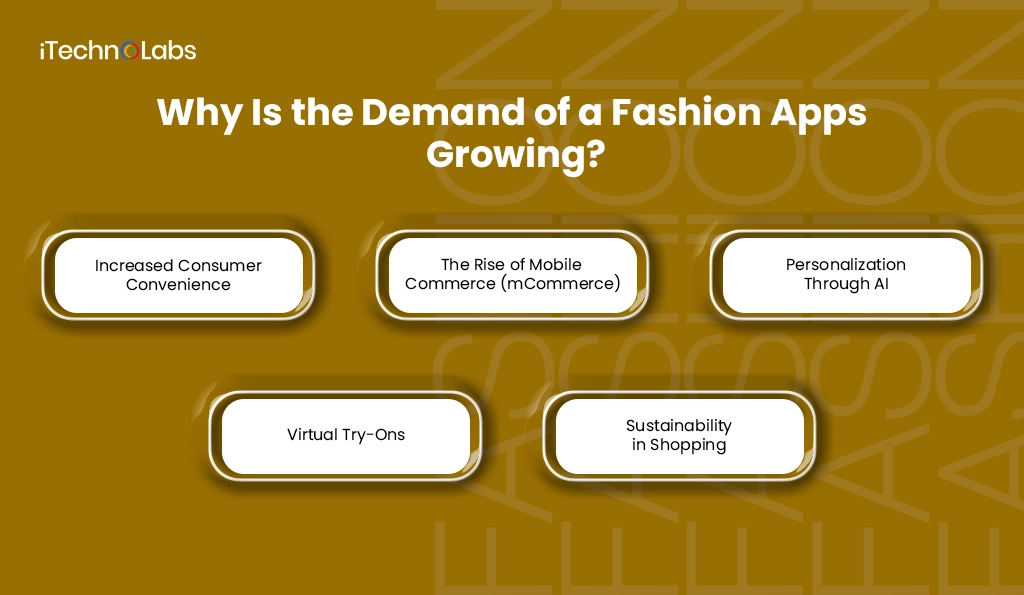
Fashion applications have become a part of the online shopping ecosystem in recent years. Here are a few factors driving it:
-
Increased Consumer Convenience
Consumers want comfort, and with the availability of fashion applications, they can do everything like browse, compare, and place a purchase anytime, anywhere. Push notifications regarding discounts and personalized recommendations add seasoning to the shopping experience and keep engagement high.
-
The Rise of Mobile Commerce (mCommerce)
The estimated projection for mobile commerce will reach 44% of all e-commerce sales in the coming years. Such an upsurge may profit a brand by tapping an application that provides appropriate ways to make purchases as simple as possible with just one-touch payment and an easy interface.
-
Personalization Through AI
With algorithms revolutionizing the private shopping experience, fashion applications employ Artificial Intelligence (AI) in providing recommendations for items based not only on the customer’s current browsing behavior but also on past purchases and social media preferences. This will keep the customer coming back for more.
-
Virtual Try-Ons
The biggest obstacle in online shopping has been the inability to touch and try before making one’s purchase decisions. Augmented Reality (AR) in fashion apps, like virtual fitting rooms, now address this problem. Nowadays, consumers can simply virtually try on clothes, accessories, and make-up from the comfort of their homes.
-
Sustainability in Shopping
Today’s consumers are interested in sustainability. They find applications for secondhand shopping, renting, or even eco-ventures very appealing. ThredUp and Rent the Runway are examples of academic or theoretical materials that touch on these two issues; they can be classified as a kind of approach to sustainability.
Emerging Trends Transforming Demand of a Fashion Apps in 2026
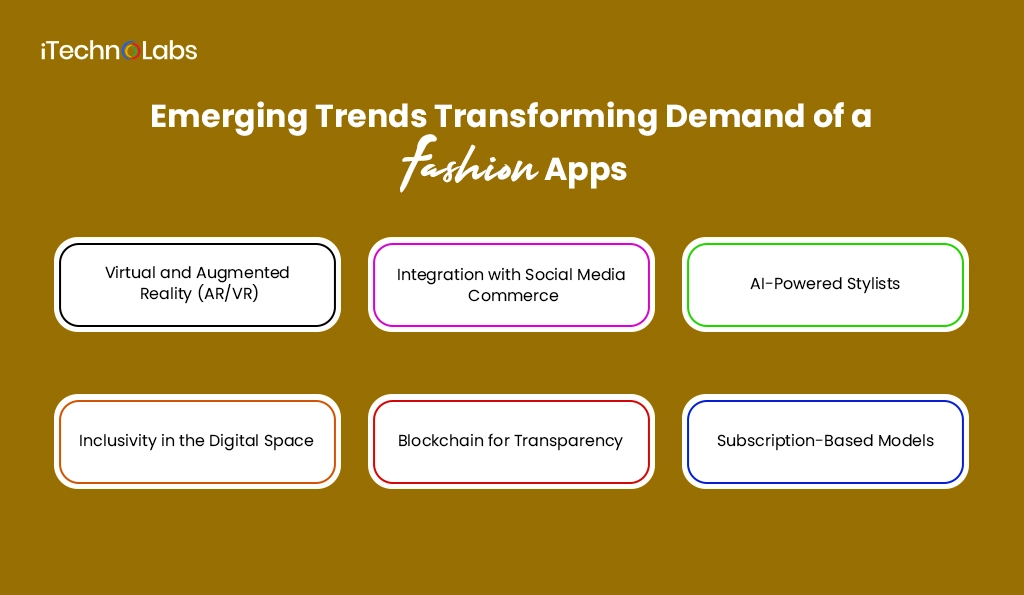
The rapid rise in demand of a fashion apps has opened the door to innovative trends. Here’s what to expect as we move toward 2026:
-
Virtual and Augmented Reality (AR/VR)
Just think of walking through a virtual store or trying on a designer jacket with your phone. AR and VR technologies lead the revolution in fashion apps, providing immersive shopping experiences. Apps like ModiFace (bought by L’Oréal) and Gucci Virtual Try-On are already making headlines in this arena.
-
Integration with Social Media Commerce
Social networking sites are transforming into sales channels and application-specific fashion platforms, for instance, Instagram and TikTok will soon host their users as shoppers right in their social feeds. These integrations promise to get stronger by 2026.
-
AI-Powered Stylists
Chatbots and virtual stylists driven by artificial intelligence are going to stay with us. They systematically analyze trends, body types, and even user preferences to tailor advice to the user. The Stitch Fix app is leading with some early prototypes in this space, and surely many more will be joining the league over time.
-
Inclusivity in the Digital Space
The dialogue of inclusiveness has reached the tech world also, and an increase in demand of a fashion apps are not an exception. In 2026, one should expect to see more demand for fashion apps with size-inclusive ideals, various avatars, and personalized fashion options.
-
Blockchain for Transparency
Consciousness concerning sustainability dictates that consumers know the source of clothes. Blockchain technology in fashion applications enables transparency across the entire supply chain, facilitating verification of ethical practices by users.
-
Subscription-Based Models
Subscription models are becoming more and more popular with things like member benefits and styled monthly outfit packages. Fabletics and Stitch Fix, for example, have already done a good job with that, and the trend shows no signs of stopping.
Key Market Insights for the Future of Rising Demand of a Fashion Apps
The rising demand of a fashion apps has massive implications for the tech and retail industries. Here are a few critical market insights:
1. Explosive Market Growth
The global fashion application market will grow at a stunning CAGR of 8.75% during the years 2023 to 2028, which looks like a great chance for app developers and fashion retailers. To take advantage of this opportunity, businesses will have to innovate continuously while remaining flexible and agile by developing apps that will meet the requirements of a new-age tech-savvy consumer.
2. Consumer Demographics
Gen Z and Millennials have been taking over the plush user base of fashion apps. They want shopping experiences to be easy, sustainable, and particularly designed for them. So, for brands to thrive, they must learn the unique behaviors of these digitally-oriented generations and adapt their strategies accordingly. Applications focusing on eco-friendly options, product availability, and ease of access are attractive to end-users.
3. Dominance of Customization
Recent studies indicate that 71% of consumers prefer finding a shopping experience that fits their style. The apps can master hyper-personalization of their services with curated recommendations, coupled with AI-driven styling tips and bespoke features to meet their intended goals. Personalized path-making would engage the brands in deeper relationships with users and encourage higher engagement among them.
4. Data-Driven Decision Making
Massive data usage in fashion applications is changing the game for developers as they learn to predict consumer behavior and improve offerings accordingly. With this information on user preferences, shopping habits, and payment methods, businesses can create intelligent marketing and well-timed, effective application releases. In this way, an application becomes relevant and people-centric in a constantly changing market.
How Fashion Apps Can Stay Competitive
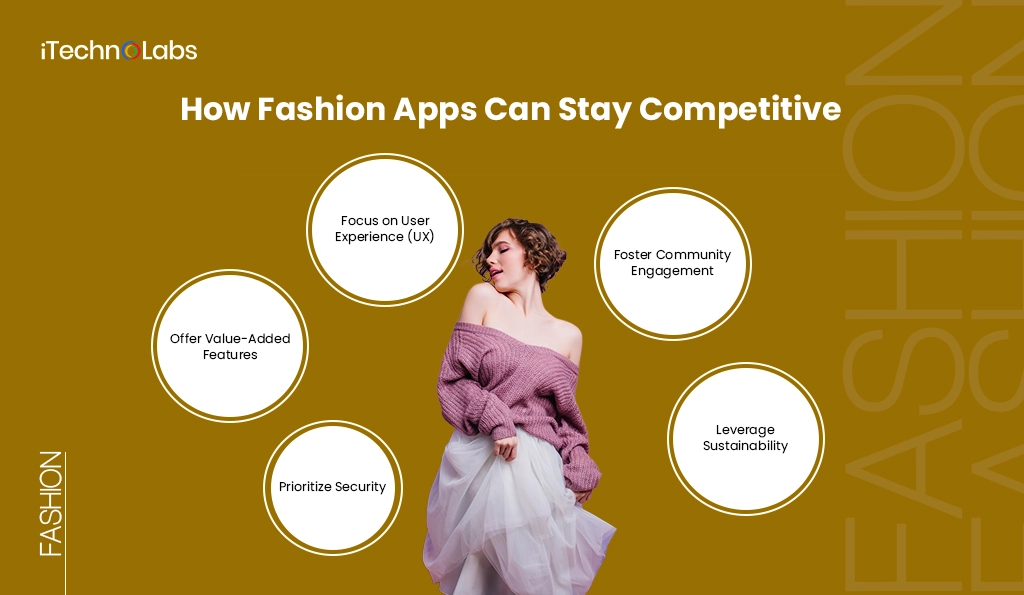
App developers need to continuously innovate to maintain a competitive edge in the bustling demand of a fashion app market. Here’s what you can do to add value:
-
Focus on User Experience (UX)
An intuitive interface, swift performance, and a winning aesthetic design must be the pillars. Nothing is more annoying than slow, clunky apps: they can drive a user mad to the point of abandonment. Regular testing and feedback allow the app to be fine-tuned to a smoother experience, thereby ensuring higher retention rates and better reviews.
-
Offer Value-Added Features
Integrating advanced features like AR try-ons, AI-powered chatbots, and loyalty programs enhances user engagement. These tools add excitement and convenience, keeping users invested in the app and its offerings.
-
Prioritize Security
With growing mobile payments, data security becomes even more critical. Encryption, multi-factor authentication, and transparent privacy policies help build trust and protect sensitive user information for long-term retention.
-
Foster Community Engagement
Adding social sharing options and encouraging user-generated content creates a vibrant community. Rewarding contributions with discounts or perks strengthens user connections and promotes ongoing interaction.
-
Leverage Sustainability
Showcase brands that are environmentally sustainable, including features such as a carbon footprint tracker. This matches up with the values of earth-minded people, especially Gen Z and Millennials.
By prioritizing these strategies, fashion apps can differentiate themselves, boost user satisfaction, and maintain relevance in a highly competitive market.
Also, read: 4 Crucial SHEIN App Features That Make Your Fashion App Successful
Why the Rising Demand of a Fashion Apps Matters
The demand of a fashion apps reveals the greater shifts in consumer engagement with brands. The physical-first shopping era gives way to digital-first experiences. Whether you are a fashionista looking for convenience, a shrewd shopper on the hunt for deals, or an app developer creating your next big innovation, fashion apps will change the way you shop, dress, and connect.
In 2026, fashion apps will change the shopping experience arena and will become the center role in pushing for sustainable, inclusive, and tech-led innovations into the industry.

Why iTechnolabs is Your Perfect Fit for Fashion App Development
It is critical to find a partner that understands your vision and provides next-gen solutions for these ever-changing waves of fashion apps. iTechnolabs is one of the world’s top mobile app development firms and is an expert in developing innovative, user-friendly, customer-focused apps that have been designed with fashion retailers and brands in mind.
With a skilled team of developers and designers, iTechnolabs builds applications that stand out in a competitive market using the latest technologies such as AI, AR/VR, and blockchain. From augmented reality virtual fitting rooms, machine learning-based virtual product recommendations, and eco-friendly shopping tools, iTechnolabs will guarantee that your app delivers a superior user experience.
Focusing on scalability, security, and seamless UX/UI, iTechnolabs positions businesses to stay ahead of industry trends. Ready to turn your fashion app idea into reality?
Visit iTechnolabs to learn more about their comprehensive app development services.
Frequently Asked Questions About the Demand for Fashion Apps & Industry Trends
1. What is the demand for the fashion industry?
The fashion industry continues to experience strong growth, fueled by the rapid adoption of digital shopping, mobile commerce, and personalized customer experiences. Consumers increasingly prefer browsing, comparing, and purchasing fashion products through mobile apps. Additionally, technologies such as AI-driven recommendations, AR try-ons, and social commerce are transforming how people shop, creating significant opportunities for fashion brands and app developers.
2. What is the demand for a fashion designer?
Fashion designers remain in high demand as brands strive to create unique, trend-driven, and customer-focused collections. With growing consumer interest in sustainability, inclusivity, and personalized fashion, designers play a vital role in developing products that meet evolving market expectations. Their creativity helps brands stay competitive in both online and offline fashion markets.
3. How much does it cost to make a fashion app?
The cost of developing a fashion app depends on several factors, including app complexity, feature requirements, design quality, supported platforms, and the development team’s location. A basic fashion app may cost between $15,000 and $50,000, while advanced applications featuring AI recommendations, AR virtual try-ons, live shopping, or social commerce functionalities may require a larger investment.
4. What is the most downloaded fashion app?
The most downloaded fashion apps can vary by region and time period, but platforms such as SHEIN, H&M, and Zara consistently rank among the most popular. Their success is driven by user-friendly interfaces, personalized recommendations, seamless checkout experiences, and frequent product updates that keep customers engaged and returning to the app.
5. What is AR try-on and why is it important for fashion apps?
AR (Augmented Reality) try-on technology allows users to virtually visualize clothing, accessories, or footwear before making a purchase. This feature has become increasingly important for fashion apps because it enhances the online shopping experience and helps customers make more confident buying decisions.
Key benefits include:
- Improved customer engagement and satisfaction.
- Reduced product return rates.
- Increased purchase confidence.
- Enhanced product visualization without visiting a physical store.
6. Are fashion apps helping sustainability efforts?
Yes, many modern fashion apps are supporting sustainability initiatives by helping consumers make more environmentally conscious purchasing decisions. These features not only improve transparency but also align with growing consumer demand for sustainable fashion.
Common sustainability-focused features include:
- Sustainable brand filters – Help users discover eco-friendly brands.
- Eco-friendly product badges – Highlight products made from sustainable materials.
- Size and fit recommendations – Reduce returns and minimize waste generated from shipping and packaging.
7. How does mobile payment integration affect fashion app demand?
Mobile payment integration significantly enhances the user experience by making transactions faster, safer, and more convenient. Features such as digital wallets and buy-now-pay-later services reduce checkout friction, helping fashion brands improve conversion rates and customer retention.
Popular payment options include:
- Apple Pay and Google Pay.
- Buy Now, Pay Later (BNPL) solutions.
- One-click checkout systems.
- Secure digital wallet integrations.
8. Are fashion apps integrating live shopping experiences?
Yes, live shopping has become one of the fastest-growing trends in fashion commerce. Through live streams, brands and influencers can showcase products in real time while viewers instantly purchase featured items. This interactive experience combines entertainment with shopping, helping brands increase engagement, trust, and sales.
9. What are rental and subscription models in fashion apps?
Rental and subscription-based fashion apps provide consumers with flexible alternatives to traditional clothing purchases. These models are particularly popular among younger consumers seeking affordability, convenience, and sustainable fashion choices.
Common offerings include:
- Fashion rentals – Temporary access to designer or premium clothing.
- Curated subscription boxes – Personalized outfit selections delivered regularly.
- Monthly wardrobe memberships – Ongoing access to rotating fashion collections.
These business models help fashion brands generate recurring revenue while providing users with greater variety and value.
10. How are fashion apps changing the fashion industry?
Fashion apps are transforming the fashion industry by making shopping more personalized, accessible, and convenient. Features such as AI-powered recommendations, virtual try-ons, social commerce, and mobile payments help brands engage customers more effectively while increasing sales and customer loyalty. As consumer preferences continue shifting toward digital experiences, fashion apps are becoming essential tools for fashion businesses worldwide.