Technology is making its way into the food industry quickly through the development of many online food delivery apps like Talabat. The convenience and ease of ordering food items and speedy deliveries are changing the way how food establishments run. With the convenience of ordering food online, the rise of the use of online food delivery applications has seen a dramatic upward trend.
According to the report from Statista, the number of people who use food delivery across the Middle East region is expected to rise to 5.5 million in 2026, with the penetration rate being 44.5 percent in 2022.
Generations of today’s tech-savvy customers appreciate the ease of shopping online and receiving faster deliveries, aiding them in managing their hectic schedules.
Based on the popularity of the app for food delivery, Talabat, investors have demonstrated a strong desire towards financing such apps. This is the ideal time to make money from the food delivery industry online by developing an Online Food Delivery App like Talabat.
The growth in popularity of these apps has been steady and the worldwide market is projected to be $320 billion in 2029. Although COVID has already forced us to adopt services that are not connected to the internet, technological advancements in the coming years will also influence this field in the future, allowing drones to deliver food as they develop to become more environmentally sustainable.
The on-demand app development industry isn’t as old as you might believe. The most recent innovation is the exploration of brand-new areas of the market for digital goods, since it was not fully developed until 2013. The main difference between traditional and modern ways of delivering the food industry is that the former provided customers with access to the logistics of various restaurants and let them evaluate and compare the products and services offered by different restaurants.
While the food delivery business has experienced an increase in the past few years, there’s still an opportunity for improvement and perfection, particularly in the realm of catering services. Customers could be lured by the wide variety of restaurants, an array of choices for food, and easy payment options. So, the immediate need is to design an app that has these options.
Table of Contents
- Why would you want to develop an Online Food Delivery App like Talabat?
- Some of the key aspects of an online food delivery app like Talabat
- How to Develop an Online Food Delivery?
- How can iTechnolabs assist in the development of a successful food delivery service?
- Frequently Asked Questions to Develop an Online Food Delivery App
Why would you want to develop an Online Food Delivery App like Talabat?
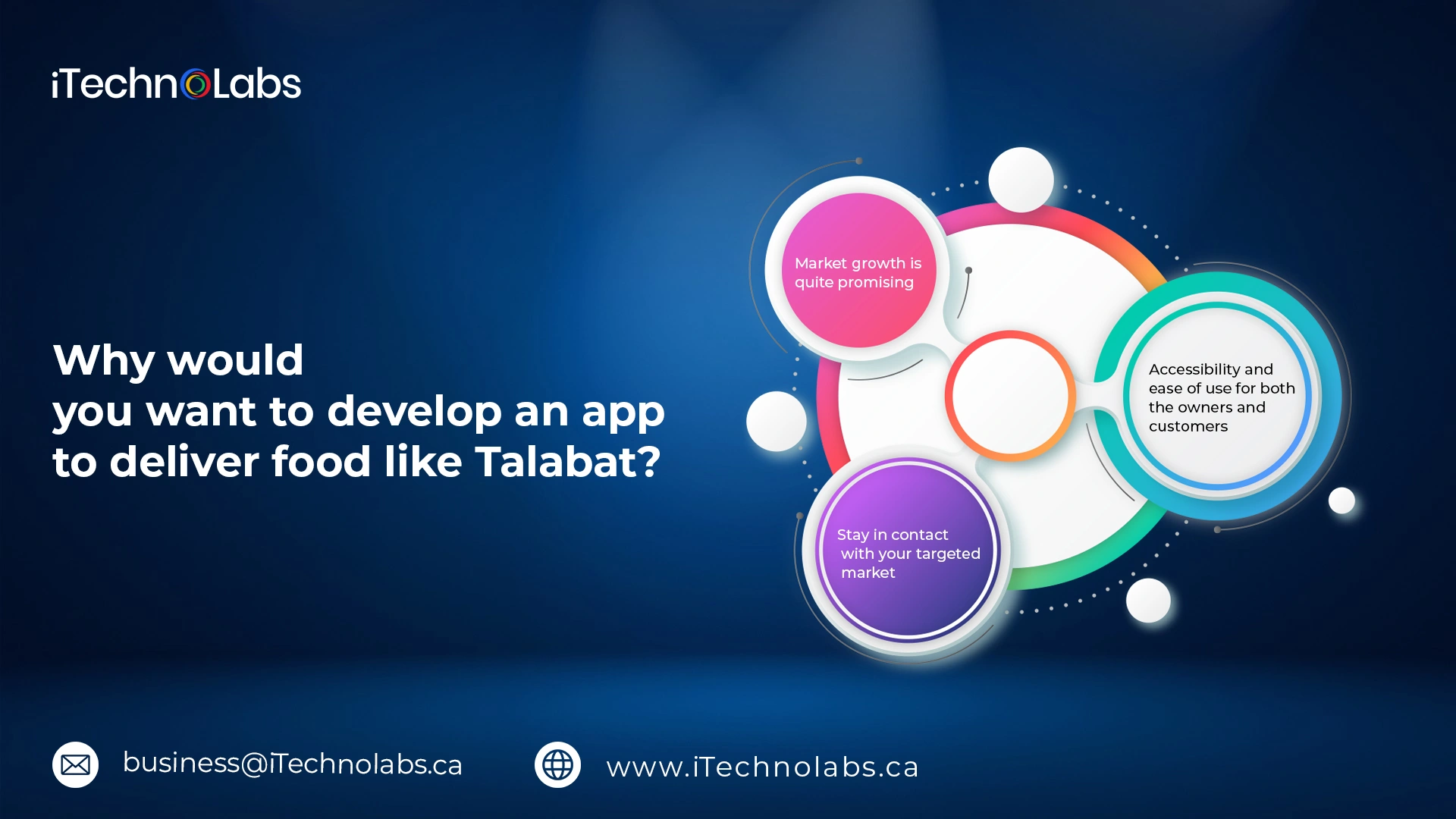
- Market growth is quite promising
- Stay in contact with your targeted market
- Accessibility and ease of use for both the owners and customers
Before you invest your time and effort into the development of an on-demand food delivery app, it is essential to assess the benefits of getting into the market. It is essential to determine the reason you’re entering the field and the advantages it could bring to develop an online food delivery app like Talabat.
1. Market growth is quite promising
The number of customers and the revenue earned by the delivery business are still astounding. In the past, the market for this sector was predicted to reach $320 billion in 2029. However, this isn’t the final word. If there ever was a time to build your food delivery app, it’s right now.
2. Stay in contact with your targeted market
An excellent method to connect with your potential customers is to contact them and get feedback via an on-demand delivery service. The key to running successfully is connecting with as many potential customers as you can. It is possible to witness an increase in customers who return time and again if you design an app that is similar to Talabat and that is appealing to a lot of potential customers simultaneously.
3. Accessibility and ease of use for both the owners and customers
The benefits for consumers are obvious. They will have more options and more quality services. The owners will reap the benefits when they can respond to the market’s demands as quickly as they can by interacting with their customers, expanding their reach, and increasing their influence.
Some of the key aspects of an online food delivery app like Talabat
Talabat has been among the most popular catering services in the Middle Eastern meal delivery online market for more than 10 years. Abdulaziz Al Loughani established the meal delivery service Talabat in Kuwait in 2004. In the countries of the Middle East, Talabat has been regarded as a reliable food delivery service.
When Talabat was first established in the year 2000, the food delivery industry was just beginning to experience the impact of the digital revolution. Talabat capitalized on the opportunities that were unexplored at the moment by offering those living in the Middle East an innovative method for ordering food. The company grew its client base by allowing customers to order food via their mobile phones easily.
Talabat app’s features make it the most favored food delivery app in the UAE. If you’re looking to develop an online food delivery app like Talabat, here are the attributes of a food delivery app that you need to think about:
Features for the Customer App
If the application is designed to provide an appealing experience and user-friendly navigation, the users will select your application over other applications. In keeping with the demands of your customers, these features must be taken into consideration when creating an application similar to Talabat.
-
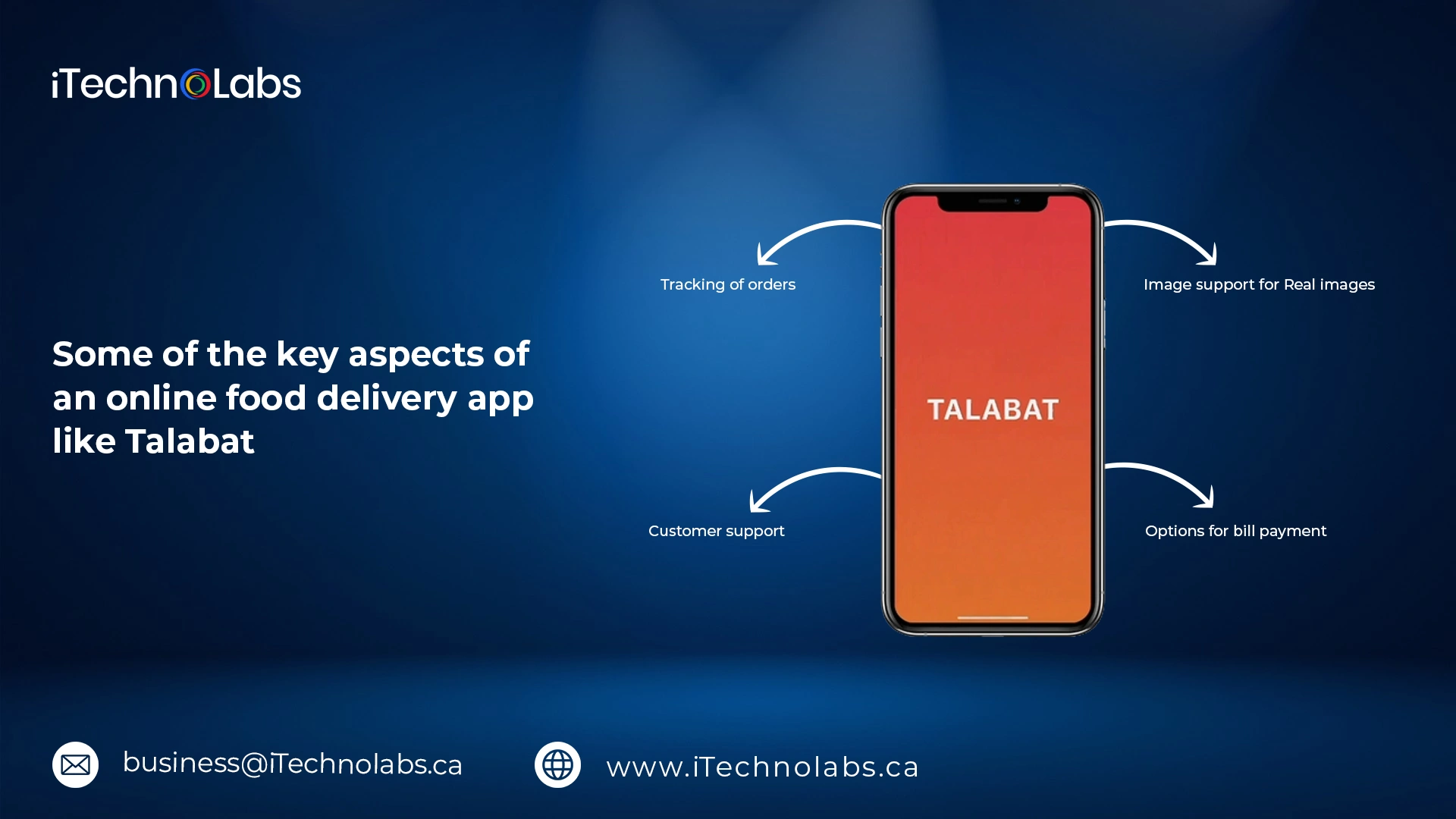
Tracking of orders
Restaurant owners can often modify the order status by using a live tracking tool to ensure that the person who delivers can track the order and collect it as it is being prepared. Customers can also track their orders using live delivery tracking right from the time they place an order to the time of the food delivery.
-
Image support for Real images
Customers are very concerned about the place of business and cleanliness of the restaurant they’re dining at, even if they don’t dine in the restaurant. So, it is advised to provide pictures of the food and the restaurant along with the address and menu.
-
Customer support
There should be a person to call in case of any issues. Help desks should be accessible for any need. This can help with complaints and queries. Get used to customer feedback on how you can improve your service.
-
Options for bill payment
Your food delivery service should be safe and secure. It should have numerous Payment gateways and provide a range of payment options that allow immediate billing, including debit cards, net banking, as well as credit cards.
Features for the Delivery Service App
The delivery company, the restaurant, and the customers should work together to ensure the benefit of all parties that are. The designer should aim at features that are geared towards delivery, such as:
- This feature allows for the determination of order status for faster delivery and better management. This will help improve the efficiency and management of deliveries.
- A database of information on the delivery people as well as their contact details. It is also important to track their delivery history.
- A GPS tracker to give information about the delivery address and the most efficient method to reach it. The feature also gives users an approximate delivery time.
- Chat systems for communicating between customers and restaurants to ensure rapid coordination. The delivery driver should be able to guide the customer to the restaurant in the event of a need.
- Reward delivery regularly to help increase delivery staff motivation and morale can be increased.
Features for the Restaurants
The restaurant you have partnered with for the delivery of food should have the option of signing up to your platform for delivery. Partnerships with more restaurants, as well as high-quality restaurants, will draw more customers. The requirements for the partnership should include:
- Registration of restaurant partners, including their names, menus that are updated addresses, as well as contact details.
- An order tracking system that includes push notifications.
- Chat is a chat platform for communicating with delivery partners to ensure greater coordination.
- Payment options from multiple payment systems via payment processors.
Furthermore, the application should be able to manage the three above-mentioned key parties in the business to add and confirm their participation in your application. This can aid in determining analytical KPIs and provide additional business opportunities or issues that need to be solved promptly. The cost of charging fees to be your partner could also be an income source and make your business more profitable.
How to Develop an Online Food Delivery?
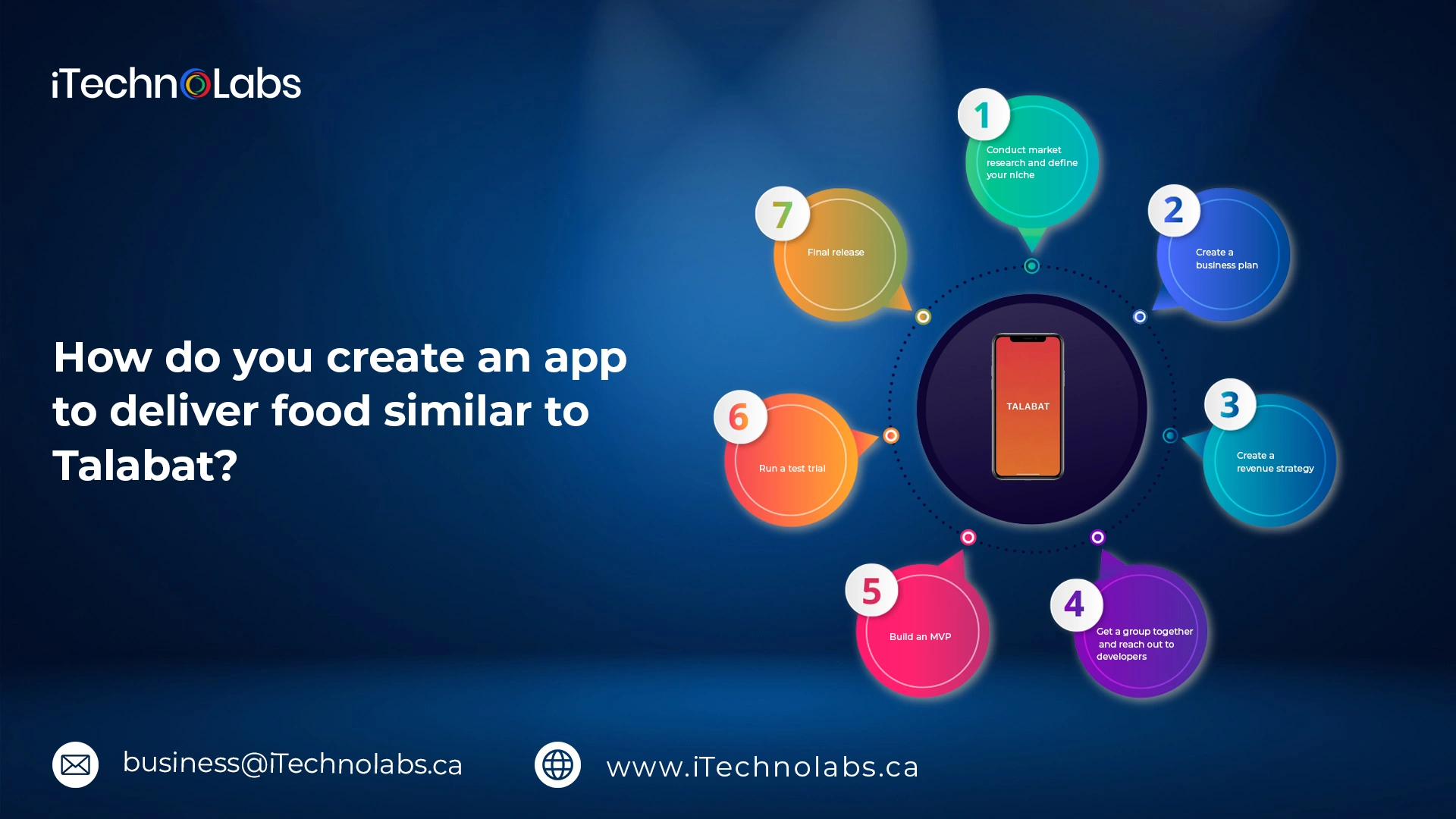
- Conduct market research
- Create a business plan
- Create a revenue strategy
- Get a group together and reach out to developers
- Build an MVP
- Run a test trial
- Final release
We’ve previously discussed the desired characteristics of a perfect online food delivery application. To achieve your objective and develop an app for food delivery with a reference app, having one can be a huge benefit. Here are the essential steps to follow to create an app that is similar to Talabat:
Step 1: Conduct market research
Before stepping into a new market, it is essential to know the dynamics of the industry. To determine the leaders in the market and gain information about trends in the market, you must conduct thorough market and competitor research. Then, you can begin developing a food delivery service such as Talabat. Take a thorough look at your customers and market to determine what your app will need.
Step 2: Create a business plan
Your goal is to earn money. It is important to consider what your app could do to aid you in this. So, make sure to give your business plan’s goals adequate attention. Determine the market you want to target, the marketing strategy, and the monetization strategy. What strategies will you employ to maintain your current customers as well as attract new ones? How soon will the app begin earning a profit? What are your chances in the future?
Write a list of essential features and integrations based on this. You can select the skills that developers must have. A test will help you identify the competencies that are within your current team and what’s not present.
Step 3: Create a revenue strategy
Create a revenue plan to make money from the app for food delivery. The top online food delivery businesses such as Talabat generally have four major revenue-generating channels:
- The price is charged per purchase
- Advertisements
- Promotions for on-site restaurants
- The cost of membership
Step 4: Get a group together and reach out to developers
It is important to ensure that you have both expert and technical support within your team to help you implement your ideas and plans into practice. To avoid confusion and ensure that you’re satisfied with the result, be sure to discuss your concerns and needs in advance with an established developer team.
Step 5: Build an MVP
Your mind should be more concentrated. Make sure you separate the essential features from the other features you need to establish your delivery app above the rest. Then, start developing your MVP. Make sure that your brand developers, strategists, and designers are given the required consideration and perspective in creating a captivating user interface since that is what the final user will see. The idea of launching a draft before reviewing the feedback will allow you to validate your business concept before you invest a large amount of cash.
Step 6: Run a test trial
Get the feedback that your MVP was able to collect. Together, determine the features that were most commonly used and those that were not. Who has used your app most often and at what times? When creating your final application, be aware of this data and make adjustments and improvements.
Step 7: Final release
In the end, you’ll be able to start your application. However, that’s where the ongoing support for customers and bug-fixing begins. Make sure you are available to help your customers at all times.
How can iTechnolabs assist in the development of a successful food delivery service?
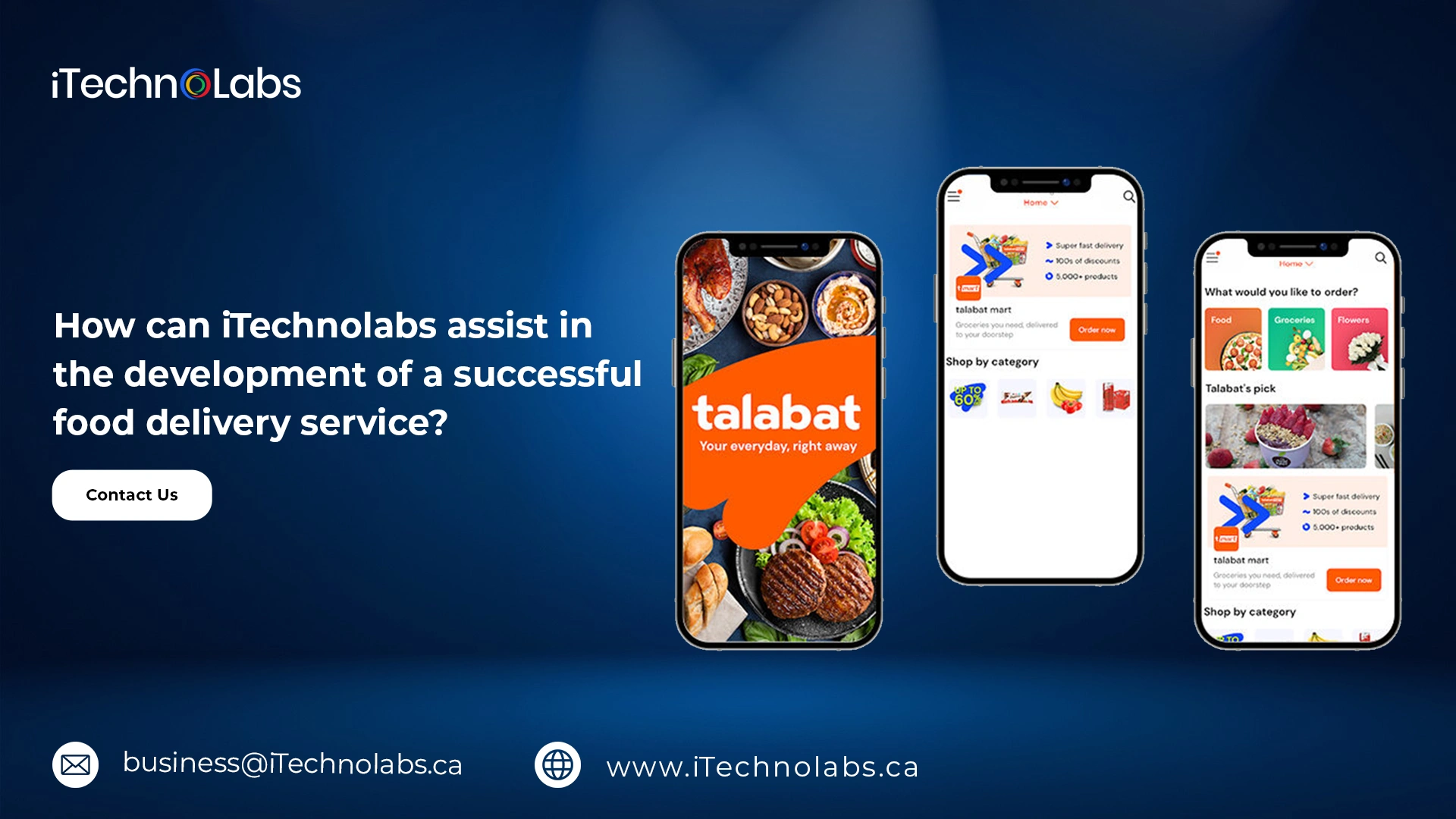
When you begin thinking about the idea of a custom food delivery app creation, iTechnolabs should be the location to go for assistance. Based on our past clientele and the services that we offered to them, we can provide you with a fair and knowledgeable Food delivery application development business.
There is no doubt that we’ll be supporting you from the beginning of the process until the results are visible. If you happen to consider how to develop an online food Delivery app like Talabat, you can send us a message.
Frequently Asked Questions to Develop an Online Food Delivery App
1. How does Talabat make money?
Talabat generates revenue through multiple income streams that help sustain and grow its food delivery platform:
- Restaurant Commissions: Talabat charges partner restaurants a commission on every order placed through the platform. The commission rate may vary based on factors such as order volume, restaurant location, and market competition.
- Delivery Fees: Customers pay delivery charges for each order. These fees may fluctuate depending on distance, demand, and weather conditions.
- Advertising & Promotions: Restaurants can pay for premium placement, sponsored listings, and homepage advertisements to improve visibility and attract more customers.
This diversified revenue model enables Talabat to maintain profitability while expanding its services.
2. How do you create a food delivery app like Talabat?
Building a food delivery app like Talabat requires careful planning, development, and execution. The process typically includes:
- Conduct Market Research: Analyze competitors, customer preferences, industry trends, and market opportunities.
- Develop a Business Strategy: Define your target audience, revenue model, and unique value proposition.
- Plan App Features: Identify essential features for customers, restaurants, and delivery drivers.
- Partner with an Experienced Development Team: Choose a reliable app development company with expertise in food delivery solutions.
- Onboard Restaurants: Build partnerships with restaurants before launch to ensure sufficient listings.
- Design and Develop the App: Focus on intuitive UI/UX design and scalable development practices.
- Build an MVP First: Launch a Minimum Viable Product to validate your idea before investing in advanced features.
- Test and Launch: Perform extensive testing to eliminate bugs and ensure a seamless user experience before deployment.
Following these steps can help you successfully launch a competitive food delivery platform.
3. What features are required to build a food delivery app?
A successful food delivery app should include features that simplify ordering, payment, and delivery management. Essential features include:
- User registration and profile management
- Restaurant listings and digital menus
- Advanced search and filtering options
- Online order placement
- Real-time order tracking
- Secure payment gateway integration
- Ratings and reviews
- Push notifications and order updates
- Delivery partner management
- Admin dashboard and analytics
These features help create a seamless experience for customers, restaurants, and delivery personnel.
4. How much does it cost to develop a food delivery app like Talabat?
The cost of developing a food delivery app like Talabat generally ranges between $30,000 and $250,000+. The final cost depends on several factors, including app complexity, feature requirements, UI/UX design, platform selection (iOS, Android, or both), third-party integrations, and the location of the development team. Advanced features such as AI-based recommendations, real-time tracking, and loyalty programs can further increase development expenses.
5. How long does it take to build a food delivery app?
The development timeline for a food delivery app varies depending on its complexity and feature set:
- Basic App: 3–6 months
- Medium-Complexity App: 6–9 months
- Advanced App Like Talabat: 9–12+ months
The timeline may also be influenced by design requirements, testing cycles, integrations, and the size of the development team. Building an MVP first can significantly reduce time to market.
6. What technologies are used in food delivery app development?
Food delivery apps rely on modern technologies to deliver seamless performance, scalability, and real-time functionality:
- Frontend Development: Flutter, React Native, Swift, Kotlin
- Backend Development: Node.js, Django, Laravel
- Databases: MongoDB, PostgreSQL, MySQL
- Maps & Location Services: Google Maps API, Mapbox
- Payment Gateways: Stripe, PayPal, Razorpay
- Cloud Infrastructure: AWS, Google Cloud, Microsoft Azure
The technology stack is selected based on project requirements, scalability goals, and budget considerations.