

Key Takeaways
- Fintech app development compliance depends on the financial services offered, customer data handled, transaction flows, countries served, and regulatory role of the business.
- PCI DSS matters when cardholder data is within the applicable payment card environment, while KYC and AML obligations depend on the business model and jurisdiction.
- Compliance should influence architecture, authentication, data storage, API security, logging, transaction monitoring, and testing from the beginning.
- Canadian fintech businesses may face FINTRAC obligations when their activities fall within the money services business framework.
- UK payment and e-money businesses may be subject to the Payment Services Regulations 2017 and Electronic Money Regulations 2011, with additional safeguarding requirements for relevant firms.
Fintech app development compliance is no longer something teams can address just before launch. Regulations, privacy requirements, payment standards, identity verification, and security controls can shape the application architecture from the start.
The exact requirements depend on the financial services offered, markets served, data handled, and third-party integrations involved. For fintech founders and technology leaders, understanding these requirements early helps define the right technical scope, reduce compliance gaps, and build an application that is prepared for security reviews and regulatory obligations.
Table of Contents
- What Does Fintech App Development Compliance Mean in 2026?
- Why Fintech Compliance Needs to Start Before Development
- What Regulations and Standards Can Affect a Fintech App?
- How Compliance Changes Fintech App Architecture
- Compliance Controls Should Be Built Into the Development Process
- A Practical Fintech Compliance Checklist
- What Should You Ask a Fintech Development Partner?
- How Much Does Compliance Add to Fintech App Development?
- Conclusion
- FAQ
What Does Fintech App Development Compliance Mean in 2026?
Fintech app development compliance means designing the application around the financial regulations, privacy obligations, security standards, and operational controls that apply to its business model and target markets. The exact requirements vary by product. A payment app, lending platform, investment application, and digital wallet do not necessarily face the same obligations.
That distinction matters because compliance is not a feature that can simply be added before launch. Regulatory requirements can affect how users are onboarded, how transactions are authorized, what data is collected, where it is stored, how access is controlled, what activity is logged, and how suspicious activity is identified.
The right approach is to map regulatory requirements to technical controls before development starts.
Why Fintech Compliance Needs to Start Before Development
A common mistake is to treat compliance as a final security review.
That creates problems because many compliance requirements affect architecture rather than individual screens.
For example, if the application needs strong authentication, transaction monitoring, identity verification, and detailed audit trails, those requirements influence the backend, database design, API architecture, and event logging.
The same applies to data protection. If an application stores identity documents, financial records, or payment information, developers need to know from the beginning what data is collected, why it is collected, who can access it, and how long it needs to be retained.
The OWASP Mobile Application Security Verification Standard provides security controls covering areas such as secure storage, cryptography, authentication and authorization, network communication, platform interaction, code quality, resilience, and privacy.
For fintech applications, this makes security architecture part of product architecture rather than a separate technical exercise.
What Regulations and Standards Can Affect a Fintech App?
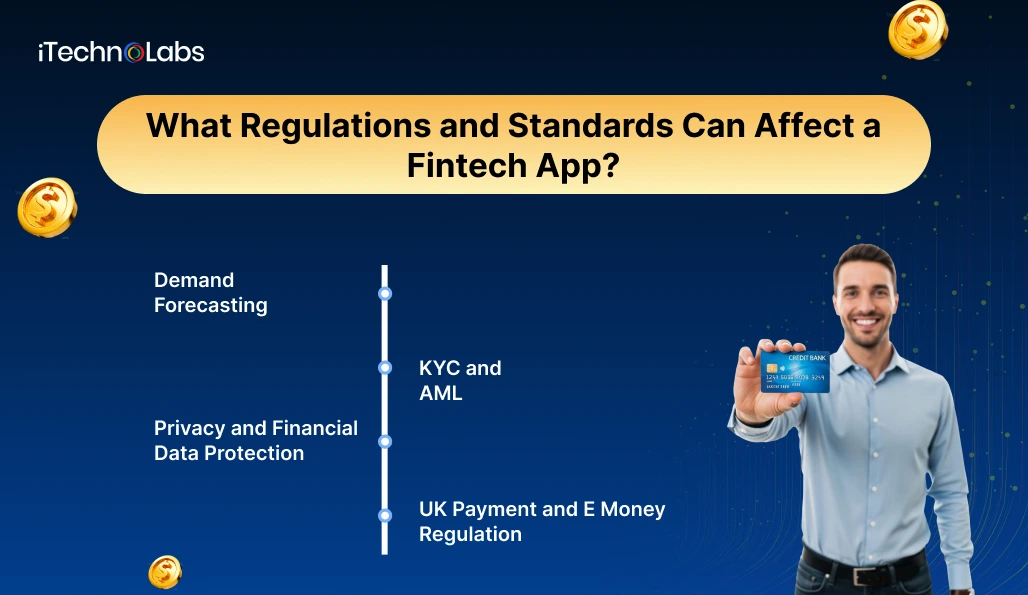
There is no single global fintech compliance framework. The applicable requirements depend on the product and market.
PCI DSS
PCI DSS applies to entities that store, process, or transmit payment account data, as well as entities that could impact the security of the cardholder data environment.
PCI DSS v4.0.1 is the current limited revision of the standard, and the future-dated requirements introduced with PCI DSS v4.0 became effective on March 31, 2025.
For a fintech application, the technical implications can include:
- Secure handling of cardholder data
- Access controls
- Authentication controls
- Vulnerability management
- Secure development practices
- Logging and monitoring
- Security testing
- Third-party service management
A practical architecture decision is to reduce the amount of sensitive payment data your own application handles when the business model allows it. Using an appropriate payment provider can reduce the application’s direct card data exposure, but it does not automatically eliminate every compliance responsibility.
KYC and AML
Know Your Customer and Anti-Money Laundering controls become important when the business model falls within applicable financial crime regulations.
The application may need identity verification, customer risk assessment, transaction monitoring, suspicious activity workflows, and appropriate records.
In Canada, FINTRAC requires money services businesses and foreign money services businesses within its framework to register, maintain a compliance program, verify clients for applicable activities and transactions, report certain transactions, and keep required records. The exact obligations depend on the business activities and regulatory status.
This means the engineering team cannot determine KYC or AML requirements from the app interface alone. The business model and regulatory status need to be established first.
Privacy and Financial Data Protection
Fintech applications often process information that can identify users, reveal financial behaviour, or connect individuals to transactions.
Privacy requirements therefore affect more than the privacy policy.
They can influence:
- Data collection
- Consent management
- Access permissions
- Data retention
- Data deletion workflows
- Encryption
- Data sharing
- Third-party integrations
- Audit records
For Canadian businesses, privacy requirements should be assessed during discovery rather than added after development.
UK Payment and E Money Regulation
The UK Financial Conduct Authority regulates payment services and electronic money activities under the Payment Services Regulations 2017 and Electronic Money Regulations 2011. The requirements that apply depend on the type of payment or e-money activity the business performs and its regulatory status.
For payment and e-money institutions that are required to safeguard customer funds, the FCA requires firms to follow applicable safeguarding requirements designed to protect those funds if the firm fails. The FCA’s safeguarding requirements were updated on May 7, 2026, with the revised rules applying to relevant payment and e-money institutions from that date.
For product teams, this demonstrates why the regulatory model needs to be defined before architecture is finalized. A fintech app may need to support operational controls that go beyond transaction processing itself.
How Compliance Changes Fintech App Architecture
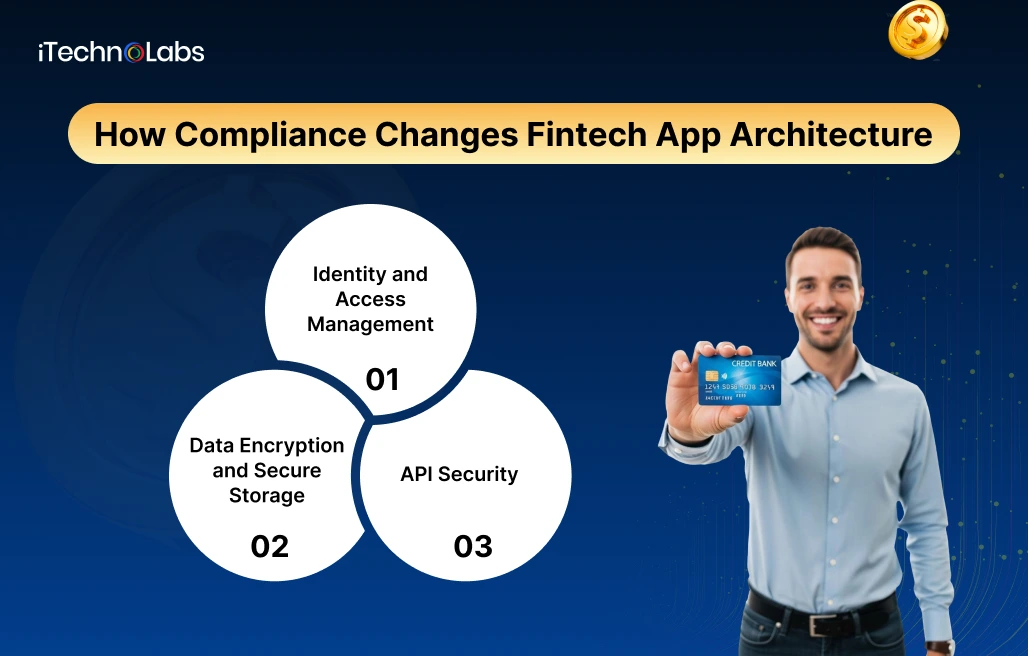
Compliance requirements become meaningful when they are translated into technical controls.
Identity and Access Management
A fintech application should define who can access which information and which operations each role can perform.
Depending on the product, this may include:
- Multi-factor authentication
- Role-based access control
- Device or session controls
- Privileged access restrictions
- Secure password policies
- Account recovery controls
- Authentication event logging
The important point is that authentication and authorization are separate concerns. A user being authenticated does not automatically mean that the user should be allowed to perform every financial operation.
Data Encryption and Secure Storage
Sensitive data should be protected both during transmission and while stored.
The architecture should define:
- Encryption for sensitive stored information
- Secure network communication
- Key management
- Secrets management
- Tokenization where appropriate
- Secure mobile storage
- Restricted database access
API Security
Most fintech applications depend heavily on APIs.
The API layer may connect the mobile application to payment providers, banking infrastructure, identity verification services, fraud detection systems, analytics platforms, and internal systems.
That makes API security a core compliance consideration.
Teams should evaluate:
- Authentication
- Authorization
- Input validation
- Rate limiting
- Request signing where required
- API key and secret management
- Error handling
- Audit logging
- Third-party API permissions
Compliance Controls Should Be Built Into the Development Process
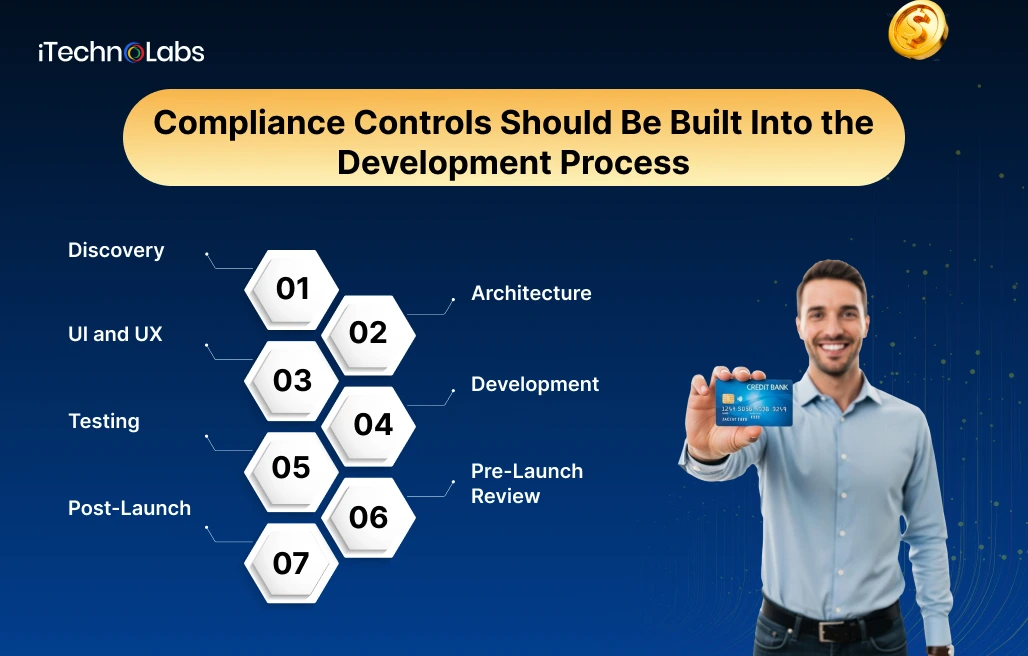
A useful fintech development process does not leave compliance until QA.
Instead, compliance requirements should appear at each stage.
- Discovery: Define the business model, markets, financial activities, user types, data categories, and regulatory obligations.
- Architecture: Translate those requirements into authentication, authorization, data storage, API, logging, and integration decisions.
- UI and UX: Make identity verification, consent, disclosures, transaction confirmation, and security interactions understandable without adding unnecessary friction.
- Development: Implement security controls alongside the relevant application functionality.
- Testing: Test both expected and abnormal behaviour. That includes unauthorized access attempts, invalid transactions, permission failures, session issues, API abuse, and sensitive data exposure.
- Pre-Launch Review: Validate the application’s technical controls against the requirements identified during discovery.
- Post-Launch: Compliance does not stop at release. Regulations, dependencies, APIs, operating systems, and threat patterns change over time.
A Practical Fintech Compliance Checklist
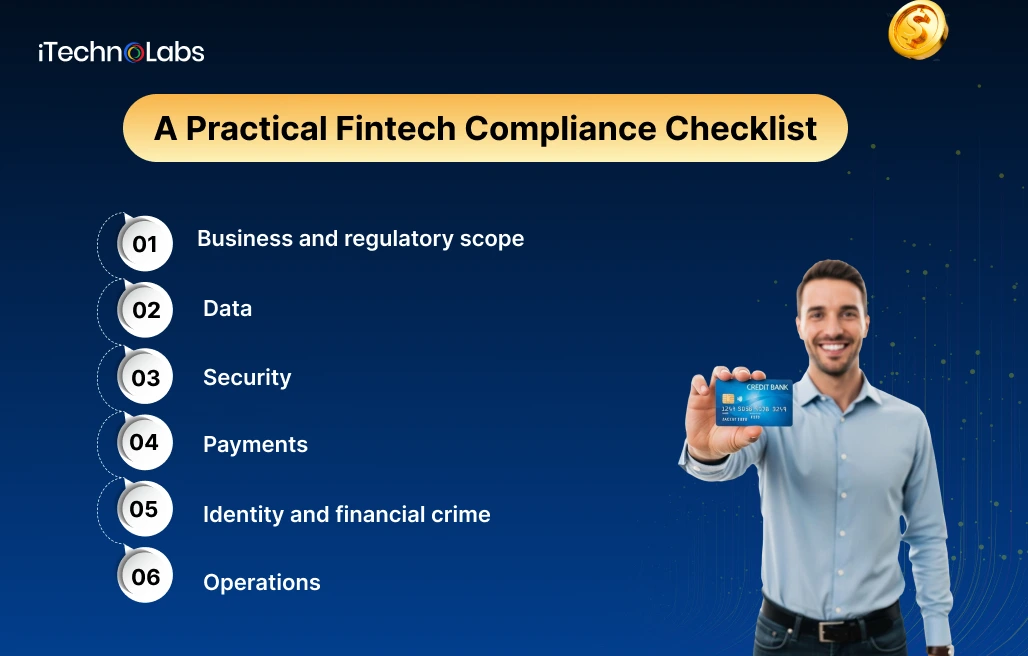
Before approving a fintech application for production, ask the following.
Business and regulatory scope
- What financial service does the application provide?
- Which countries and states or provinces will it serve?
- Does the business need a license, registration, or regulated partner?
- Which activities are performed directly by the company and which are handled by third parties?
Data
- What personal and financial data does the application collect?
- Where is that information stored?
- Who can access it?
- How long is it retained?
- How is sensitive information deleted or anonymized?
Security
- Is multi-factor authentication required?
- Are sensitive data and credentials protected?
- Are APIs authenticated and authorized correctly?
- Are privileged actions logged?
- Has the application undergone security testing?
Payments
- Does the application handle cardholder data?
- Can payment processing be delegated to an appropriate provider?
- What PCI DSS responsibilities remain with the business?
- Are payment failures and suspicious transactions monitored?
Identity and financial crime
- Is identity verification required?
- Are KYC and AML controls applicable?
- How are suspicious transactions detected?
- What records need to be retained?
Operations
- Is there an incident response process?
- Can security events be investigated through audit logs?
- Are third-party integrations monitored?
- Is there a process for handling regulatory or security changes?
What Should You Ask a Fintech Development Partner?
If compliance is important to your product, do not evaluate a development partner only on their ability to build the interface.
Ask how they handle:
- Security requirements during discovery
- Regulatory requirements and jurisdiction mapping
- Authentication and authorization
- Sensitive data architecture
- Payment integrations
- KYC and AML integrations
- Audit logging
- Security testing
- Third-party dependencies
- Post-launch security maintenance
iTechnolabs currently positions its fintech software development service around banking, payments, lending, investment, insurance, and financial management applications, with security controls such as authentication, encryption, role-based access, API security, audit logging, and transaction monitoring.
For a regulated fintech project, the discovery process should produce a compliance and security requirements map before development estimates are finalized.
How Much Does Compliance Add to Fintech App Development?
There is no reliable universal compliance surcharge.
The cost depends on the application type, jurisdictions, financial activities, data handled, integrations, security requirements, testing requirements, and whether regulated infrastructure is provided by third parties.
A simple financial management application has a different compliance profile from a payment platform that moves customer funds.
Likewise, an application using a hosted payment provider may have a different technical scope from one handling payment data directly.
The most useful way to estimate compliance-related development cost is to identify the controls the application actually needs rather than adding a generic compliance percentage to the development budget.
This approach also reduces the risk of receiving an attractive initial estimate that later expands when security, regulatory, or integration requirements are discovered.
Conclusion
Fintech app development compliance should be treated as an engineering requirement from the beginning, not a final review before launch. The right approach starts by identifying the regulations and security standards that apply to your product, then translating them into architecture, data controls, authentication, payment security, monitoring, logging, and testing requirements.
Because obligations vary by product and jurisdiction, there is no universal compliance checklist. A properly scoped development process helps fintech teams build securely while reducing regulatory and technical risks.
FAQ
1. What is fintech app development compliance?
Fintech app development compliance means designing and operating a financial application according to the laws, regulatory requirements, privacy obligations, and security standards that apply to its business model and target markets. Requirements can affect identity verification, payments, data protection, authentication, transaction monitoring, audit logging, and third-party integrations.
2. Is PCI DSS required for every fintech app?
No. PCI DSS applicability depends on whether and how the application stores, processes, or transmits payment card data within the applicable card payment environment. A fintech business should determine its specific responsibilities based on its payment architecture and service providers rather than assuming every fintech application has identical PCI DSS obligations.
3. Do fintech apps need KYC and AML?
Not every fintech application has identical KYC and AML obligations. Requirements depend on the financial activities performed, jurisdiction, regulatory status, and business model. For example, Canadian money services businesses can have FINTRAC obligations covering registration, compliance programs, client identification, and record-keeping.
4. How does compliance affect fintech app development?
Compliance can affect architecture, data storage, authentication, authorization, API security, logging, payment processing, identity verification, transaction monitoring, and testing. The impact depends on the product and jurisdiction. Defining these requirements during discovery usually gives the development team a more accurate scope than adding compliance work shortly before launch.
5. What security standards should fintech mobile apps follow?
OWASP MASVS provides a useful security baseline for mobile applications, covering areas such as secure storage, cryptography, authentication, authorization, network communication, privacy, code quality, and resilience. Fintech applications may also need additional controls based on their regulatory obligations, payment architecture, and risk profile.
6. Does fintech compliance vary by country?
Yes. Financial regulation is jurisdiction-specific. A payment business operating in the UK may fall under the Payment Services Regulations 2017 and related FCA requirements, while a Canadian money services business can fall within FINTRAC requirements. A fintech product serving multiple markets therefore needs a jurisdiction-by-jurisdiction compliance assessment.











