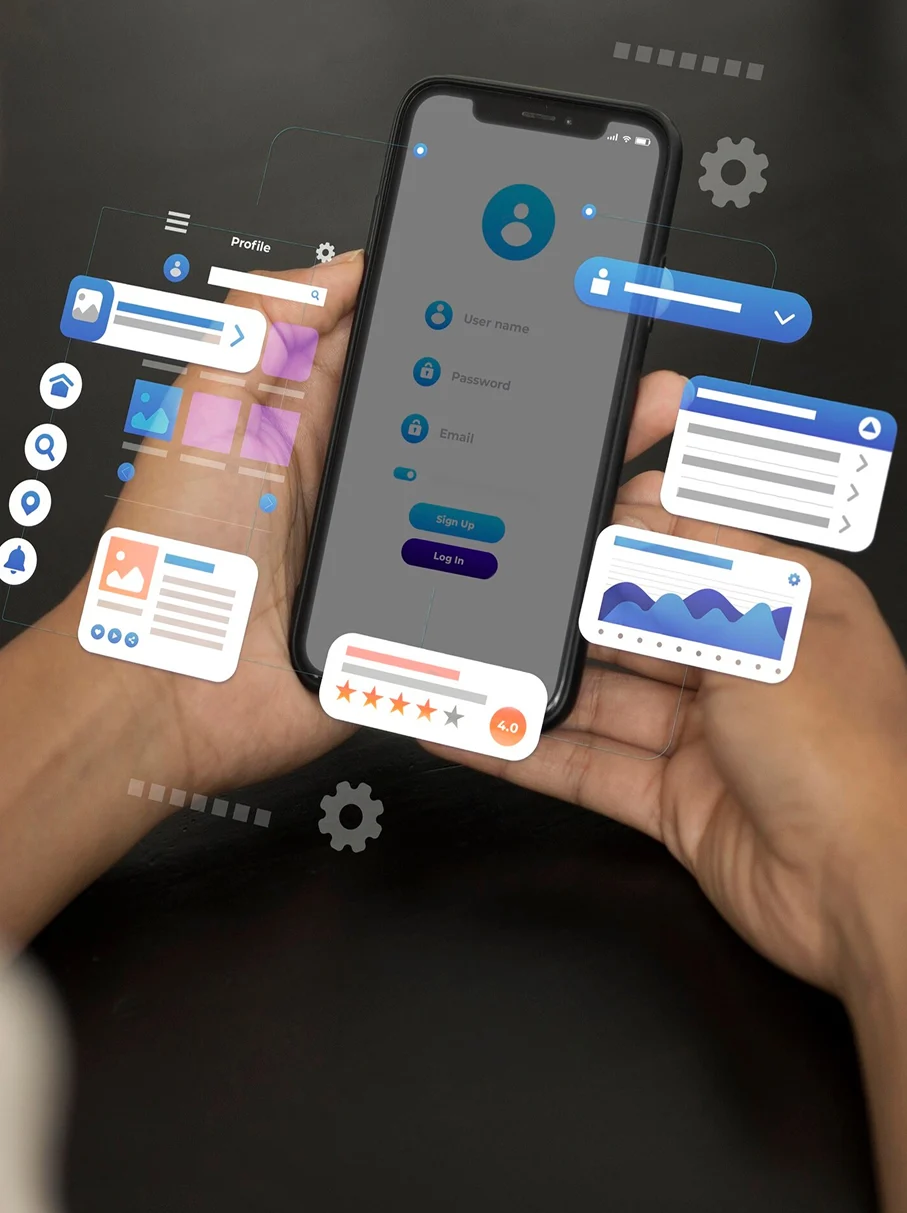
Mobile apps today are far more than sleek interfaces and smooth animations; the real intelligence lives behind the scenes. From secure authentication and real-time data synchronization to push notifications, AI-driven insights, and cloud integrations, everything depends on a powerful backend.
According to industry reports, over 85% of mobile apps rely on cloud-based backend infrastructure, while the global mobile app market is projected to surpass $935 billion in revenue by 2026. At the same time, users expect lightning-fast performance, real-time experiences, and enterprise-grade security, making backend architecture more important than ever.
Mobile app backend development forms the backbone of modern applications, ensuring scalability, reliability, and seamless performance across millions of users. Whether you’re building a startup MVP, a SaaS platform, or an enterprise ecosystem, a well-designed backend directly impacts your app’s success, scalability, and user retention.
In this ultimate 2026 guide, we’ll break down everything you need to know about mobile app backend development from architecture and core components to tech stacks, best practices, and future trends shaping the next generation of mobile apps.
Table of Contents
- What is Mobile App Backend Development?
- Why Mobile App Backend Development Matters
- Core Components of Mobile App Backend Development
- Types of Mobile App Backend Architecture
- Backend Technologies and Tech Stack
- Backend as a Service (BaaS) vs Custom Backend
- Key Features of a Strong Mobile App Backend
- Best Practices for Mobile App Backend Development
- Cost of Mobile App Backend Development
- Cost Breakdown by App Type
- Key Factors That Affect Backend Development Cost
- Future Trends in Mobile App Backend Development (2026)
- Why Choose iTechnolabs for Mobile App Backend Development?
- Conclusion
- FAQs
What is Mobile App Backend Development?
Mobile app backend development refers to the server-side architecture and infrastructure that powers the functionality of a mobile application. It includes the systems, databases, APIs, and server logic responsible for processing requests, managing data, and enabling seamless communication between the app and external services.
In simple terms, while users interact with the frontend (UI/UX), the backend works behind the scenes to ensure everything runs smoothly. From storing user data and managing authentication to handling payments and delivering real-time updates, the backend is the engine that drives the entire mobile experience.
A well-designed mobile app backend development strategy focuses on building scalable, secure, and high-performance systems that can support growing user bases and complex features. It ensures fast data processing, reliable uptime, and consistent performance across devices and platforms.
The backend also acts as a bridge connecting the mobile application with multiple components such as:
- Databases for storing user and app data
- Cloud infrastructure for scalability and storage
- APIs for communication between frontend and servers
- Third-party integrations like payment gateways, analytics, and messaging services
In modern app ecosystems, mobile app backend development goes beyond basic server management. It involves cloud-native architecture, microservices, serverless computing, and advanced security protocols to support real-time and data-intensive applications.
Ultimately, investing in strong mobile app backend development ensures your app is not only functional but also scalable, secure, and future-ready capable of supporting evolving user expectations and rapid digital growth.
Why Mobile App Backend Development Matters
A strong backend is the backbone of any successful mobile application. While users interact with the interface, it’s the backend that ensures everything works reliably behind the scenes. From handling millions of requests to safeguarding sensitive data, mobile app backend development directly impacts performance, scalability, and long-term stability.
Without a well-architected backend, even the most visually appealing apps can fail due to slow loading times, crashes, data leaks, or poor scalability. Businesses that invest in robust mobile app backend development gain a competitive advantage by delivering faster, more secure, and highly scalable digital experiences.
Here’s why backend development is critical for modern mobile apps:
1. Ensures Fast Performance and Responsiveness
A powerful backend processes user requests quickly and efficiently. It handles data retrieval, caching, and server optimization to deliver fast load times and smooth interactions — which are essential for user retention and app store rankings.
2. Enables Real-Time Features
Modern apps rely heavily on real-time functionality such as live chat, push notifications, GPS tracking, multiplayer gaming, and live streaming. These capabilities are powered by backend technologies like WebSockets, cloud messaging, and real-time databases.
3. Supports Scalability and Growth
As your user base grows, your app must handle increased traffic without performance degradation. Scalable mobile app backend development uses cloud infrastructure, load balancing, and microservices architecture to support millions of concurrent users effortlessly.
4. Protects User Data and Ensures Security
With rising cybersecurity threats, backend security is more important than ever. A secure backend implements encryption, authentication protocols, secure APIs, and compliance standards (like GDPR and HIPAA) to protect user data and build trust.
5. Simplifies Third-Party Integrations
Mobile apps often rely on external services such as payment gateways, social logins, analytics tools, maps, and AI APIs. A well-structured backend makes it easy to integrate and manage these services without disrupting app performance.
6. Enables Advanced Features and Personalization
Backend systems power AI-driven recommendations, behavioral analytics, personalization engines, and automation workflows. These features enhance user engagement and drive higher retention rates.
7. Improves Maintainability and Future Expansion
A modular backend architecture makes it easier to update features, fix bugs, and introduce new functionalities without rebuilding the entire app. This ensures long-term flexibility and reduced maintenance costs.
In short, mobile app backend development defines the reliability, scalability, and security of your application. A well-built backend not only supports current functionality but also prepares your app for future innovation, rapid user growth, and evolving market demands.
Core Components of Mobile App Backend Development
To build scalable and high-performance applications, it’s essential to understand the key elements that power the backend. Each component plays a specific role in ensuring reliability, security, and seamless functionality. A well-structured mobile app backend development strategy combines these components to create a robust and future-ready system.
Below are the core components of mobile app backend development:
1. Application Server
The application server is the brain of the backend. It processes client requests, executes business logic, and ensures smooth communication between the frontend and backend systems.
Whenever a user performs an action such as logging in, placing an order, or sending a message the application server handles the request and delivers the appropriate response. It also manages workflows, data validation, and integrations with external services.
Popular application server technologies include Node.js, Java (Spring Boot), Python (Django), and .NET.
2. Database
Databases store and manage all application data, including user profiles, content, transactions, and logs. Choosing the right database is critical in mobile app backend development, as it directly impacts performance and scalability.
There are two primary database types:
- Relational Databases (SQL): MySQL, PostgreSQL, SQL Server — ideal for structured data and complex relationships.
- NoSQL Databases: MongoDB, Firebase Firestore, Cassandra — best for flexible schemas and real-time apps.
Modern apps often use hybrid database architectures to balance performance and scalability.
3. APIs (Application Programming Interfaces)
APIs act as the communication bridge between the mobile app and backend services. They define how data is requested, processed, and delivered between different components.
In mobile app backend development, APIs enable seamless interaction between the frontend, databases, cloud services, and third-party integrations like payment gateways or analytics platforms.
Common API types include:
- REST APIs: Simple, widely adopted, and scalable
- GraphQL APIs: Flexible and efficient data fetching
- gRPC: High-performance communication for microservices
A well-designed API architecture ensures fast performance, maintainability, and scalability.
4. Authentication and Authorization Services
Security is a fundamental part of mobile app backend development. Authentication services verify user identities, while authorization systems control access levels and permissions.
These services handle:
- User login and registration
- Social authentication (Google, Apple, Facebook)
- Multi-factor authentication (MFA)
- Session management and token validation (JWT, OAuth)
A secure authentication system protects sensitive user data and prevents unauthorized access.
5. Cloud Infrastructure
Cloud infrastructure provides the computing power, storage, and scalability required to run modern mobile apps. Instead of maintaining physical servers, developers rely on cloud platforms to deploy and manage backend systems efficiently.
Leading cloud providers include:
- Amazon Web Services (AWS)
- Microsoft Azure
- Google Cloud Platform (GCP)
Cloud-native mobile app backend development enables auto-scaling, high availability, global deployment, and cost optimization.
6. Push Notification Services
Push notifications are essential for user engagement and retention. Backend systems trigger real-time alerts based on user actions, events, or scheduled campaigns.
Push notification services enable:
- Transactional alerts (orders, payments, updates)
- Marketing campaigns and promotions
- Real-time reminders and engagement triggers
Popular tools include Firebase Cloud Messaging (FCM), Apple Push Notification Service (APNs), and OneSignal.
A reliable notification backend ensures timely delivery and personalized messaging.
7. Storage and File Management
Many mobile apps require media storage for images, videos, documents, and backups. Backend storage systems manage file uploads, compression, and delivery through secure and scalable solutions like AWS S3 or Google Cloud Storage.
Efficient storage management improves performance and reduces bandwidth costs.
8. Monitoring and Analytics Tools
Monitoring tools track backend performance, uptime, and error rates in real time. Analytics systems provide insights into user behavior and app performance.
These tools help developers:
- Detect issues proactively
- Optimize performance
- Improve user experience
- Ensure high availability
Examples include New Relic, Datadog, Firebase Analytics, and CloudWatch.
In modern mobile app backend development, these components work together to deliver fast, secure, and scalable digital experiences. By carefully selecting and integrating the right backend components, businesses can build apps that support high traffic, complex features, and future growth with confidence.
Types of Mobile App Backend Architecture
Choosing the right architecture is one of the most important decisions in mobile app backend development. Your backend architecture directly affects scalability, performance, maintainability, and long-term operational costs.
Different apps require different architectural approaches depending on complexity, traffic, and growth goals. Below are the most widely used backend architecture models in modern mobile app backend development.
1. Monolithic Architecture
Monolithic architecture is the traditional backend model where all components including business logic, database access, APIs, and user management are built into a single unified codebase.
In this approach, the entire backend operates as one tightly integrated system. All features are interconnected, and updates are deployed as a single unit.
Best for:
- MVPs and early-stage startups
- Small-scale mobile apps
- Products with limited features
Advantages:
- Simple to develop and deploy
- Easier debugging and testing
- Lower initial development cost
- Faster time-to-market
Limitations:
- Difficult to scale individual components
- Slower updates as the app grows
- Higher risk of system-wide failures
- Limited flexibility for large teams
While monolithic architecture works well for simple applications, it can become difficult to manage as mobile app backend development evolves and user demand increases.
2. Microservices Architecture
Microservices architecture breaks the backend into smaller, independent services that communicate through APIs. Each service is responsible for a specific function, such as authentication, payments, notifications, or analytics.
This modular approach allows teams to develop, deploy, and scale services independently, making it a popular choice for modern, scalable mobile applications.
Best for:
- Enterprise-grade mobile apps
- High-traffic platforms
- Apps requiring continuous updates
- Large development teams
Advantages:
- High scalability and flexibility
- Independent service deployment
- Faster innovation and feature releases
- Better fault isolation
Limitations:
- Complex infrastructure management
- Higher DevOps requirements
- Increased monitoring and security challenges
- More initial setup time
Microservices-based mobile app backend development is widely adopted by companies like Netflix, Amazon, and Uber due to its scalability and resilience.
3. Serverless Architecture
Serverless architecture allows developers to build backend functionality without managing physical servers or infrastructure. Instead, backend logic is deployed as cloud functions that run on demand.
Cloud providers automatically handle scaling, maintenance, and availability, allowing developers to focus purely on writing code.
Best for:
- Startups and rapid development
- Event-driven applications
- Apps with unpredictable traffic
- Cost-optimized backend solutions
Advantages:
- No server management required
- Automatic scaling based on demand
- Reduced operational costs
- Faster development cycles
Limitations:
- Limited control over infrastructure
- Vendor lock-in risks
- Cold start latency issues
- Not ideal for highly complex systems
Serverless mobile app backend development is becoming increasingly popular due to its simplicity and cost efficiency, especially for modern cloud-native applications.
4. Hybrid Architecture (Modern Approach)
Many modern apps use a hybrid backend architecture that combines multiple models. For example, a system may start as monolithic and gradually transition into microservices while leveraging serverless components for specific features like notifications or image processing.
Best for:
- Scaling startups
- SaaS platforms
- Apps transitioning to enterprise scale
This flexible approach allows businesses to evolve their mobile app backend development strategy without rebuilding the entire infrastructure.
How to Choose the Right Backend Architecture
Selecting the right architecture depends on several factors:
- App complexity and feature requirements
- Expected user traffic and growth
- Development budget and timeline
- Team expertise and DevOps maturity
- Long-term scalability goals
Startups often begin with monolithic or serverless models for speed, while enterprises prefer microservices for scalability and resilience.
In mobile app backend development, there’s no one-size-fits-all architecture. The right choice depends on your product vision, scalability needs, and technical roadmap. A well-planned architecture ensures your mobile app remains fast, scalable, and future-ready as your user base grows.
Backend Technologies and Tech Stack
Selecting the right technology stack is crucial for building scalable and high-performance mobile applications. In mobile app backend development, the tech stack typically includes programming languages like Node.js, Python, and Java, frameworks such as Express or Django, and databases like MongoDB or PostgreSQL. Combined with cloud platforms like AWS or Google Cloud, the right backend technologies ensure security, flexibility, and long-term scalability.
1. Programming Languages
- Node.js (JavaScript)
- Python
- Java
- Kotlin
- Go
2. Frameworks
- Express.js
- Django
- Spring Boot
- Laravel
3. Databases
- MySQL
- PostgreSQL
- MongoDB
- Firebase Firestore
4. Cloud Platforms
- AWS
- Microsoft Azure
- Google Cloud Platform
Backend as a Service (BaaS) vs Custom Backend
When planning mobile app backend development, one of the biggest decisions businesses face is choosing between a ready-made backend solution or building a custom backend from scratch. Both approaches offer unique benefits and trade-offs depending on your app’s complexity, scalability goals, and time-to-market requirements.
Understanding the differences between Backend as a Service (BaaS) and custom backend development helps you make a strategic decision aligned with your product vision.
1. Backend as a Service (BaaS)
Backend as a Service (BaaS) is a cloud-based solution that provides pre-built backend functionalities, allowing developers to build mobile apps without managing server infrastructure manually. These platforms offer ready-to-use services such as authentication, cloud databases, APIs, hosting, storage, and push notifications.
In mobile app backend development, BaaS is commonly used by startups and small teams looking to launch products quickly with minimal backend complexity.
Popular BaaS Platforms:
Firebase, Supabase, AWS Amplify, Backendless
Best for:
- MVP development
- Early-stage startups
- Rapid prototyping
- Apps with limited backend complexity
Pros:
- Faster development and deployment
- Lower upfront development costs
- No need for infrastructure management
- Built-in scalability and cloud hosting
- Easy integration with frontend apps
Cons:
- Limited customization and flexibility
- Dependency on third-party providers
- Vendor lock-in risks
- Potential scalability limitations for large apps
BaaS is ideal for validating product ideas quickly without investing heavily in backend engineering.
2. Custom Backend Development
Custom backend development involves building a fully tailored backend architecture from the ground up. This approach gives businesses complete control over system design, data flow, integrations, and scalability.
In mobile app backend development, custom backends are commonly used for enterprise applications, SaaS platforms, and large-scale consumer apps that require complex functionality and long-term scalability.
Best for:
- Enterprise-grade applications
- High-performance mobile platforms
- Complex workflows and integrations
- Apps requiring strict security or compliance
Pros:
- Full control over architecture and features
- Unlimited customization possibilities
- Better scalability and performance optimization
- Enhanced security and compliance support
- No reliance on third-party backend providers
Cons:
- Higher development and maintenance cost
- Longer development timeline
- Requires experienced backend developers
- Ongoing DevOps and infrastructure management
Custom backend development is a long-term investment that enables flexibility, scalability, and innovation as your product grows.
Which One Should You Choose?
The choice between BaaS and custom backend depends on your business goals and technical requirements.
- Choose BaaS if you want fast development, lower costs, and quick market entry.
- Choose a custom backend if you’re building a scalable product with advanced features and long-term growth plans.
Many modern businesses start with BaaS for speed and later transition to a custom backend as their app scales and feature requirements evolve.
In mobile app backend development, both approaches have their place. The right choice depends on your product roadmap, scalability expectations, and available resources. Selecting the right backend strategy early can significantly impact your app’s performance, flexibility, and future growth.
Key Features of a Strong Mobile App Backend
A well-architected backend is the backbone of any successful mobile application. In mobile app backend development, building a feature-rich backend ensures high performance, scalability, and long-term reliability. The right backend features not only enhance user experience but also support business growth and operational efficiency.
Below are the essential features every strong mobile app backend should include:
1. Secure Authentication and Authorization
Security is a fundamental pillar of mobile app backend development. A strong backend must implement secure authentication mechanisms to verify user identities and prevent unauthorized access.
This includes:
- Multi-factor authentication (MFA)
- OAuth and social logins
- Token-based authentication (JWT)
- Role-based access control (RBAC)
A robust authentication system protects sensitive data and builds user trust.
2. Scalable Cloud Infrastructure
Modern mobile apps must handle unpredictable traffic spikes and growing user bases. Scalable cloud infrastructure allows your backend to automatically adjust resources based on demand.
Cloud-native mobile app backend development enables:
- Auto-scaling servers
- Global availability
- Load balancing
- High uptime and reliability
Platforms like AWS, Azure, and Google Cloud make scalability seamless and cost-efficient.
3. Real-Time Data Synchronization
Real-time capabilities are essential for modern mobile experiences. Whether it’s chat apps, ride-sharing platforms, or live dashboards, backend systems must support instant data updates.
Real-time backend features include:
- WebSockets and real-time databases
- Push notifications
- Live activity tracking
- Instant syncing across devices
These capabilities significantly improve user engagement and retention.
4. Robust API Architecture
APIs act as the communication layer between the frontend and backend. A strong mobile app backend development strategy focuses on building scalable, secure, and well-documented APIs.
Key API qualities include:
- RESTful or GraphQL architecture
- Version control for backward compatibility
- Secure API gateways
- Fast request-response cycles
A well-structured API ensures seamless integrations and long-term maintainability.
5. Data Encryption and Compliance Support
With increasing data privacy regulations, backend security must go beyond basic protection. Strong mobile app backends use advanced encryption protocols to secure data both in transit and at rest.
This includes:
- SSL/TLS encryption
- End-to-end data protection
- Compliance with GDPR, HIPAA, or SOC 2
- Secure key management systems
Compliance-ready backends help businesses avoid legal risks and build credibility.
6. Analytics and Monitoring Tools
Backend analytics and monitoring tools provide insights into app performance, user behavior, and system health. These tools help developers identify issues early and optimize performance.
Monitoring capabilities include:
- Real-time error tracking
- Performance monitoring dashboards
- User behavior analytics
- Server health and uptime monitoring
Popular tools include Firebase Analytics, Datadog, and New Relic.
7. High Availability and Reliability
A strong backend must ensure minimal downtime and uninterrupted performance. High availability features like failover systems, redundancy, and disaster recovery mechanisms are essential in enterprise-grade mobile app backend development.
This ensures:
- Consistent uptime
- Seamless user experience
- Business continuity
8. Modular and Maintainable Architecture
A scalable backend should be easy to update and extend. Modular architecture allows developers to add features, fix bugs, and scale components independently without disrupting the entire system.
This flexibility is crucial for long-term product evolution.
In mobile app backend development, these features collectively determine how secure, scalable, and future-ready your application will be. A strong backend not only ensures smooth performance today but also prepares your app to handle future growth, innovation, and evolving user expectations.
Best Practices for Mobile App Backend Development
Following proven best practices in mobile app backend development helps ensure scalability, security, and long-term performance. A well-structured backend not only supports smooth functionality but also prepares your app for future growth and evolving user demands.
1. Design for Scalability
Scalability should be a priority from the start. Build modular backend systems that can handle increasing users and traffic without performance issues. Using cloud-native infrastructure, microservices, and load balancing ensures your app can grow seamlessly.
2. Prioritize Security
Security is critical in mobile app backend development. Implement strong encryption, secure authentication methods like OAuth or JWT, and regular security audits. A secure backend protects user data and builds long-term trust.
3. Use API-First Development
Design APIs before building the frontend to ensure smooth communication between app components. An API-first approach improves flexibility, speeds up development, and makes integrations with third-party services easier.
4. Optimize Performance
Backend performance directly impacts user experience. Use caching, CDNs, optimized database queries, and asynchronous processing to reduce latency and ensure fast response times across devices.
5. Implement DevOps Practices
Adopting DevOps and CI/CD pipelines helps automate testing, deployment, and updates. This improves release speed, reduces downtime, and ensures consistent backend performance throughout the development lifecycle.
Cost of Mobile App Backend Development
The cost of mobile app backend development can vary significantly depending on multiple factors such as app complexity, scalability requirements, feature set, and chosen technology stack. On average, a basic backend for an MVP can cost between $10,000 and $40,000, while more advanced applications with real-time features and integrations may range from $40,000 to $100,000. Enterprise-grade backend systems with high scalability and security needs can exceed $100,000+. Elements like cloud infrastructure, security standards, third-party integrations, and the geographic location of your development team also play a crucial role in determining the overall budget.
Below is a general cost breakdown based on different project scales.
Estimated Backend Development Cost Breakdown
| App Type | Estimated Cost | Best For | Complexity Level |
| MVP Backend | $10,000 – $40,000 | Startups, prototypes | Low |
| Mid-Level App Backend | $40,000 – $100,000 | Growing businesses | Medium |
| Enterprise Backend | $100,000+ | Large-scale platforms | High |
Cost Breakdown by App Type
1. MVP Backend ($10,000 – $40,000)
An MVP backend includes basic features such as user authentication, simple APIs, database setup, and cloud hosting. It’s ideal for startups looking to validate ideas quickly with minimal investment. Most MVP backends use Backend-as-a-Service platforms or lightweight custom architectures.
2. Mid-Level Backend ($40,000 – $100,000)
Mid-scale apps require more advanced features such as real-time functionality, payment integrations, analytics, and scalable infrastructure. These backends typically use custom development with cloud-native architecture to support growing user bases.
3. Enterprise Backend ($100,000+)
Enterprise-grade backend development involves complex architecture, microservices, advanced security, AI integrations, and high availability systems. These projects require dedicated backend teams, DevOps pipelines, and compliance-ready infrastructure.
Key Factors That Affect Backend Development Cost
Backend development costs depend on app complexity, architecture type, technology stack, integrations, security requirements, scalability needs, and developer location. Each factor influences development time, infrastructure investment, and long-term maintenance expenses.
- App Complexity: Apps with advanced features like real-time syncing, AI recommendations, or multi-role dashboards require more development time and resources.
- Architecture Type: Monolithic backends are cheaper initially, while microservices and serverless architectures increase upfront cost but improve scalability.
- Technology Stack: The choice of backend frameworks, databases, and cloud providers impacts both development and long-term operational costs.
- Third-Party Integrations: Integrations with payment gateways, maps, analytics tools, and external APIs increase development effort and licensing costs.
- Security Requirements: Apps requiring compliance with standards like GDPR, HIPAA, or SOC 2 need additional security layers, increasing costs.
- Scalability Needs: High-traffic apps require load balancing, distributed databases, and auto-scaling infrastructure, which adds to backend complexity and cost.
- Development Team Location: Backend development costs vary by region. For example, hiring developers in North America is typically more expensive than outsourcing to regions like India or Eastern Europe.
In mobile app backend development, the right investment depends on your product stage and scalability goals. While MVPs can be built on a limited budget, enterprise backends require strategic investment to ensure performance, security, and long-term growth.
Future Trends in Mobile App Backend Development (2026)
The landscape of mobile app backend development is evolving rapidly as new technologies reshape how modern applications are built and scaled. With rising user expectations for speed, personalization, and real-time functionality, backend systems are becoming smarter, more automated, and highly cloud-driven.
Here are the key trends shaping the future of mobile app backend development in 2026 and beyond.
1. AI-Powered Backend Automation
Artificial Intelligence is transforming backend operations by automating repetitive processes such as data management, monitoring, and performance optimization. AI-driven backends can predict traffic spikes, auto-scale infrastructure, and detect anomalies in real time. This reduces operational overhead while improving system efficiency and reliability.
2. Edge Computing for Faster Processing
Edge computing is gaining momentum as businesses aim to reduce latency and deliver faster app experiences. Instead of processing data in centralized cloud servers, edge computing enables data processing closer to the user’s location. This is especially beneficial for real-time apps like gaming, IoT platforms, and AR/VR applications.
3. Serverless-First Architectures
Serverless computing continues to dominate modern mobile app backend development due to its cost efficiency and scalability. Developers can deploy backend functions without managing servers, allowing faster development cycles and automatic scaling. Serverless-first approaches are becoming the go-to choice for startups and cloud-native applications.
4. Low-Code and No-Code Backend Platforms
Low-code and no-code backend platforms are making backend development more accessible to non-technical users and startups. These tools allow businesses to build and deploy backend systems faster using visual workflows and pre-built modules. While not suitable for complex enterprise systems, they significantly accelerate MVP development.
5. Enhanced Cloud-Native Development
Cloud-native backend development is becoming the standard for scalable mobile apps. Technologies like containers, Kubernetes, and microservices enable flexible deployments and better resource utilization. Cloud-native architectures also improve uptime, fault tolerance, and global scalability.
6. Stronger Backend Security and Compliance
With increasing data privacy regulations worldwide, backend security is evolving rapidly. Future mobile app backends will focus on zero-trust architectures, end-to-end encryption, and automated compliance monitoring. This ensures better protection against cyber threats and regulatory risks.
7. Real-Time and Event-Driven Architectures
Event-driven backend models are enabling real-time user experiences across mobile apps. These architectures use asynchronous processing and messaging queues to deliver instant updates, making them ideal for fintech, collaboration apps, and live streaming platforms.
8. Backend Observability and Intelligent Monitoring
Advanced observability tools powered by AI are improving backend monitoring and diagnostics. These systems provide deep insights into performance metrics, error tracking, and system behavior, enabling faster troubleshooting and proactive optimization.
Businesses that embrace these emerging trends in mobile app backend development will gain a significant competitive advantage. By adopting AI-driven automation, cloud-native infrastructure, and scalable architectures, companies can build faster, smarter, and more resilient mobile applications ready for the future.
Why Choose iTechnolabs for Mobile App Backend Development?
Choosing the right development partner plays a critical role in the success of your mobile application. iTechnolabs stands out as a trusted technology partner known for delivering scalable, high-performance digital solutions across industries.
Here’s why businesses choose iTechnolabs for mobile app backend development:
1. Proven Expertise in Mobile App Development
iTechnolabs is a global software & mobile app development company specializing in mobile apps, web solutions, and AI-driven technologies. With expertise across iOS, Android, Flutter, and cross-platform frameworks, the company delivers scalable and user-centric applications.
2. End-to-End Development Services
From product ideation and UI/UX design to backend architecture and post-launch support, iTechnolabs provides full-cycle development services. Their end-to-end approach ensures seamless execution and faster time-to-market.
3. Strong Backend and Cloud Capabilities
The team specializes in building secure and scalable backend systems using modern cloud-native technologies, microservices architecture, and DevOps best practices. This ensures high performance, reliability, and future-ready scalability.
4. Experienced and Dedicated Teams
With a team of skilled engineers and developers, iTechnolabs delivers tailored solutions aligned with specific business goals. Their agile development methodology ensures faster iterations and transparent collaboration.
5. Global Delivery Model
Operating across regions like Canada, India, and the US, iTechnolabs supports clients worldwide with flexible engagement models and cost-effective development solutions.
6. Custom and Scalable Solutions
The company focuses on building customized software tailored to unique business needs. Whether it’s a startup MVP or an enterprise-grade platform, iTechnolabs develops solutions designed for scalability and long-term growth.
7. Agile and Innovation-Driven Approach
iTechnolabs follows agile methodologies and leverages emerging technologies like AI, cloud computing, and automation to build future-ready digital products.
8. Cost-Effective Development
Compared to many global agencies, iTechnolabs offers competitive pricing while maintaining quality standards, making it a preferred choice for startups and growing businesses.
By combining technical expertise, scalable backend solutions, and a client-centric approach, iTechnolabs helps businesses transform ideas into powerful digital products. Whether you’re building a startup MVP or a large-scale enterprise platform, partnering with iTechnolabs ensures reliable, future-ready mobile app development.
Conclusion
Mobile app backend development is the true backbone of modern digital experiences. While users engage with intuitive interfaces, it’s the backend that powers performance, scalability, and security behind the scenes. A well-structured backend ensures seamless data flow, reliable uptime, and the flexibility needed to support evolving user expectations.
Whether you opt for Backend-as-a-Service for faster deployment or a custom backend for advanced scalability, choosing the right backend strategy is critical to your app’s long-term success. The decisions made at the backend level directly influence performance, maintainability, and future innovation.
As mobile ecosystems continue to evolve in 2026 and beyond, investing in strong mobile app backend development is no longer optional it’s a strategic necessity. A future-ready backend not only supports your app today but also empowers your business to scale, innovate, and stay competitive in an increasingly digital world.
FAQs
1. What is mobile app backend development?
Mobile app backend development involves building the server-side infrastructure that powers a mobile application. It includes databases, APIs, authentication systems, cloud servers, and business logic that ensure the app runs smoothly and securely.
2. Why is backend development important for mobile apps?
Backend development ensures app performance, scalability, and data security. It enables real-time features, third-party integrations, and seamless communication between the frontend and servers, making it critical for long-term app success.
3. What technologies are used in mobile app backend development?
Common backend technologies include Node.js, Python, Java, and .NET, along with databases like MongoDB and PostgreSQL. Cloud platforms such as AWS, Azure, and Google Cloud are also widely used for scalable backend infrastructure.
4. How long does it take to build a mobile app backend?
The development timeline depends on app complexity. A basic MVP backend may take 4–8 weeks, while mid-scale apps can take 2–4 months. Enterprise-grade backend systems may require 6 months or more.
5. What is the difference between BaaS and a custom backend?
Backend as a Service (BaaS) provides ready-made backend features for faster development, while a custom backend is built from scratch for better scalability, flexibility, and control. The choice depends on your app’s goals and growth plans.
6. How much does mobile app backend development cost?
Backend development costs vary based on features and scalability. MVP backends typically cost $10,000–$40,000, while advanced apps range from $40,000 to $100,000. Enterprise backends can exceed $100,000+.
7. Can I upgrade from BaaS to a custom backend later?
Yes, many startups begin with BaaS for a faster launches and later migrate to a custom backend as user demand grows. However, planning migration early helps reduce technical challenges and downtime.
8. How do I choose the right backend development partner?
Look for a partner with proven backend expertise, scalable architecture experience, strong security practices, and post-launch support. A reliable development team ensures long-term performance and future scalability.