Who doesn’t want to have an online app for their business? And, when it comes to the online food business, every other startup wants to match online food delivery apps like Zomato! The revenue growth, profits, and market reputation are some of the exciting reasons to have a food ordering app. Even numbers prove that this business is progressing!
And, why wouldn’t it be? The success, market domination, and continuous monetization of food ordering apps for today’s modern customers are unrivaled! Also, the way customers are habitual and inclined to use these apps more and more every day works like a catalyst for food ordering apps.
But, things are not easy, and to reach the level of Zomato’s success and market acquisition, businesses need out of the box strategy. That’s where smartly designing an online food delivery app like Zomato becomes critical. But, the right strategy and principled approach can bridge the gaps!
So, before discussing the right approach, let’s understand why you should invest in an online food delivery app like Zomato!
Table of Contents
Why Investing in an Online Food Delivery App Like Zomato Can be Beneficial For Your Business?
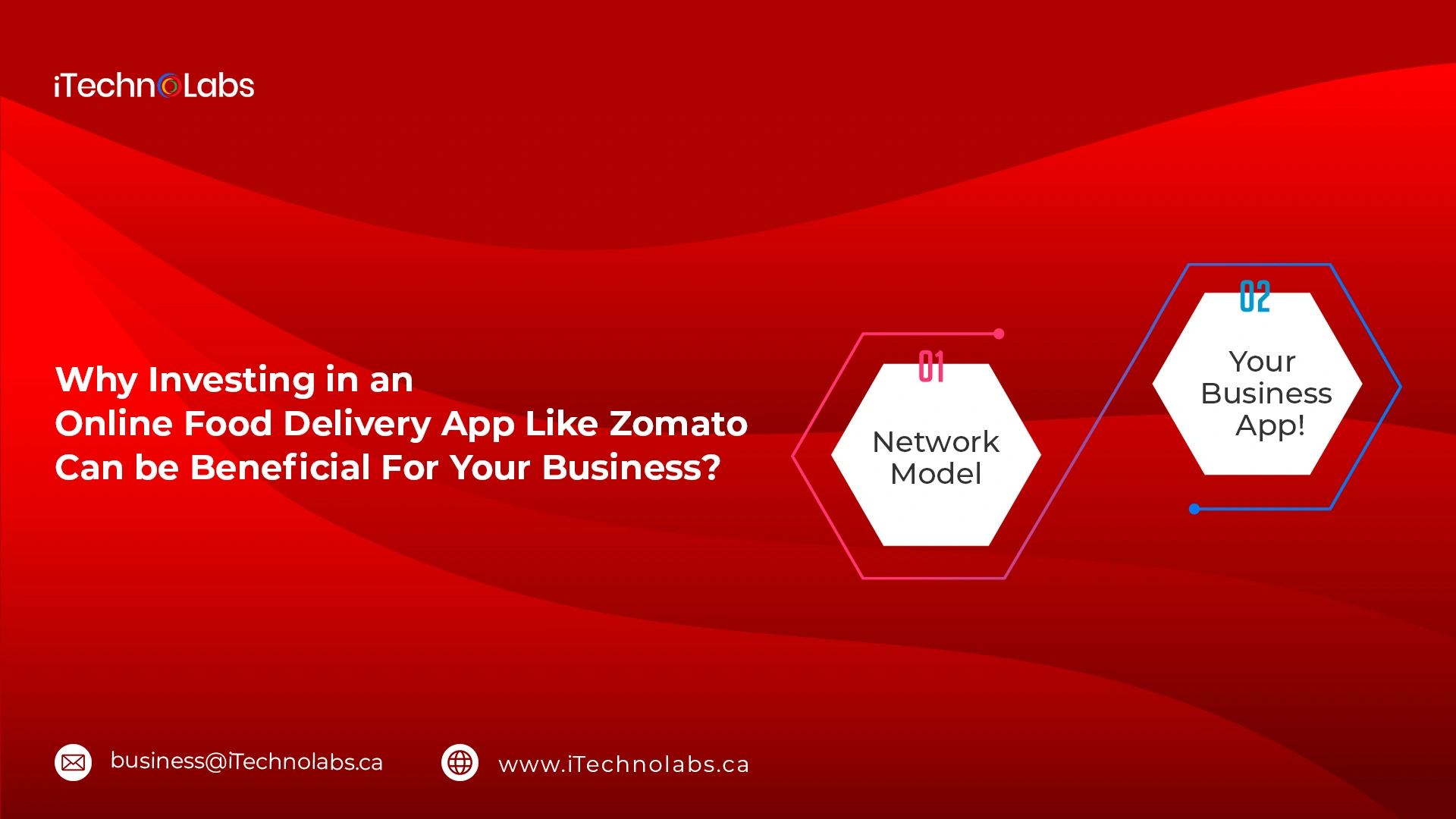
Are you thinking of getting your food business app like Zomato? But having no links in the food industry is stopping you? No worries! Having an online food delivery app like Zomato doesn’t specifically need contacts and there are other ways to make revenue out of food ordering apps. These models give you alternatives to establishing lengthy contacts in the food business. To begin with, you can leverage one of the two models available-
1. Network Model
This model needs you to build a network with local food outlets and eateries. And, once you have created a network with them, you can get them on your app where customers can order from their restaurant through your app. This can give your customers a range of eateries to choose from and order food from. And, amid this, you can keep your commissions and “service on platform” charges.
In this model, you can expand your revenues by widening your network of food outlets! Food outlets, on the other hand, can get increased orders every day that too without investing huge chunks in branding, marketing, and reaching customers. This is a deal of mutual benefit, but the potential for expanding more is on your side!
2. Your Business App!
This can cost you way more and, in some cases, generate fewer revenues in comparison to the network model of online food delivery apps. But, to make this model successful, you need to invest a lot of effort and money in the branding, promotion, and marketing of your app! At Least for some initial months. But this is extremely important, as this would ensure your private online food app reaches the right audience.
For this model, getting an online food delivery app for your business is relatively easy. You can either set up an in-house team or hire a professional team from iTechnolabs, like an expert app development company! Just ideate your app, share the itinerary with the team you hired or with your in-house team, get it developed, and you are good to go!
But when it comes to network model-type online food delivery apps like Zomato, the right step-by-step approach is needed. Let’s hop on it!
How to Get an Online Food Delivery App Like Zomato!
- Think Like a Customer
- Revenue Model
- Onboarding, Tracking, and Assistance!
- Don’t Forget the Customers!
- Think of Tech Principles as well!
- Test, Test, and Test Your Online Food Delivery App!
- There’s a Lot to Do Even After the Launch
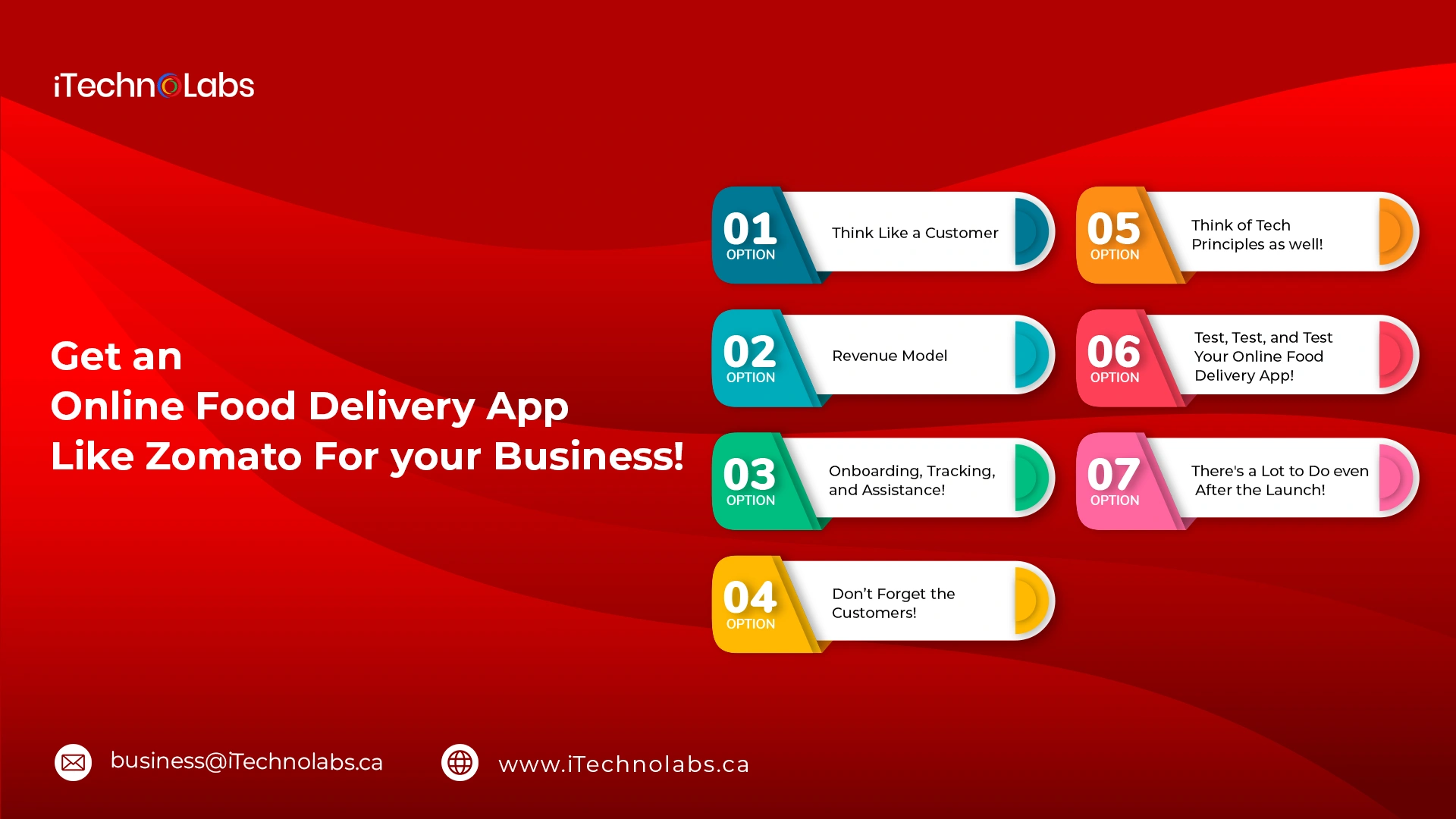
To get a network-type food ordering app, the right approach and strategy are required. Because this industry already has giants playing in a market monopoly, only the right strategy can make new businesses win! Here are some of the steps to keep in mind-
1. Think Like a Customer
The first step to getting a successful food ordering app is to think like a customer!
Put yourself in your customer’s shoes and comprehend what they can expect and need from an online food delivery app like Zomato. Carefully list all the features and widgets you would add to your app. You can get this estimate through a detailed market study and customer understanding. Further, you can also decide on UI and UX elements of your app with the right type of model. In this step, also think about the app’s navigation. And designed to make it easy and doable even for novice app users!
2. Revenue Model
There can be a range of revenue models to earn profits through apps. These can be advertisement-based, commission-based, registration fees on the network, per-order rates, and so forth! But you have to be firm on this before making your app live on platforms. Making this decision beforehand would give you the right strategy to plan the UI, UX, marketing, and even launch of your app!
This would also assist you to underline the branding strategy for your app. At this stage, you can also rectify rules and commission rates for food outlets you would allow on your food outlet network.
3. Onboarding, Tracking, and Assistance!
For food outlets or food businesses you would onboard on your platform, there is a need for a well-regulated and managed onboarding process. This should also have the provision of how they would be able to track orders, commissions, and overall earnings from your food delivery platform. And, to the outlet, all this should be conveyed before final onboarding to avoid later conflicts!
Further, for networked food outlets, also establish the right support and assistance so that they can get the most out of your online food delivery app like Zomato, which in turn will provide you hefty profits in terms of commissions, margins, and referrals!
4. Don’t Forget the Customers!
Online food delivery apps like Zomato are customer-facing B2C products; therefore, it is of utmost importance to get your app optimized for the end customer. For this, ensure you keep payment gateways secure, give a hassle-free food ordering experience, integrate the right widgets, and provide the right support in case of failed food deliveries, late deliveries, any concerns related to delivery partners, orders, and so forth!
Along with this, also make sure you keep a refund policy keeping in mind customers’ concerns. This would help you gain the trust of your customers who are ordering from your app. This would directly elevate the ratio of repeat customers on your app!
5. Think of Tech Principles as well!
Only thinking and designing your app on paper would not do favors. You have to start the actual coding and making your app live by assembling all essential elements together.
But, this step is tricky!
Deciding the right coding language, platform, UI & UX elements, the amalgamation of all precision, and tech integrations is critical for online food delivery apps like Zomato. For this, you might need an expert app development team. iTechnolabs has the right team for you!
We have years of experience and industry-expert app developers who can help you make your online food app like Zomato in today’s reality. Not only this, but along with development, we also assist in testing and launching your app. From ideation to launching, we help you at each step!
6. Test, Test, and Test Your Online Food Delivery App!
Having an online food delivery app like Zomato is incomplete without testing it in real market conditions. This ensures your app meets the market standards and never fails to satisfy the end customer! This would also help you continuously leave a mark and dominate the food ordering market.
But, app testing is not easy and therefore should not be taken lightly! The right software tester should work on this. If you are looking for one, iTechnolabs has the right recommendations for you! For other alternatives, you can leverage the widely available software testing tools.
7. There’s a Lot to Do Even After the Launch!
If you get an online food delivery app like Zomato developed for your business, make sure you don’t leave it unmanaged even after launching and releasing it in the market. After launching, keep updating your app. Incorporate features parallel to recent trends, market demands, and customers’ expectations. Also, keep testing your app within real market conditions. Resolve bugs, track performance, and also schedule regular run checks for integrations. This would help you advance your app with the customer’s comfort level.
All this would ensure exponential growth of your app in the market!
Also, read: Food Delivery App Development: A Complete Guide 2026
Are you Ready to Get Your Online Food Delivery App Like Zomato?
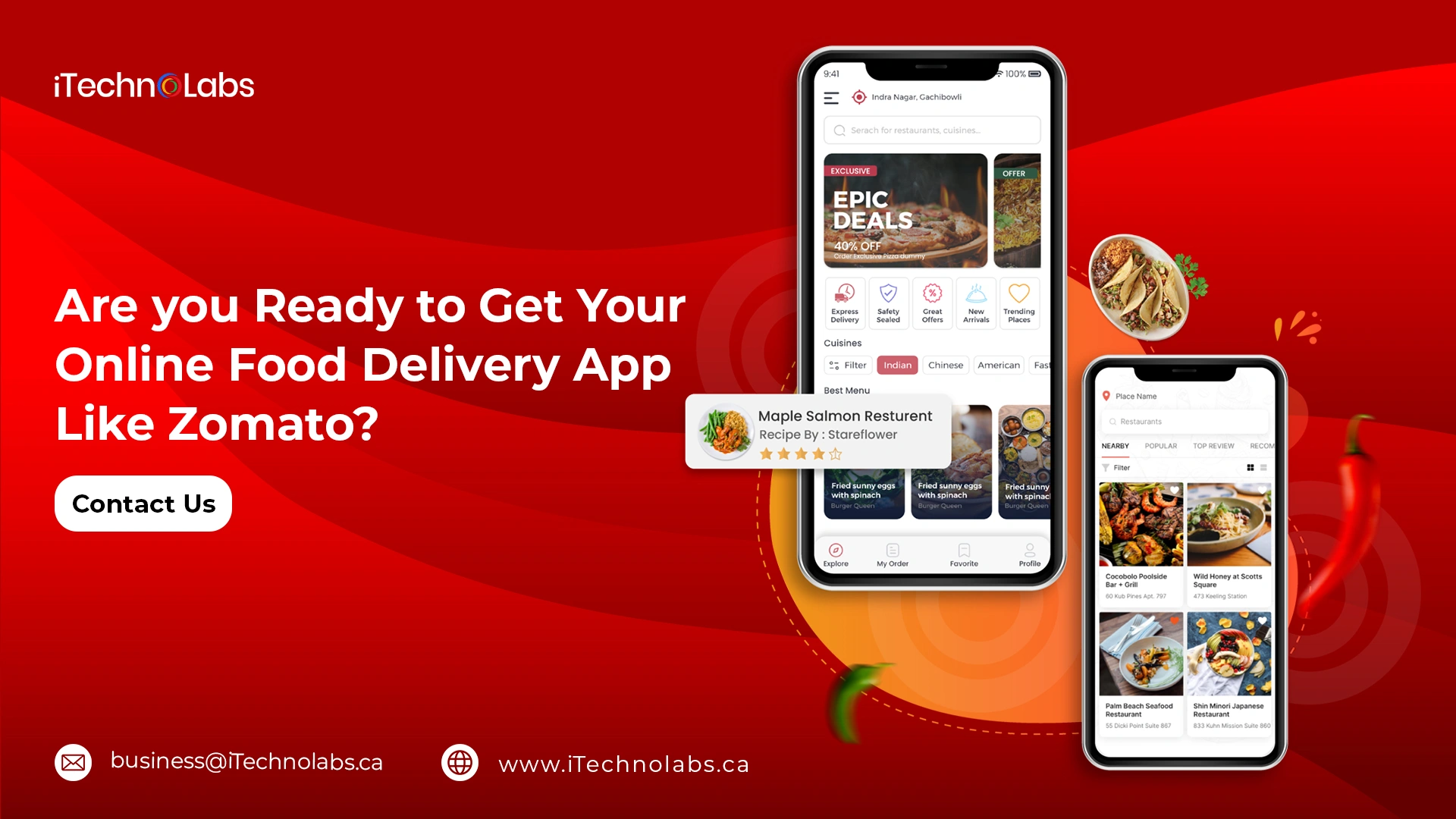
If you have decided to give your business a Zomato-like online food delivery app, it’s time to get to know the experts of iTechnolabs. We have years of industry exposure and app development experience that equips our experts with the right approach and strategy to make your app rule the market in a nick of time.
For any assistance, affordable app development packages, and advanced apps that meet today’s modern market. Get in touch today!
Frequently Asked Questions to Build an Online Food Delivery App Like Zomato
1. How do you create an online food delivery app like Zomato?
Building a food delivery app like Zomato requires careful planning, market research, and the right development strategy. Key steps include:
- Research your target market and audience
- Analyze competitors and identify gaps
- Define unique features and value propositions
- Partner with local restaurants and delivery personnel
- Choose an experienced app development team
- Develop and launch an MVP (Minimum Viable Product)
- Gather user feedback and improve the app
- Launch the full-featured application
Following a structured approach helps ensure your app meets user expectations and remains competitive in the market.
2. How much does it cost to build a food delivery app like Zomato?
The average cost of developing a Zomato-like food delivery app starts at around $22,000, but the final investment depends on several factors, including:
- App size and complexity
- Number of features and integrations
- UI/UX design requirements
- Development team location
- Technology stack selection
- Native or cross-platform development approach
More advanced apps with custom features and multiple user panels typically require a larger budget.
3. What features are required to build a Zomato-like app?
A successful food delivery app should include features that provide a seamless experience for customers, restaurants, and delivery partners. Essential features include:
- User registration and profile management
- Restaurant listings and advanced search filters
- Online ordering and real-time order tracking
- Multiple payment options
- Ratings and reviews
- Push notifications and order updates
- GPS location tracking
- Customer support integration
These features help improve convenience, engagement, and customer satisfaction.
4. How much does it cost to develop an app like Zomato?
The cost of developing an app like Zomato generally ranges between $30,000 and $250,000+. The overall budget depends on factors such as app complexity, custom features, supported platforms, design requirements, and integration needs. Enterprise-grade solutions with advanced functionalities typically fall at the higher end of the range.
5. How long does it take to build a food delivery app like Zomato?
The development timeline depends on the app’s features, complexity, and development approach. Typically:
- 3–6 months for a basic MVP with core functionality
- 6–12 months for a feature-rich application
- 12+ months for a highly customized, enterprise-level solution
Proper planning and agile development practices can help reduce time-to-market.
6. What technologies are used to build apps like Zomato?
Food delivery apps use a combination of frontend, backend, database, and third-party technologies. Common choices include:
- Frontend: Flutter, React Native, Swift, Kotlin
- Backend: Node.js, Django, Laravel
- Database: MongoDB, PostgreSQL, MySQL
- Cloud Services: AWS, Google Cloud, Azure
- Maps & Tracking: Google Maps API
- Payments: Stripe, PayPal, Razorpay
The technology stack is selected based on project requirements, scalability goals, and budget.
7. What are the key panels in a Zomato-like food delivery app?
A complete food delivery ecosystem typically consists of four main panels:
- Customer App: For browsing restaurants, placing orders, and tracking deliveries.
- Restaurant Panel: For managing menus, orders, and customer requests.
- Delivery Partner App: For accepting deliveries and updating order status.
- Admin Dashboard: For overseeing users, restaurants, payments, analytics, and overall platform operations.
Together, these panels ensure smooth management and efficient food delivery services.