Key Takeaways
- PropTech app development involves building software for real estate companies for listing, managing, renting, and selling properties, including tenant portals and listing marketplaces.
- The worldwide PropTech market is anticipated to be $50.1 billion in 2026 and will more than double by 2033.
- As real estate companies develop different types of apps to meet various needs, such as brokerage, management, and tenant and owner portals, the role of AI is becoming clearer, from offering similar properties to answering potential buyers’ questions via chat.
- Real estate apps process sensitive financial and personal user data, which means data security has to be a priority from day one, not something bolted on after launch, and compliance isn’t optional.
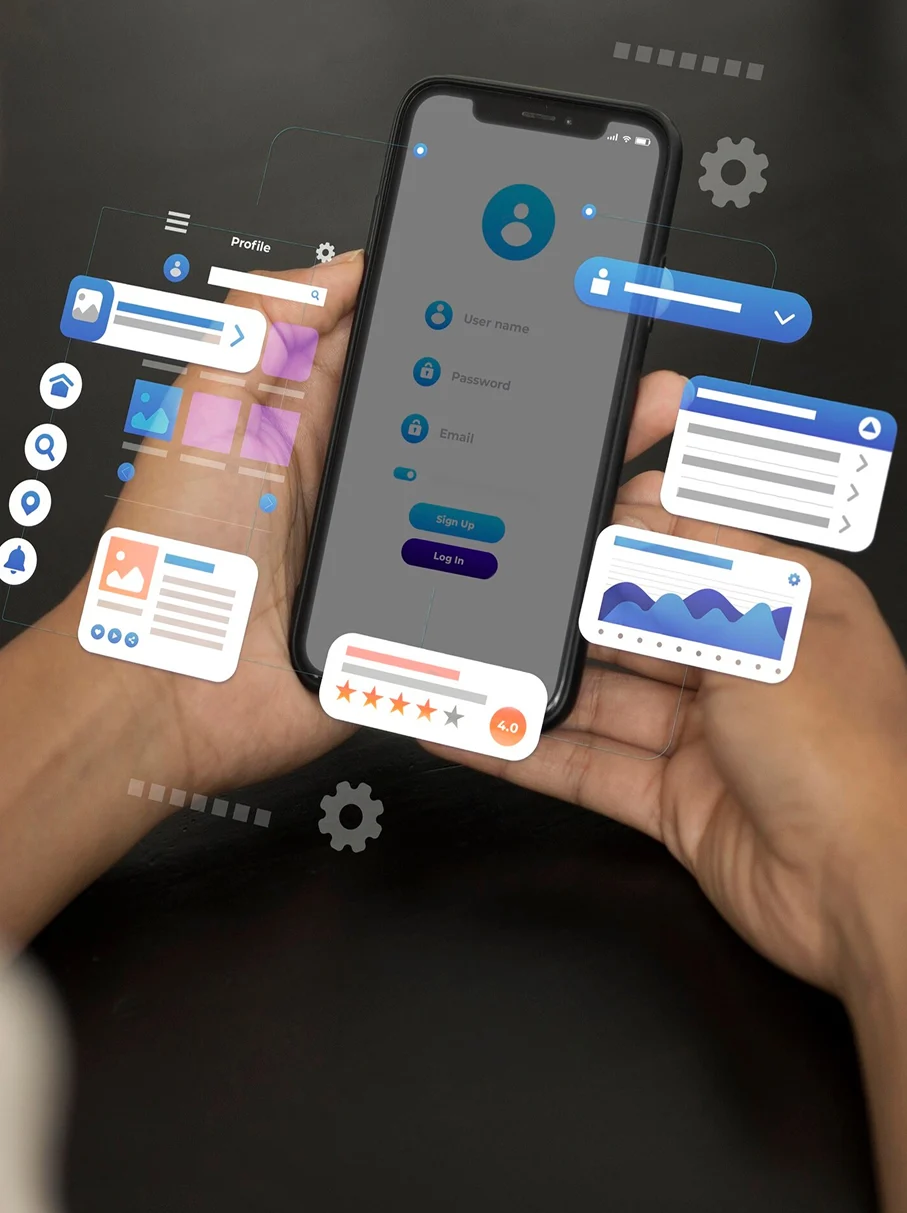
PropTech app development is the process of building software, like listing marketplaces, property management tools, and tenant portals, that helps real estate businesses run day-to-day operations online. It covers everything from a simple app that shows listings on a map to a full platform that handles rent, maintenance, and leases in one place.
The global PropTech market is on track to hit $50.1 billion in 2026, up from roughly $45 billion in 2025, according to Grand View Research, and it’s projected to top $115 billion by 2033. That growth is happening because manual processes, spreadsheets, phone calls, paper leases are starting to cost real estate businesses leads and time.
For a small or mid-sized real estate company, none of this needs to feel overwhelming. This prop tech real estate software guide covers the app types real estate companies actually build, the features and tech choices that matter most, and how to avoid the mistakes that turn a six-month project into a year-long one.
Table of Contents
- What Is PropTech App Development, Really?
- What Types of PropTech Apps Do Real Estate Companies Actually Build?
- What Core Features Does a Modern PropTech App Need?
- How Does AI Fit Into PropTech App Development?
- What Tech Choices Actually Matter?
- What Data Security and Compliance Considerations Apply?
- What Does the PropTech App Development Process Look Like?
- Why Work With iTechnolabs on a PropTech App?
- Conclusion
- Frequently Asked Questions
What Is PropTech App Development, Really?
The term gets thrown around a lot right now. But for most real estate businesses, it comes down to one specific problem, not a trend worth chasing. Maybe your team is still updating listings by hand. Maybe tenants keep calling instead of using a portal that doesn’t exist yet.
PropTech, short for property technology, covers a lot of ground. Some of it is physical: smart locks, sensors that track a building’s temperature and energy use. Some of it is software: listing sites, management tools, portals tenants use to pay rent or ask for repairs. This prop tech real estate software guide sticks to the software side, since that’s where most small and mid-sized real estate businesses actually start.
At its core, a PropTech app does one job. It makes some part of buying, selling, renting, or managing property easier than it currently is. That might mean a buyer finding a listing without calling five agents. It might mean a property manager approving a maintenance request from a phone instead of a paper form. The problem changes from business to business. The pattern doesn’t. Something you used to do by hand now happens on its own, or close to it.
Not every real estate business needs the same app, either. A three-person brokerage and a property management company running 500 units are solving different problems. Their apps look nothing alike. That’s the first thing to get right before you build anything: knowing which type of app actually matches what your business does day to day.
What Types of PropTech Apps Do Real Estate Companies Actually Build?
Not every real estate app does the same job. Before you start building, it helps to know which category fits your business.
- Brokerage and marketplace apps let buyers and renters search listings, filter by price or location, and contact agents directly. Think Zillow, but built for your market and your listings only.
- Property management apps go the other direction. They’re built for landlords and property managers, not buyers, and they handle rent collection, maintenance requests, lease tracking, and tenant communication in one dashboard.
- Tenant and owner portals are smaller and more focused. Tenants pay rent, submit repair requests, and pull up lease documents. Owners get visibility into their properties without picking up the phone to call the office.
- There’s also agent CRM and productivity tools. Less flashy than a listings app, honestly, but often the tool that actually drives revenue, since it’s what helps agents track leads and close deals faster.
- And valuation or analytics software, which estimates property value or tracks market trends. Useful mainly for investors and larger brokerages that need data behind their pricing decisions.
Most real estate businesses need one or two of these. Not all five. Picking the right category first saves you from building features nobody on your team will ever use.
What Core Features Does a Modern PropTech App Need?
A handful of features show up in nearly every real estate app that actually works. Skip these and users notice fast.
- Start with search and filtering. Buyers and renters want to narrow results by price, bedrooms, location, and move-in date without digging through five menus to do it. This is, without question, the most-used feature in any listings app.
- Map-based browsing matters just as much. People search by neighborhood as often as they search by keyword, so a map view with pins on active listings has become the standard, not a nice extra. Worth noting why: more than 70% of property searches now start online, and mobile is doing most of that work, shaping how people browse listings and compare prices before they ever talk to an agent.
- Photos and virtual tours help buyers shortlist properties before setting foot in one. High-resolution images, a 3D walkthrough if you can manage it. This also cuts down wasted showings for agents, which nobody complains about.
- Messaging and notifications keep the conversation inside the app instead of scattered across email threads. Buyers, renters, and agents need one place to talk. Push notifications for new listings or maintenance updates keep people coming back.
- For management apps specifically, CRM and payment integration matter a lot. Rent payments, deposit tracking, syncing with whatever CRM your sales team already relies on. Bolting this on after launch is a lot harder than planning for it from the start.
And somewhere behind all of it, an admin dashboard. Someone on your team needs a back-end view to add listings, approve maintenance requests, and actually see what’s happening across your properties at a glance.
How Does AI Fit Into PropTech App Development?
AI shows up in real estate apps in a few practical ways. Not as a buzzword tacked onto a feature list.
Property recommendation engines learn what a user clicks on, saves, and searches for, then surface similar listings without being asked. Same idea Netflix uses for shows, just applied to homes and apartments instead.
Chatbots handle the first line of questions. “Is this available?” “What’s the pet policy?” A basic bot answers these instantly, which frees up agents for the conversations that actually need a human on the other end.
Predictive pricing tools look at market trends, comparable sales, and demand patterns, then suggest a listing price. Especially useful for property managers setting rent across a whole portfolio at once.
None of this requires building your own AI from scratch, and that’s worth saying plainly. Most real estate apps plug into existing AI services rather than training custom models, which keeps costs down and timelines shorter. iTechnolabs works on AI integration for exactly this kind of use case. More on how that process works is on the AI development services page.
What Tech Choices Actually Matter?
You don’t need to code to make good decisions. However, some decisions will impact your app for years, so let’s walk through those first.
The first of these major decisions pertains to whether to build the app for iPhone and Android separately, or whether to build once and launch on both. For the second option, you can use tools such as React Native and Flutter, which allow for a faster and cost-effective first iteration of the app. Most real estate focused startups take this route and build different versions of the app only after performance calls for it.
Second: where the app actually lives and runs. Due to increased traffic, like photo and video uploads, and a growing user base, cloud-based hosting becomes critical for real estate apps. cloud-based services are especially useful on busy days when the app may slow or even crash. Having a listing app that crashes while the real estate market is competitive is not just an annoyance for the user; it is also a lost opportunity to make money.
Third, and easy to overlook: how the underlying data is organized. Property details change constantly, prices, availability, photos, so that data needs to update fast without slowing down search results for users. Nobody notices this when it’s done right. Everyone notices when it’s done badly.
None of these decisions need to be made alone, either. A development partner should walk you through the trade-offs based on your budget and how fast you expect to grow.
What Data Security and Compliance Considerations Apply?
Real estate apps hold sensitive information: financial details, lease agreements, ID documents, sometimes background check data too. That makes security a foundation, not an afterthought bolted on before launch.
In Canada, a law called PIPEDA governs how businesses collect, store, and use personal data. If your app handles tenant applications or payment information, this isn’t optional reading. It shapes how data gets stored and who’s allowed to access it.
Look for partners with actual security track records. As an example, iTechnolabs has the ISO 27001:2013 and ISO 9001:2015 certifications for information security and quality management systems, respectively. This means iTechnolabs implements security at every phase of the process and doesn’t end up implementing it at the last minute as an afterthought.
Some stuff a real estate application should always have: encryption for all the stored data, online payment systems that don’t save the raw data of the credit cards, varying levels of access where staff is able to see what is required of them, and frequent security checks as the user base and the operational scope of the application expands.
What Does the PropTech App Development Process Look Like?
Here’s a realistic walk-through, start to finish.
- It starts with discovery and planning, where you define what the app actually needs to do, who it’s for, and what “done” looks like. Skip this step and you’ll likely find out later, the hard way, since it’s the single biggest reason projects run over budget. Most real estate founders are better served scoping an MVP first, one core feature set proven with real users, rather than building every feature on the list before launch.
- Then design. Wireframes and prototypes come first, so the user flow gets tested before a single line of code exists. For a real estate app, that usually means mapping out how someone searches, filters results, and contacts an agent.
- Development follows, frontend and backend built together in phases. Good teams work in short sprints, so you see real progress every few weeks instead of waiting months for one big reveal.
- Testing and QA come next, and this is where real-world use catches what a demo misses. Does the map load properly on a slow connection? Does the payment flow break under load? This step is what protects your launch day.
- Launch means getting the app live on the App Store and Google Play, plus the web version if you’re building one.
- And then maintenance, which never really stops. Listings change. Operating systems update. New features get requested in six months that nobody thought of at the start. Ongoing support is what keeps the app working the way it did on day one.
Why Work With iTechnolabs on a PropTech App?
A few things separate a development partner worth trusting from one that just says the right words.
iTechnolabs holds ISO 27001:2013 certification for information security and ISO 9001:2015 for quality management, which matters directly for real estate apps handling tenant data, payments, and lease documents. The company also holds a Government of Canada Procurement Supply Arrangement (SA CW2395301), a credential most development shops in this space don’t have.
There’s also the track record behind it: over 500 apps delivered and more than 50,000 end users across those builds, with teams working out of four offices, Markham, Calgary, Ottawa, and Sheridan, Wyoming. For a Canadian real estate business, that means a partner with actual PIPEDA-aware delivery experience, not a generic overseas shop learning Canadian compliance on your project.
None of that replaces asking the right questions during a discovery call. But it’s a reasonable starting filter when you’re comparing partners for something as sensitive as tenant and financial data.
Conclusion
PropTech app development doesn’t focus on making the shiniest app in the market. It’s about making a good tool for the job, whether that is a listings portal, tenant portal, or a property management tool dashboard. The goal is to build a tool that is prepared to handle actual users and data. Basics like search functionality, maps, and security need to be addressed. Once these are set, tools like AI can be useful recommendations. Whether to build in-house or bring in a partner depends on how urgent the app development is and how much the app needs to scale.
Frequently Asked Questions
1. How long does it take to build a PropTech app?
A basic app with user accounts, search, and listings typically takes 3-4 months. A more complex app with AI recommendations, virtual tours, and integrated CRM takes 6-9 months. The timeline is more dependent on your feature prioritization based on what is essential to launch versus what can be added later to version 2.
2. Do I need AI features from day one?
No. Most real estate apps launch with core features like search and messaging, then add AI recommendations or chatbots once there’s enough user data to make them useful. Building AI in from day one adds cost without much payoff if you don’t have users yet.
3. What’s the difference between a listing app and a property management app?
Listing apps allow prospective property buyers or tenants to search and browse through property listings. Property management apps are made for landlords and their staff to help them with the process of managing maintenance requests, receiving rental payments, and keeping up with lease information. Some businesses need both, built as connected but separate tools.
4. Do I need a native app, or is cross-platform enough?
For use cases involving real estate, UI frameworks like React Native or Flutter are best both in cost and time to develop an application, but in the event that performance issues arise, or if you’re trying to use many deep features, you’ll be better off using Native development.
5. What ongoing costs should I expect after launch?
Cloud hosting, app store fees, bug fixes, and OS updates are the baseline. Plan for a maintenance budget, not just a build budget. Most real estate apps also add features gradually after launch based on what users actually ask for.
6. Is my tenant and financial data actually safe in a custom app?
It should be secure if the development team builds such functionality from day one. Before you sign, you should ask any potential partner about their security certifications and how they ensure compliance with the protection of personal information and electronic documents act (PIPEDA).