The practice of yoga has developed into an international digital fitness trend, which began as an ancient wellness practice. The Yoga Go App provides people who prefer home workouts with an affordable and accessible option to traditional studio classes, which they can use through mobile wellness platforms.
Yoga-Go App pricing information can be found on this page because you want to know the cost of Yoga-Go. Yoga as a practice began more than 3000 years ago when it first developed from the Indus Valley Civilization into its present form. The Vedas, which were composed between 1500 BCE and 500 BCE, contain ancient texts that describe early yogic practices that ancient practitioners used to achieve physical, mental, and spiritual well-being.
Yoga has developed into a worldwide business that generates billions of dollars each year in the present-day world. People worldwide practice yoga because it provides them with benefits which include improved flexibility and physical fitness and help with stress management and mindfulness, and better health. Digital platforms enable users to practice yoga whenever they want from any location throughout their daily activities, and many are also curious about Yoga Go cost when choosing the right app. The practice of yoga continues to attract more practitioners. In the United States, yoga stands as one of the most popular fitness activities because approximately 16% of adults practice it on a regular basis, according to data from the Centers for Disease Control and Prevention. The increase in participation demonstrates a complete change in people who now prefer to use home-based wellness solutions, which provide them with access to wellness services whenever they want.
The business side is expanding at the same speed as other business operations. The global yoga market was valued at more than $100 billion during recent years, and it is expected to grow continuously over the next ten years. As interest grows, many users also look into Yoga Go cost and subscription options before committing to digital fitness platforms. The increasing demand for digital fitness products creates a significant business opportunity that benefits both users and entrepreneurs who want to enter this market.
The Yoga Go App offers different subscription plans, which establish its price range between monthly subscription options and discounted annual packages. This guide explains the complete pricing structure of the application while outlining its main features to help you decide whether it is a worthwhile investment. It also covers essential features required for developing a yoga app, along with estimated costs and key development insights for businesses entering the digital wellness space.
Table of Contents
A Closer Look at What the Yoga Go App Offers
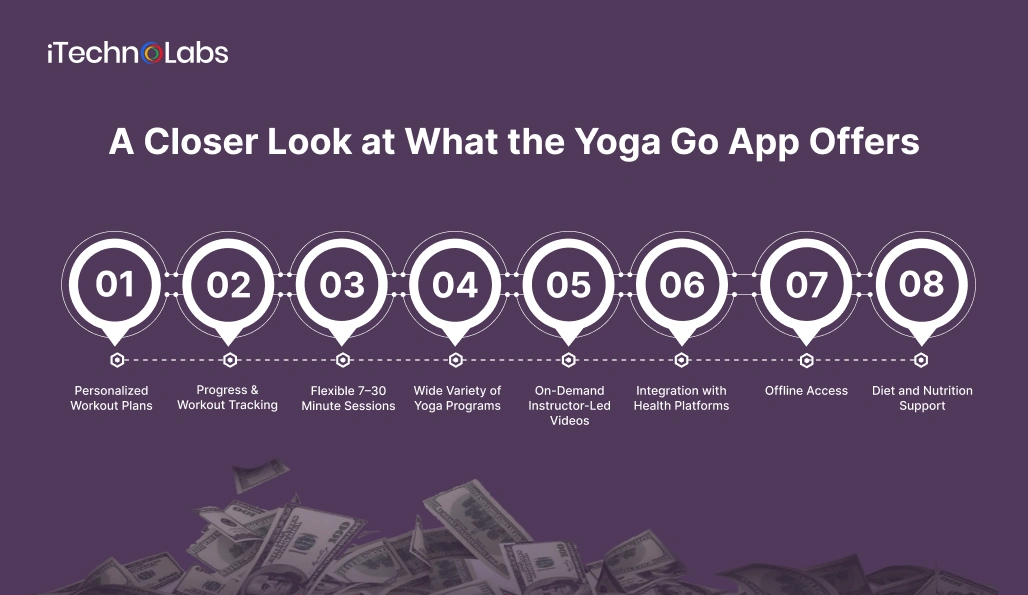
The Yoga Go App is a personalized fitness and wellness platform that enables users to achieve better flexibility, strength development and mental awareness through its guided yoga programs. The system develops personalized exercise programs that fit the user’s specific training needs, their present physical condition, their age, and their workout duration.
The Yoga Go app provides its users with three fundamental features that define its unique value proposition.
1. Personalized Workout Plans
The app develops personalized yoga routines through analysis of your personal lifestyle, age, and gender, fitness targets, and available practice time. The system guarantees that every workout session provides users with relevant content that establishes their effectiveness as actual workout exercises.
2. Progress & Workout Tracking
The Yoga Go application includes a fitness tracking system that allows users to track their workout progress. The system enables users to log their finished exercises while monitoring their calorie expenditure and tracking their workout achievements throughout different periods. The system uses visual progress indicators to maintain your motivation while showing specific aspects of your performance that require improvement.
3. Flexible 7–30 Minute Sessions
Yoga-Go offers users workout choices which include 7-minute and 30-minute workout options because the company understands users have limited time. The program develops active habits through its brief sessions, which provide valuable outcomes to users.
4. Wide Variety of Yoga Programs
The application offers users access to different yoga styles and multiple training programs. Users can explore Hatha for its gentle stretching, Vinyasa for its flowing movements, Yin for its complete relaxation, and Power Yoga for its strength and endurance training. The different exercise choices keep users engaged in their workouts while supporting their pursuit of various fitness goals.
5. On-Demand Instructor-Led Videos
Yoga Go offers users an extensive library of professional video tutorials from experienced teachers. The videos are suitable for all skill levels and are frequently updated, so users always get new content to discover.
6. Integration with Health Platforms
The app works in tandem with well-known health and fitness platforms like Apple Health, Google Fit, and Fitbit. Linking up in this way helps users to monitor their steps, calories burned, heart rate, and other metrics together in one place for a fuller picture of their health.
7. Offline Access
Yoga-Go provides an offline mode, which works for users who travel often or face internet connectivity limitations. Users can download workouts beforehand to exercise at any moment without needing Wi-Fi access.
8. Diet and Nutrition Support
In addition to workouts, Yoga-Go promotes a holistic approach to wellness by offering nutrition guidance. Users can access meal plans and healthy recipe suggestions that align with their fitness goals, helping them maintain balance between exercise and diet.
9. Is the Yoga Go App Free?
The Yoga Go App is free to download on both Android and iOS devices, allowing users to explore the platform initially. However, access to most guided workout programs, personalized plans, and advanced features requires a paid subscription, which unlocks the app’s complete library and full wellness experience.
10. Yoga Go Subscription Plans
Here’s a general overview of the Yoga Go App pricing structure, which includes multiple subscription options designed to suit different user needs. Plans range from short-term monthly access to longer annual commitments, along with optional add-ons and one-time purchases for specialized fitness and wellness content.
| Plan Type | Starting Price |
| Introductory Trial | May vary (often discounted first period) |
| Monthly Subscription | Around $19.99/month |
| Quarterly Subscription | Around $34.99/quarter |
| Annual Subscription | Around $52.99/year |
| One-Time Guides | Around $29.99 |
| Weight Loss Add-On | Around $9.99/month |
Subscription rates may fluctuate according to geographic location, active promotional campaigns, and the device platform through which the purchase is made.
11. Is Yoga-Go Worth the Subscription Cost?
Whether the Yoga Go App is worth paying for largely depends on your fitness goals, how consistently you plan to use it, and the type of guidance you prefer. Users who value structured programs, flexibility, and at-home convenience may find the subscription worthwhile compared to traditional in-person yoga classes.
Benefits
- Personalized yoga programs tailored to individual needs
- Wide variety of guided sessions and yoga styles
- Flexible workout lengths to fit different schedules
- Offline access for practicing without internet
- Integration with popular health tracking apps
- Beginner-friendly guidance with clear video instructions
- Regular content updates to keep workouts fresh and engaging
Limitations
- The free version provides only limited access to workouts and features
- Full functionality requires a paid subscription
- No live classes or real-time instructor feedback
- Lacks interactive community or social features
- Some users may feel the workout content becomes repetitive over time
- Limited customization beyond preset program structures
- Refund policies may be restrictive depending on the platform
The app provides users who practice yoga regularly with a more affordable solution than their regular visits to physical yoga studios. The subscription fees reduce total expenses when compared to paying for individual classes, which benefits users who practice multiple times each week.
Also Read: The Fastest Growing Industries Shaping the Future: 2026 and Beyond
Planning to Build an App Like Yoga-Go? Here’s What to Consider
Before you start calculating development expenses for your project, you must first comprehend the reasons that make yoga app development a profitable business opportunity. The digital fitness industry shows rapid growth, and users now prefer yoga apps as their primary method to maintain active lifestyles while practicing mindfulness and achieving home-based health goals.
Here are some key reasons why investing in a yoga app can be profitable:
- The global fitness application market will experience substantial growth during the upcoming years, which will lead the market value to exceed multiple billion-dollar thresholds.
- More than 300 million individuals worldwide practice yoga, but most people today choose to use digital platforms because it offers them better accessibility.
- Yoga interest keeps increasing because people have been conducting more online yoga searches throughout the past few years.
- The development costs for your yoga application project will depend on both your chosen yoga application type and the specific features which you intend to include.
Below are the main categories of yoga apps and their approximate development costs.
1. On-Demand Yoga Apps (Live and Recorded Classes)
The applications offer users the ability to watch yoga classes that are taught by certified instructors through both live-streaming and pre-recorded formats. Users have the flexibility to join live sessions at any time, while they can also schedule classes and proceed through established programs at their convenience.
- Examples: Glo, Alo Moves, Yoga International
- Estimated Development Cost: $50,000 – $120,000
2. AI-Powered Yoga Apps
AI-powered yoga applications use computer vision and motion tracking technologies to assess user body positions and deliver instant body position assessment results. The system creates individualized exercise plans according to users’ actual progress and their intended fitness objectives.
- Examples: Asana Rebel, Yoga Go
- Estimated Development Cost: $80,000 – $150,000
3. Meditation and Wellness Yoga Apps
The applications concentrate on mindfulness practices, together with breathing exercises, relaxation methods, and sleep assistance solutions. The programs frequently provide users with guided meditation sessions, soothing audio tracks, and stress relief programs.
- Examples: Calm, Headspace
- Estimated Development Cost: $40,000 – $100,000
4. Yoga and Fitness Hybrid Apps
Yoga training combines its practice with different fitness exercises, which include HIIT, Pilates, and strength training. The application provides users with features that include meal planning, goal tracking, and complete fitness assessment.
- Examples: FitOn, Daily Yoga
- Estimated Development Cost: $60,000 – $130,000
Total Cost Breakdown for Yoga App Development
The development expenses for yoga applications can be estimated (with basic apps starting from $20,000) using three key factors, which include the application’s complexity, its feature set, and its design requirements, plus its technology stack. The ranges presented here enable companies to assess the financial requirements needed to create three different types of yoga applications, which range from basic to mid-level and advanced applications with contemporary features.
| App Type | Estimated Development Cost |
| Basic Yoga App | $20,000 – $40,000 |
| Mid-Level Yoga App | $50,000 – $80,000 |
| Advanced / AI-Powered App | $80,000 – $150,000+ |
| Hybrid Fitness & Yoga App | $40,000 – $130,000+ |
Actual costs depend on features, design expectations, and the development team you consider.
Also Read: Top 20+ Best Free Music Streaming Apps in 2026
Factors That Affect Yoga App Development Cost
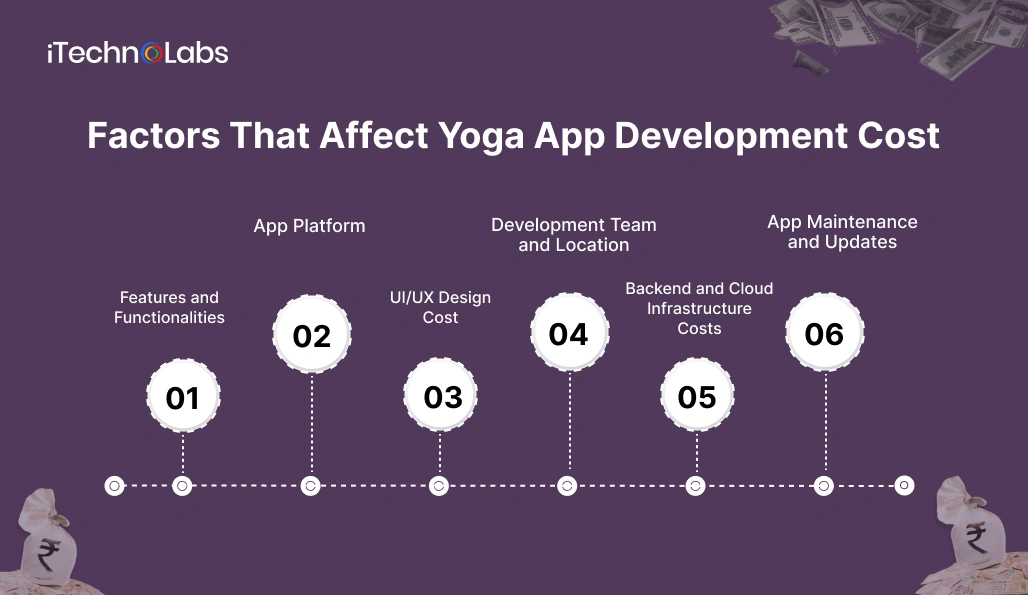
The development process of a yoga application requires development teams to make technical and strategic choices that determine their total financial expenditures. The development costs of your project will be determined by the features you choose to include in your yoga guide and the multiple functions of your Yoga Go app.
The following list includes the primary elements that affect the expenses of creating yoga applications.
1. Features and Functionalities
The complexity of features is one of the biggest cost drivers. A basic yoga app with limited functionality will cost significantly less than an advanced app with smart and interactive tools.
If you’re launching a Minimum Viable Product (MVP), you can start with essential features such as:
- User registration and profile management
- Pre-recorded yoga sessions
- Basic workout tracking
- Push notifications
- Subscription and payment integration
A yoga app with core features typically costs between $20,000 and $40,000.
To compete with apps like Yoga-Go, you may want to add advanced capabilities that enhance user experience. These features increase development time and cost:
- AI-based posture correction
- Live-streamed and interactive classes
- Personalized workout recommendations
- Integration with wearable devices (Apple Watch, Fitbit)
- AI chatbot or virtual fitness coach
Adding these advanced features can raise the total cost to approximately $50,000 – $150,000.
2. App Platform
Your selection of a platform determines your expenses. The creation of distinct native applications for iOS and Android requires developers to work with two separate codebases, which results in increased development expenses and time requirements. Cross-platform frameworks enable organizations to achieve cost savings.
3. Estimated platform development costs:
- iOS App Development: $30,000 – $100,000
- Android App Development: $30,000 – $100,000
- Cross-Platform (Flutter or React Native): $40,000 – $120,000
Cross-platform development is often the most cost-effective option for startups looking to reach a wider audience.
4. UI/UX Design Cost
A well-designed interface improves user engagement and retention. Design costs vary depending on how customized and interactive you want the app to be.
- Basic UI design (simple layout and navigation): $3,000 – $8,000
- Advanced UI design (custom animations and rich visuals): $10,000 – $25,000
Investing in intuitive and visually appealing design can significantly improve user satisfaction.
5. Development Team and Location
Developer rates vary widely depending on geographic location. Hiring teams in North America or Western Europe is generally more expensive than outsourcing to Eastern Europe or Asia.
Estimated hourly developer rates by region:
| Region | Hourly Rate |
| USA & Canada | $100 – $200/hr |
| Western Europe | $80 – $150/hr |
| Eastern Europe | $40 – $80/hr |
| India & Asia | $20 – $50/hr |
Outsourcing to experienced offshore teams can reduce costs while maintaining quality.
6. Backend and Cloud Infrastructure Costs
A yoga app requires a strong backend to handle user accounts, workout data, subscriptions, and video streaming. Cloud services like AWS, Firebase, or Azure are commonly used.
7. Estimated backend and cloud costs:
- Basic hosting and storage: $5,000 – $15,000 per year
- Advanced cloud services (AI, streaming, high traffic): $20,000 – $50,000 per year
Serverless and scalable cloud solutions can help optimize infrastructure spending.
8. App Maintenance and Updates
After launch, ongoing maintenance is essential for performance improvements, bug fixes, and new feature releases.
9. Estimated yearly maintenance costs:
- Basic maintenance: $5,000 – $15,000 per year
- Regular updates and feature enhancements: $15,000 – $50,000 per year
A good rule of thumb is to allocate 15–20% of the initial development cost annually for maintenance and upgrades.
How to Reduce Yoga App Development Costs
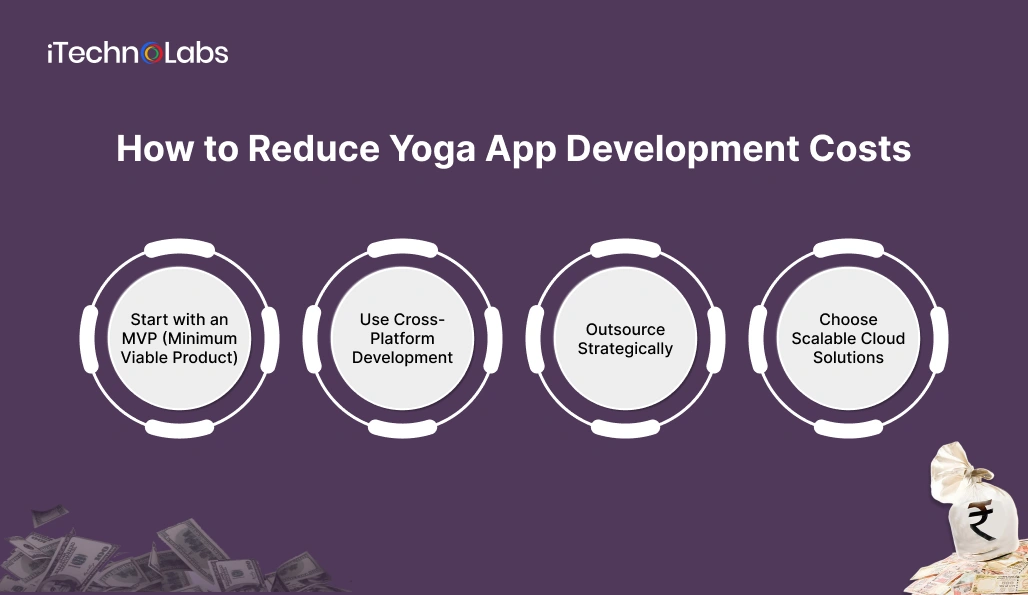
If you want to create a yoga application but your budget is limited, there exist multiple effective methods that will help you reduce costs while maintaining project standards.
1. Start with an MVP (Minimum Viable Product)
You should develop your application first from its basic version which contains only its essential features. Your advanced features should be developed after you achieve user validation of your business concept.
2. Use Cross-Platform Development
Using Flutter and React Native, developers can create applications for both iOS and Android platforms using one shared codebase, which helps them save time and reduce development expenses.
3. Outsource Strategically
Partnering with experienced offshore development teams can lower labor costs while still delivering high-quality results.
4. Choose Scalable Cloud Solutions
Using serverless and cloud-based infrastructure helps optimize backend expenses and ensures your app can scale as your user base grows.
5. Build Apps Like Yoga-Go with Our Expert Development Team
The development of a successful yoga application requires designers to create an attractive interface, while developers need to establish dependable technological systems that provide users with satisfying experiences. The app development process becomes more efficient when you collaborate with a skilled mobile app development company that will create your product while meeting present market requirements.
Expert developers will assist you in building your yoga routine application or your wellness platform, which includes personalized features from the initial idea validation stage through the design process until development, launch, and permanent updates.
Frequently Asked Questions (FAQs)
1. How much does the Yoga Go App subscription cost?
The Yoga Go App offers several subscription options based on billing frequency and promotional offers. Monthly plans typically cost around $19.99, while quarterly subscriptions are available for approximately $34.99. Annual plans generally start at $52.99 per year, making them the most cost-effective option for long-term users. Additional wellness programs, fitness guides, or premium content may be available as optional purchases.
2. How much does it cost to develop an app like Yoga Go?
The cost of developing an app like Yoga Go generally ranges from $50,000 to $150,000 or more, depending on the app’s complexity, feature set, technology stack, and platform requirements. A basic yoga and fitness app with essential features may cost between $20,000 and $40,000, while advanced solutions with AI-powered recommendations, video streaming, wearable integrations, and personalized wellness tracking require a significantly larger investment.
3. How long does it take to build a yoga app?
The development timeline for a yoga app typically ranges from 3 to 9 months. A minimum viable product (MVP) with core features such as workout plans, video content, and user profiles can often be completed within 3 to 4 months. More sophisticated applications featuring AI functionality, live classes, wearable integrations, and advanced analytics may require 6 to 9 months or longer to design, develop, test, and launch.
4. What features should a yoga app include?
A successful yoga app should provide personalized workout plans, guided video sessions, progress tracking, user profiles, subscription management, push notifications, and offline access to content. To create a more engaging user experience, advanced yoga applications may also include AI-powered recommendations, posture correction, wearable device integration, live instructor-led classes, nutrition guidance, wellness monitoring, and community engagement features.
5. Is cross-platform development a good option for yoga apps?
Yes, cross-platform development is often a cost-effective choice for yoga app development. Frameworks such as Flutter and React Native allow developers to build applications for both iOS and Android using a single codebase, reducing development time and costs. Depending on the app’s complexity, a cross-platform yoga app typically costs between $40,000 and $120,000 while still delivering a consistent user experience across devices.
6. Can AI be integrated into a yoga app?
Yes, AI can significantly enhance a yoga app by delivering personalized workout recommendations, tracking user progress, providing wellness insights, and suggesting routines based on individual goals and fitness levels. Advanced AI implementations may also include posture analysis, voice-guided coaching, and predictive health recommendations, helping improve user engagement and long-term retention.
7. What technologies are used to develop a yoga app like Yoga Go?
Yoga apps are commonly built using technologies such as Flutter or React Native for mobile app development and Node.js, Python, or Firebase for backend services. Additional technologies may include cloud storage solutions, video streaming platforms, AI and machine learning frameworks, payment gateways, and wearable device integrations to support advanced fitness and wellness features.
8. How do yoga apps generate revenue?
Yoga apps typically generate revenue through subscription plans, in-app purchases, premium workout programs, personalized coaching services, and partnerships with fitness and wellness brands. Some apps also offer free versions supported by advertisements, while premium subscription models remain the most popular monetization strategy for apps similar to Yoga Go.