The digital transformation of businesses throughout the world would not have been complete without mobile app development. With the growing usage of Smartphones worldwide, the companies are pouring into app development in order to enable interaction with customers, effective business processes, and potential to increase revenue. The total market value of the mobile apps is going to stand above $330 billion by 2026 due to the high market need for new experiences.
Now, mobile app development is not just about developing an application, but creating efficient, scalable, and secure solutions for business needs. Professional mobile app development services helps enterprises with design, development, testing, and maintenance of high-quality apps on platforms like Android, iOS, and cross-platforms. Hiring a mobile app development company can help reduce the risks of failure to launch apps and accelerate app development.
This guide contains all information regarding mobile app development in 2026, that ranges from the types of apps to tech stacks, development trends, and costs.
TL;DR
- The business expansion and customer engagement come through mobile app development.
- Various business needs are fulfilled through Android apps, iOS apps, and cross-platform app development.
- The AI, 5G, cloud computing, and personalization trends influence the mobile app development.
- Using proper tech stack increases scalability and performance of the mobile application.
- The risks of building a mobile app and business acceleration is managed through mobile app development services.
Key Points
- Mobile applications offer enhanced customer experience, allow companies to engage and build relationships with customers, automate tasks and create new revenue streams with the help of digital mediums.
- Understanding the types of applications, approaches to their development and technology used would ensure that the right mobile application is selected that suits the company’s objectives for the long term.
- Mobile application industry has evolved drastically with emerging technologies such as AI, IoT, cloud technologies, AR/VR and 5G.
- The mobile application development life cycle helps in achieving project goals by having clearly defined stages of planning, designing, development, testing, deployment, and maintenance.
- A top mobile application development company would offer benefits like better quality technology, more talent available, faster product delivery, better quality assurance, and support.
- Constant upgrades and continuous enhancement of the mobile application performance and maintenance services after launch are key to ensuring application security and functionality.
Table of Contents
- What is Mobile App Development?
- The Mobile App Development Process, Step-by-Step
- Types of Mobile Apps
- Core Technologies Used in Mobile App Development
- How Much Does Mobile App Development Cost?
- How to Evaluate a Mobile App Development Company
- Mobile App Development Trends in 2026
- Why iTechnolabs for Mobile App Development
- Conclusion
- FAQs
What is Mobile App Development?
The process of mobile app development is defined as creating any kind of application, designed to run on mobile phones, tablets, other devices, and even small-scale computers and all devices used by consumers worldwide, which work on operating systems designed and optimized for mobile use. It is a defined methodology process from business planning, simple UI/UX design, efficient coding, quality testing, to deployment, then maintenance in order to make a real-life application from the idea. It does not depend on what sort of application type, like if it’s B2C, business productivity, a giant enterprise application or just some small mobile software, in the end, it has to be a high-quality application to satisfy both users’ and business needs.
Mobile application development is increasingly seen as a tool that supports engagement to customers, provides an access to information, and creates new sources of revenue in today’s globally consumer-focused and enterprise-focused market, which has accepted the integration of mobile applications into people’s everyday lives. People use it to shop, to bank, to order appointments, to stay in touch with friends, to follow health and fitness progress, to research information, and to accomplish many other different tasks in many different sectors. As users get accustomed to this way of communication and performing daily tasks with the help of mobile applications, mobile applications are considered to be a necessary tool to adapt to today’s business and to transform enterprises.
Mobile app development services that are provided by professional companies are not only just to write codes but include all aspects, from business analysis and market research through UI/UX designing and both frontend and backend development, then cloud implementation and security, quality assurance of product and finally providing technical support and maintenance after delivery. The best company will assist organizations through each step in order to choose proper technologies to implement in your application, an adaptable architecture design and a unique quality mobile application which will keep on giving value to users over a longer period of time.
Key Components of Mobile App Development
- Project Discovery and Planning – Defining goals, target audience, features, and development strategy.
- UI/UX Design – Creating intuitive interfaces that enhance usability and engagement.
- Frontend Development – Building the visual elements and interactive features that users experience.
- Backend Development – Managing databases, servers, APIs, authentication, and business logic.
- Quality Assurance Testing – Identifying and resolving bugs, performance issues, and security vulnerabilities.
- Deployment and Launch – Publishing applications on Android, iOS, or enterprise platforms.
- Maintenance and Optimization – Releasing updates, improving functionality, and ensuring long-term performance.
Why Mobile App Development Matters
- Enhances customer engagement and brand loyalty.
- Provides convenient access to products and services.
- Supports digital transformation and business innovation.
- Improves operational efficiency through automation.
- Creates additional revenue streams and growth opportunities.
- Enables personalized user experiences through advanced technologies.
- Strengthens competitiveness in an increasingly mobile-first marketplace.
The Mobile App Development Process, Step-by-Step
Knowing the process keeps you from being “gamed” by a vendor trying to cut corners and from making decisions about the scope that you’ll regret. All 8 stages of the process below have their own obvious value and are predictable costs if omitted or compressed. Before signing a contract, question the reason a vendor has omitted any of these 8 stages.
Step 1: Product Discovery
This is the most critical phase, and perhaps the most often skipped. The discovery phase answers all the questions that guide every subsequent decision: Who is this app for? What need does it fill and how? What functionality does the user need and in what order? What backend capabilities are required? What’s in the MVP and what’s reserved for v2?
The result of a successful discovery phase will be a document containing a requirements statement, user stories for all functionality, an established information architecture, and an initial technical approach. Without it, the development team is building against assumptions, and assumptions can prove to be extremely expensive if they are made halfway through the project (at the 60% mark). It’s not unusual for a $10-20,000 engagement in discovery to save over $80,000 in development rework mid-project.
Step 2: UI/UX Design
Always design before development. First, the logic of navigation and layout is established through wireframes, which lack color and branding. High-fidelity prototypes are then used to test designs with users before any code is written. A design system, consisting of reusable components, typographic rules, and color tokens, is a system for ensuring UI consistency over time.
During this phase, where you fix flows for a lower cost, minutes to move a button position in Figma versus days to update a component that’s been deployed to 15 screens, fast-shipping teams spend significantly less on rework.
Step 3: Architecture & Tech Stack
Before any code is produced, the development team should have consensus over how the system will be architected. Here, the architecture will be determined, and more specifically, the backend (monolith vs microservices, what database, where it will be hosted), the contract by which front-end and backend will talk to each other, and the development environment setup (local, staging, production). This stage will also cover choice of external dependencies: payment provider, maps API, authentication provider, etc.
Once a decision has been made at this stage, it is very expensive to roll back later. A bad choice made here might hold up while 1,000 users, and crumble at 100,000. Experienced team members justify their cost in this stage.
Step 4: Frontend Development
This is where the designs become a functioning application. A developer wrote all of the screens, wired up all of the navigation, coded in animations and transitions, and hooked up UI elements with the backend APIs as they become available. On cross-platform builds, this translates to all the code running simultaneously on iOS and Android. Native builds, while on opposite ends, are developed by specialists on both ends simultaneously.
The timeline is directly impacted by the number of screens, amount of animation complexity, and the stability of the backend APIs. The work on both frontend and backend should overlap a properly staffed team will build both in parallel to shrink the timeline.
Step 5: Backend Development
The backend is what users never see but are constantly experiencing. This phase involves setting up server-side logic, building and populating a database, handling all authentication and authorization (what gets seen by whom), and integrating with any 3rd party applications. All functionality that involves data: user profiles, purchases, content, notifications, searching, etc., is handled in the backend.
This phase is run concurrently with frontend development on properly organized teams. Both teams use the mutually agreed-upon API contracts from Step 3, thereby never having to wait for the other team. Teams that run this phase after the frontend have 6-10 weeks tacked onto their timeline for no reason.
Step 6: QA & Testing
QA shouldn’t be thought of as a stop; it should be an ongoing process integrated throughout the development process, but the official QA phase is where the entire app is tested end to end: Unit tests (individual functions), Integration tests (components working together), User Acceptance testing ( does the app perform as intended by the client?) and Device testing (does the app behave correctly across various phones and screen sizes and OS versions?).
Apps that do not implement embedded QA and solely undergo an end-of-build testing phase will always have architectural issues, which will be costly to resolve at a later stage. Bugs found in development cost a fraction to those discovered in production.
Step 7: App Store Deployment
It is never the case of submitting an app to the Apple App Store or Google Play in just 30 minutes. Apple will always review apps manually, which usually takes a few days, and when an app is rejected, there will always be need for correction and resubmission. App submissions will always require appropriate build signing, adherence to developer guidelines, rightly sized screenshots, correct metadata, privacy policy disclosures, age ratings and above. Google Play has become quite stringent of late, and anything that doesn’t fit the new guidelines will automatically be rejected.
It is a stage that will run relatively smoothly when dealing with a team that has been there several times. It might easily take first-timers one or two weeks because of rejections and missing information in the docs.
Step 8: Post-Launch & Iteration
Launch is just the starting gun on the product lifecycle, not the finish line. The first 30-60 days, you’ll find production bugs your test environments missed and receive user feedback that goes against all your best-laid plans, and you’ll begin collecting actual retention and engagement numbers. Apple and Google will release OS updates, which may break functionality, meaning you will need to have regular maintenance releases.
After the maintenance phase, the apps which continue to engage their users will be those that consistently improve. Before you build the first version, you will need a roadmap (it can be lightweight) for what post-launch improvements you will work on. Allocate 15-20% of your initial build cost for annual post-launch maintenance and iteration; apps that don’t update after launch lose users faster than those that aren’t launched at all.
Also read: 10 Key Steps of the Mobile App Development Process
Types of Mobile Apps
Mobile applications come in various forms, each designed to meet specific business objectives, technical requirements, and user expectations. From high-performance native applications to cost-effective web and cross-platform solutions, understanding the different types of mobile apps helps businesses choose the right development approach for delivering exceptional user experiences and achieving long-term growth. Professional mobile app development services can help organizations identify the most suitable app type based on their goals, budget, and target audience.
Native Apps
Native apps are developed specifically for a single mobile operating system, either Android or iOS. They use platform-specific programming languages and development tools, enabling full access to device features such as cameras, GPS, push notifications, and biometric authentication. Businesses often invest in Android app development or iOS app development when performance, responsiveness, and platform-specific functionality are top priorities.
Native applications provide superior speed, security, and user experiences compared to other development approaches. While maintaining separate codebases for Android and iOS can increase development costs, partnering with an experienced Android or iOS app development company ensures optimized performance, scalability, and seamless integration with platform features.
Web Apps
Web apps operate through a mobile browser and do not require installation from an app store. Built using technologies such as HTML, CSS, and JavaScript, these applications can be accessed through a web URL on virtually any internet-connected device.
Their primary advantages include lower development costs, simplified maintenance, and broad cross-platform compatibility. However, web apps generally have limited access to device hardware and often rely on a stable internet connection. They are commonly used for customer portals, booking platforms, business dashboards, and information-based services where accessibility is a key requirement.
Hybrid Apps
Hybrid apps combine elements of both web and native applications. They are developed using web technologies but packaged within a native container, allowing distribution through app stores while supporting multiple operating systems from a single codebase.
Businesses often choose hybrid development to reduce costs and accelerate project delivery. A single codebase simplifies maintenance and shortens development cycles while still providing access to many native device features. Although hybrid apps may not match the performance of fully native applications, they offer an effective balance between functionality, affordability, and market reach.
Progressive Web Apps (PWAs)
Progressive Web Apps (PWAs) are modern web applications that deliver app-like experiences directly through mobile browsers. Users can add PWAs to their home screens, receive push notifications, and access selected functionality even when offline.
PWAs are lightweight, fast, and easy to maintain because updates are automatically delivered through the web. They eliminate the need for app store downloads while helping businesses reach a broader audience across devices. As a result, PWAs have become increasingly popular for eCommerce platforms, online services, and customer engagement applications.
Cross-Platform Apps
Cross-platform apps are developed using a single codebase that runs on both Android and iOS devices. Frameworks such as Flutter and React Native enable developers to create applications that deliver near-native performance while significantly reducing development effort.
Many businesses choose Flutter app development because it allows faster development, lower maintenance costs, and consistent user experiences across platforms. Working with a specialized Flutter app development company enables organizations to launch applications more quickly while maintaining scalability, performance, and visual consistency. Cross-platform development remains one of the most popular approaches for startups and businesses seeking efficient multi-platform deployment.
Core Technologies Used in Mobile App Development
A mobile application development tech stack is the set of programming languages, tools, services, frameworks, and technologies necessary to design, construct, develop, and maintain a mobile application. The mobile app development stack largely affects the application’s security, scalability, speed of development, and performance, as well as the user’s experience with it. The understanding of the components of a mobile application tech stack is essential in selecting the appropriate set of technologies.
Mobile App Development Tech Stack Components
- Frontend Development Technologies
- Backend Development Technologies
- Programming Languages
- Mobile App Frameworks
- Database Management Systems
- Cloud Services and Infrastructure
- API Integration Technologies
- DevOps and CI/CD Tools
- Security Technologies
- Testing and Quality Assurance Tools
- Analytics and Monitoring Tools
- Push Notification Services
- Version Control Systems
- Payment Gateway Integration Technologies
- Third-Party SDKs and Services
How Much Does Mobile App Development Cost?
“What’s the cost of mobile app development?” It is the most frequent question every business asks us. However, there is no standard answer for that, as the cost for a mobile application is based on various factors such as functionalities needed, level of complexity, choice of platforms, design specifications, any integrations required and the development timeline. Developing a simple application with basic features will cost much less than that of a complex app that offers features such as, real-time data updates, detailed analytical reporting, bespoke workflows, any external application engagement, and
The estimated cost of mobile app development services in the year 2026 ranges from $25,000 CAD to $300,000+ CAD. Basic applications with fewer features would cost within the lower range while complex consumer and business applications would need to be funded on a higher budget. A competent mobile app development company will take your business goals, needs, technicalities involved and scalability into consideration to generate an accurate quote.
Estimated Mobile App Development Costs
| App Type | Complexity | Estimated Cost (CAD) | Timeline |
| Basic Mobile App | Low – limited screens and core functionality | $25,000–$60,000 | 8–14 weeks |
| Standard Business App | Medium – user accounts, integrations, notifications | $60,000–$150,000 | 16–28 weeks |
| Advanced Consumer App | High – real-time features, payments, AI capabilities | $150,000–$300,000+ | 28–48 weeks |
| Enterprise Application | Very High – compliance, complex workflows, large-scale infrastructure | $300,000+ | 40+ weeks |
Factors That Influence Mobile App Development Costs
1. Features and Functionality
The greater the number of features and their intricacy, the higher the development costs. Features like user authentication, a payment gateway, chat functionality, real-time synchronization, AI, video streaming, robust analytics, etc., will all add extra cost.
2. Platform Selection
It also costs less to develop and maintain the application on one particular platform (e.g. Android or iOS) rather than developing for both. Companies may save money on both of the applications when using cross-platform frameworks (like Flutter or React Native).
3. UI/UX Design Requirements
Custom user interfaces, branded experience, sophisticated animations, and more complex interactions can boost the cost of both design and development, whereas simpler designs demand fewer resources and faster completion times.
4. Backend Infrastructure
For a given application requiring unique databases, the need for a cloud infrastructure, user management systems, and complicated business logic will result in a higher development cost. With a platform that offers these features (e.g., Firebase, Supabase), some infrastructure costs could be minimized and development time cut down.
5. Third-Party Integrations
Integrating payment processors, maps, messaging applications, social networks, analytics, and external APIs, among others, increases functionality but adds to the complexity of implementation, testing, and maintenance in the long run.
How to Keep Mobile App Development Costs Manageable
The part concerning budget optimization is crucial. We have to define what the requirements are before starting the development and make sure the critical features for the first release are developed first. Technology stack must be selected properly, and no feature bloat must be performed. Planning will ensure no rework and control the budget.
Hidden Costs Businesses Should Consider
Organizations often neglect to take into consideration ongoing operational costs after paying for the development work. Mobile applications require cloud hosting, monthly subscriptions to third-party services, charges for API access, monitoring, performance enhancement, security checks, changes to the app store, and ongoing QA testing.
Maintenance after development is a key investment, and typically most experts recommend budget for at least 15-20% of the development cost annually for things like updates, security patches, improvements, and OS compatibility changes.
Suggested Article: The Ultimate Guide to Mobile App Development Costs in 2026
How to Evaluate a Mobile App Development Company
The partner that builds the app is far more important to your success than the framework the partner uses. No failed app project was a failed framework project- they were failed partner projects. It’s a failed fit, fuzzy workflow, and no responsibility after deployment. Here’s how to tell if a development shop will be the success story you want them to be, versus just vanishing after launch:
| Evaluation Criteria | What Good Looks Like | Red Flag |
| Portfolio | Live apps across relevant industries, both platforms | Only mockups, no store links |
| Discovery Process | Formal scoping before any design work begins | Quote given the same day without requirements discussion |
| Architecture Approach | Can articulate scalability decisions | “We’ll figure it out as we build.” |
| QA Process | Embedded testing across sprints | QA was mentioned only at the end of the process |
| Communication | Access to actual developers and PMs | All communication goes through a single sales contact |
| Code Ownership | Full handoff of codebase from day one | Vague on repo access or IP terms |
| Post-Launch Support | Clear maintenance offering with defined SLAs | Project ends at store submission |
| References | Can connect you with past clients | Hesitates or offers only written testimonials |
Ask to see Git history. Ask who will own the repository. Ask what happens if a critical bug surfaces 30 days post-launch. The answers tell you more than the pitch deck.
Mobile App Development Trends in 2026
The landscape of mobile app development is always changing, with new tech and shifting user expectations always modifying the mobile world. From AI-driven experiences and cross-platform development to the security and cloud connection, the latest trends are creating apps smarter, quicker, and more responsive than ever. Understanding the current trends allows businesses to remain competitive, increasing user engagement and continued growth over time.
Artificial Intelligence (AI) Integration
Artificial intelligence is changing the way mobile applications work, facilitating smarter automation, predictive capabilities, and customized user interactions. The ability to automate processes through chatbots, leverage recommendation engines to suggest products, understand images via image recognition, and provide information through virtual assistants allows businesses to boost customer engagement, enhance operations and provide tailored experiences that increase customer satisfaction.
Cross-Platform App Development
There has been a rising trend on cross-platform development frameworks, such as Flutter, React Native etc, and it’s the king of all mobile app development approaches currently. Having a single source code to run on Android and iOS can be very cost- and time-efficient. Businesses can save on their development time by deploying the application faster and maintaining a consistent application and experience for users.
5G-Powered Mobile Experiences
The rollout of 5G networks has allowed for quicker mobile connectivity and reduced latency, as well as an increased number of capabilities for application use. Mobile apps can be developed to include functions such as real-time communication, high-definition streaming, cloud gaming, and other applications with complex data requirements. This is opening up a wide range of new possibilities for richer and more complex application services.
Internet of Things (IoT) Connectivity
The development of mobile applications to serve as control interfaces to various connected devices in the Internet of Things environment. These apps are used for managing your house from smart home devices to wearables and factory machinery, to help the user monitor, control and automate IoT systems, bringing more ease and efficiency in day-to-day operations.
Augmented Reality (AR) and Virtual Reality (VR)
AR and VR technology adoption in mobile applications is being noticed at an increased scale within retail, education, healthcare, and entertainment industries. AR and VR technology enable users with a realistic experience of virtually interacting or visualizing products and learning in a digital environment via mobile device.
Cloud-Native Mobile Applications
Cloud-native mobile apps take advantage of the cloud environment for storage, processing, and scalability, allowing them to deliver better performance, easier updates, and to synchronize perfectly across multiple devices. The business advantage includes flexibility, decreased infrastructure costs and the possibility to scale efficiently with an increasing user base.
Enhanced Mobile App Security
With the evolving threats of cybersecurity, security continues to be a critical issue for mobile app developers. Modern mobile applications include high-end encryption, biometric authentication, secure APIs and multi-factor authentication to ensure the security of their sensitive data. Effective security not only helps businesses gain trust but also be compliant with privacy legislation.
Low-Code and No-Code Development
Low-code and no-code development is speeding up the way in which we are building applications. With less manual coding required companies can develop a useful application far more quickly at lower cost and more effectively react to the market’s needs. Low-code and no-code are ideally suited for internal tools and quick prototyping.
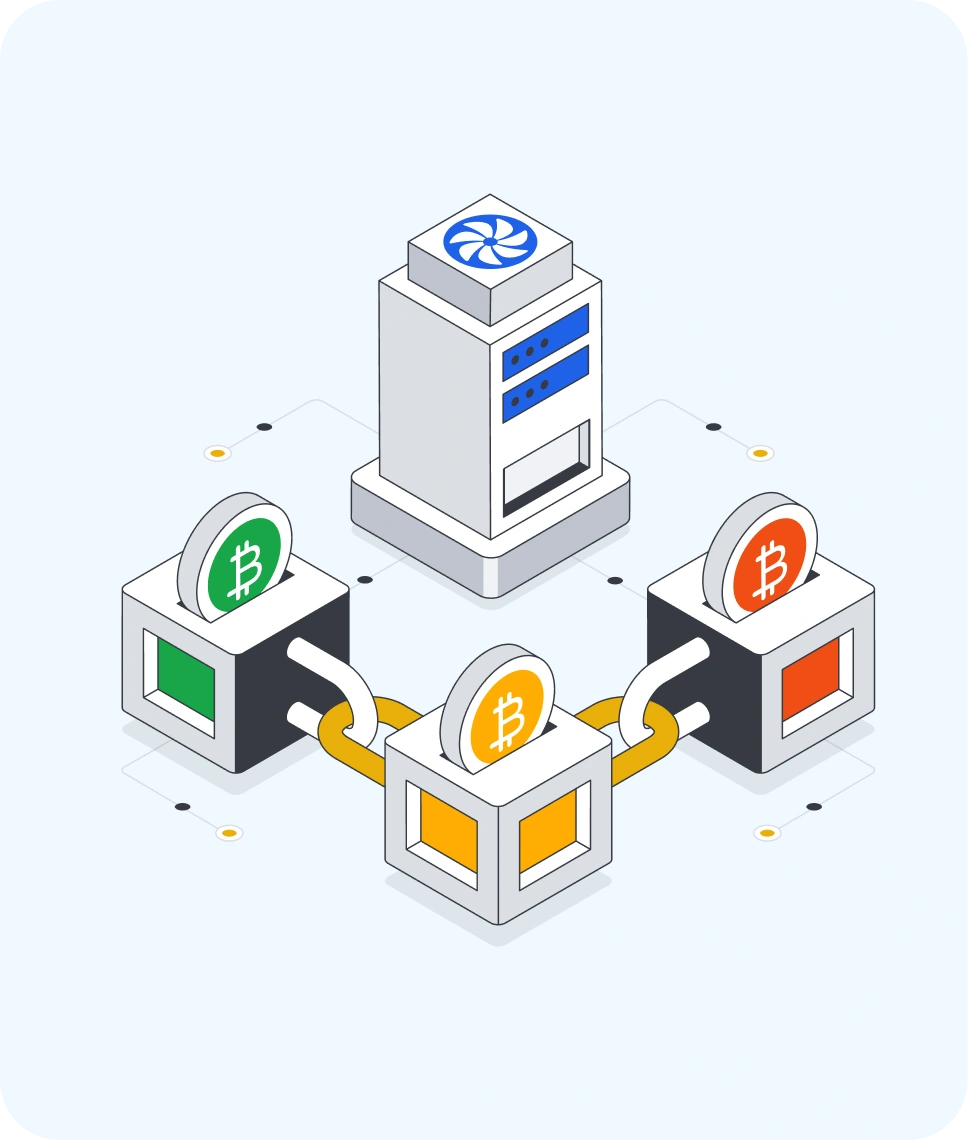
Blockchain-Based Mobile Applications
Blockchain technology is expanding beyond cryptocurrency and influencing mobile application development. It enhances transparency, security, and decentralized data management. Industries such as finance, healthcare, logistics, and digital identity verification are increasingly adopting blockchain-powered apps to improve trust, transaction security, and operational efficiency.
Voice Search and Conversational Interfaces
Voice has now emerged as a key element in contemporary mobile applications, allowing for users to make searches, get tasks done, and utilize various services via voice command. Using AI-enabled conversational interfaces increases accessibility and ease while creating a more engaging experience through hands-free operations across a variety of uses.
Progressive Web Apps (PWAs)
PWAs are gaining momentum. They bring together the best of web accessibility with many features and capabilities of native apps. PWAs load faster, can run offline and be added to the homescreen without an app store. It lowers costs of development for the business and reaches users on all devices quickly.
Why iTechnolabs for Mobile App Development
iTechnolabs builds mobile applications for SMBs and mid-market companies that need production-grade software without enterprise-sized budgets. The work spans iOS, Android, and cross-platform development with the same team handling architecture, design, development, QA, and post-launch support. No handoffs to subcontractors. No disappearing after launch. One team, accountable from discovery to maintenance.
Here’s what that looks like in practice:
End-to-End Mobile App Development — iOS, Android, Native, and Cross-Platform
iTechnolabs builds across the full stack of mobile platforms: native iOS (Swift), native Android (Kotlin), and cross-platform using Flutter and React Native. The framework choice is made based on your product requirements, timeline, and budget, not on what the team prefers to build in. Most business applications are best served by Flutter or React Native, and that’s what iTechnolabs recommends when it’s the right call. When native is the right call for hardware-deep integrations, advanced performance requirements, or platform-specific functionality, that’s what gets built instead.
Discovery and Scoping Before a Line of Code Is Written
An engagement at iTechnolabs always starts with an organized discovery process. Scope is documented, user stories are created and reviewed, architecture is designed and timelines are built from actual scope, not imagination. This phase is here to prevent you from scope changes in the middle of the project, overspending, or building a product to solve a problem that does not exist. Skipping this step does not eliminate risk, it simply pushes it downstream to cost you more money.
UI/UX Design Integrated Into the Build — Not Outsourced
The design at iTechnolabs is not a handover from a design agency. The design team is integrated into the same process as the development team and are designed to be implemented, not delivered as Figma files to be translated and reverse-engineered by a developer. Wireframes, hi-fi prototypes, design systems, and component libraries are all generated in-house, assessed against technical considerations, and refined before coding starts.
Backend Development and API Architecture
The backend is where most mobile applications falter, often either due to an application that was never designed to scale, or a solution which has been stitched together with no underlying architectural plan. We architect and build our mobile application backends with scale and complexity in mind from the very beginning. This involves building on top of Firebase and Supabase, where infrastructure needs are handled, or developing a fully custom server architecture for complex data model requirements, compliance needs or specific performance requirements.
Third-Party Integrations — Payments, Maps, Notifications and More
Almost every production app is interacting with outside services. These can be payment processors (Stripe, PayPal, Apple Pay), mapping APIs (Google Maps, Mapbox), push notification providers (Firebase Cloud Messaging, APNs), CRM connections, authentication services (Auth0, Google Sign-In, Apple ID), and specialty APIs. All these integrations bring with them scope, additional testing, and a reliance that the app can take on. iTechnolabs will do the scoping, implementation, and testing of these integrations as part of the build, not as a last-minute detail of the final week.
QA Embedded Across the Entire Development Cycle
Testing at iTechnolabs is not a phase that happens after the build is done. Unit tests are written alongside code. Integration tests run after each sprint. UAT happens before the build is declared ready for submission. Device testing covers a matrix of phones, screen sizes, and OS versions not just the latest iPhone. The result is that production bugs surface during development, where they’re cheap to fix, rather than in production, where they cost users and reviews.
App Store Submission — Both Apple and Google Play
Submitting an application for both Apple and Google goes further than simply uploading a build; the two stores have their own strict guidelines that each application needs to comply with in order to be accepted for functionality, privacy, metadata, screenshots, and age and content. The review process is carried out by hand by Apple and can be rejected for very strange reasons on a first submission. iTechnolabs takes full responsibility for all of the submission process for both stores; build the signing; set up the store listing; check that you have followed their guidelines, and resubmit if necessary so you don’t hold the launch.
Post-Launch Maintenance, Monitoring, and Iteration
An app that launches and receives no support is an app on the clock. OS updates break functionality. Users find edge cases that no test environment caught. Analytics reveal that users are behaving differently from what the design assumed. iTechnolabs provides structured post-launch support, bug triage, monitoring, OS compatibility updates, and feature iteration with defined response times and a team that already knows the codebase. You don’t start over with someone new every time something needs to change.
Also, read: A Complete Roadmap of Mobile App Development: An Expert Guide 2026
Conclusion
Mobile app development has become a fundamental part of modern business growth, enabling organizations to connect with customers, streamline operations, and deliver services more efficiently. From planning and design to development, testing, and ongoing maintenance, every stage plays a crucial role in building a successful application. As technologies such as AI, cloud computing, IoT, and 5G continue to evolve, businesses must adopt innovative mobile solutions to remain competitive and meet rising user expectations. Partnering with experienced mobile app development services providers ensures access to the expertise, tools, and strategies needed to create scalable, secure, and high-performing applications that drive long-term success.
FAQs
1. What is mobile app development?
Mobile app development is the process of designing, building, testing, deploying, and maintaining software applications for smartphones and tablets. These applications can be developed for Android, iOS, or multiple platforms and are used to provide digital services, improve customer engagement, and support business operations.
2. How long does mobile app development take?
The development timeline depends on the app’s complexity, features, design requirements, and platform selection. A basic application may take 2–4 months, while a feature-rich or enterprise-level mobile app can require 6–12 months or longer to design, develop, test, and launch successfully.
3. What are the different types of mobile apps?
The main types of mobile apps include native apps, cross-platform apps, hybrid apps, web apps, and Progressive Web Apps (PWAs). Each approach offers different advantages in terms of performance, development cost, maintenance, scalability, and user experience, depending on business requirements.
4. How do I choose the right mobile app development company?
When selecting a mobile app development company, evaluate its portfolio, technical expertise, industry experience, development process, communication practices, and post-launch support capabilities. Choosing a reliable partner helps ensure higher-quality development, reduced project risks, and successful long-term outcomes.